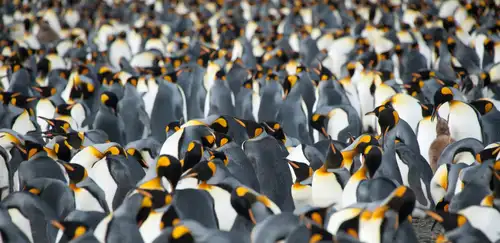


South Georgia is a paradise for animal enthusiasts. It stands out as one of the most wildlife-abundant destinations in our polar expeditions, whether in the Northern or Southern Hemisphere.
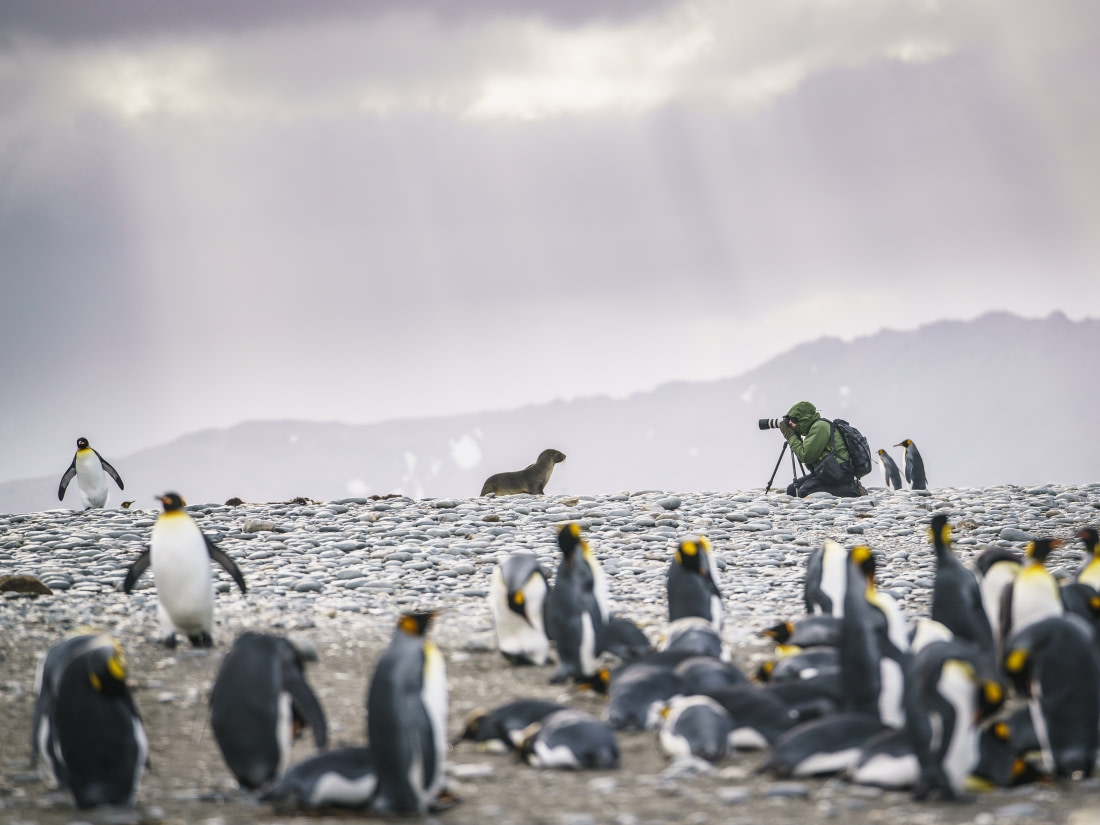
Few places can match the sheer variety and number of species found here, from the massive king penguin colonies at St. Andrews Bay to the rich whale-watching opportunities just offshore.
South Georgia also has a fascinating and somber history related to whales.
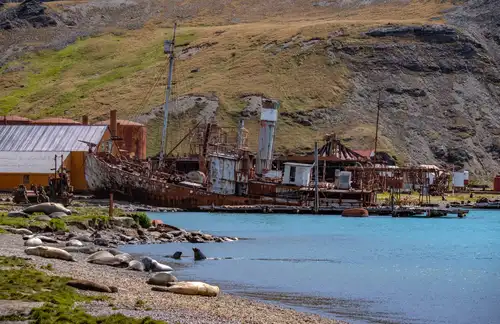
Once a major British whaling center, the United Kingdom Overseas Territory of South Georgia is now dotted with the rusting remnants of abandoned whaling stations: Grytviken, Stromness, Leith Harbour, and others. These names evoke a not-so-distant past when whales were hunted in the Southern Ocean without regard for cruelty or conservation.
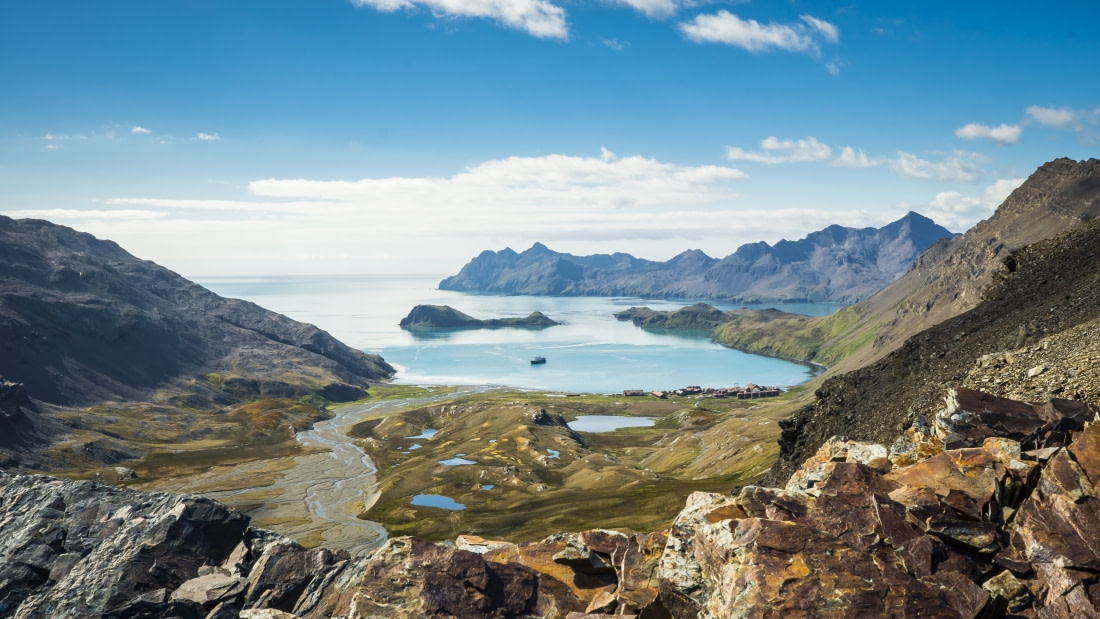
Nearly driven to extinction to supply Europe with oil, an estimated 1.6 million whales were killed in the Southern Ocean during the first six decades of the 20th century. While this exploitation of nature might shock us today, it was not uncommon at the time. The British, Norwegians, and other nationalities operating there often abandoned their stations once the profits dwindled.
On the upside, many of these stations can still be seen (and in some cases, visited) today.
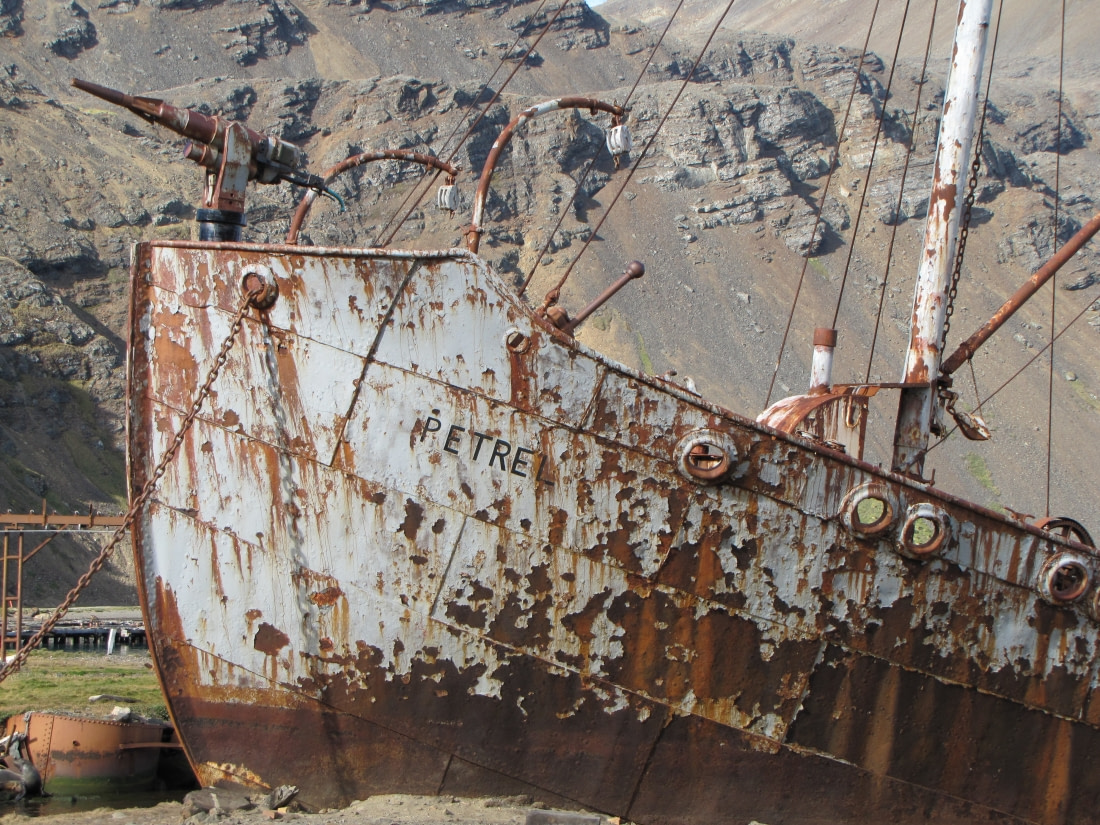
We do not visit all the whaling stations mentioned here, though certain South Georgia cruises pass nearby. Many of the stations are too hazardous for landings, such as Leith Harbour with its asbestos contamination and weakened structures, while others might be too far off our route. Even so, we strive to view the following South Georgia whaling stations whenever possible. Please refer to specific trip itineraries for more details on the stations we visit.
Husvik
Husvik is one of the three South Georgia whaling stations located in Stromness Bay. It began as a floating factory in 1907 and was expanded into a whaling station in 1910. Leith Harbour and Stromness are the other two stations in Stromness Bay. All were connected by a track that ran along the beach, which you can still see today. Elephant and fur seals breed in this area, along with gentoo penguins, Antarctic prions, and South Georgia diving petrels.
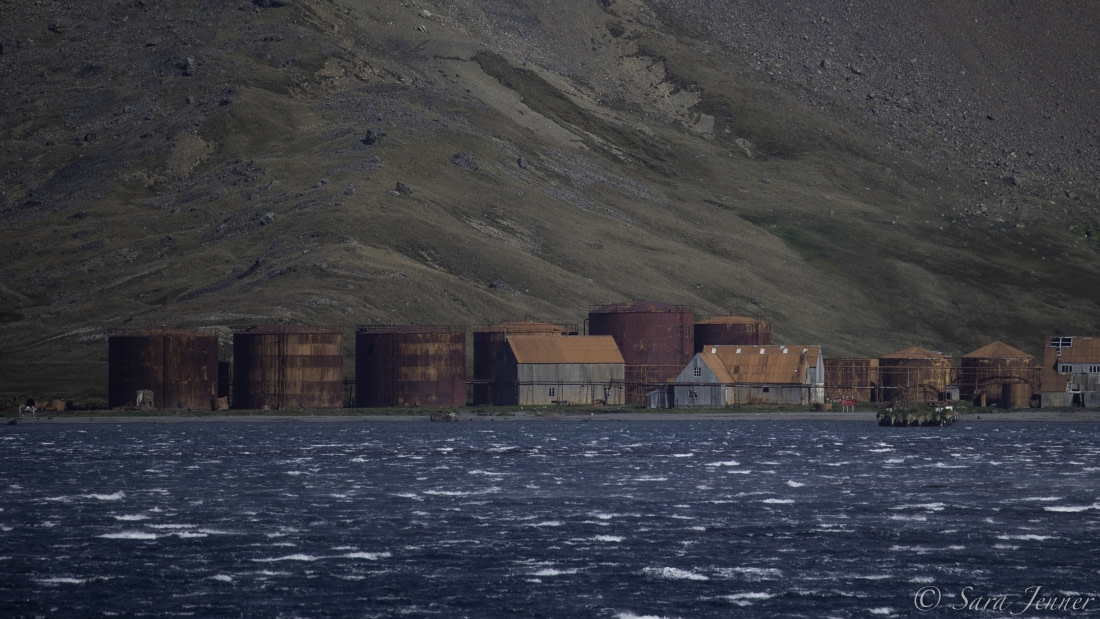
At Husvik, you can also see the whale catcher Karrakatta, a vessel grounded on the slipway and used to provide steam power to the station’s machinery. The station ceased whaling operations in 1960, after which the British Antarctic Survey and other UK groups used parts of the site for various work in the area. While we can’t visit Husvik due to asbestos pollution and the danger of building collapse, we sometimes cruise nearby in our Zodiacs.
Leith Harbour
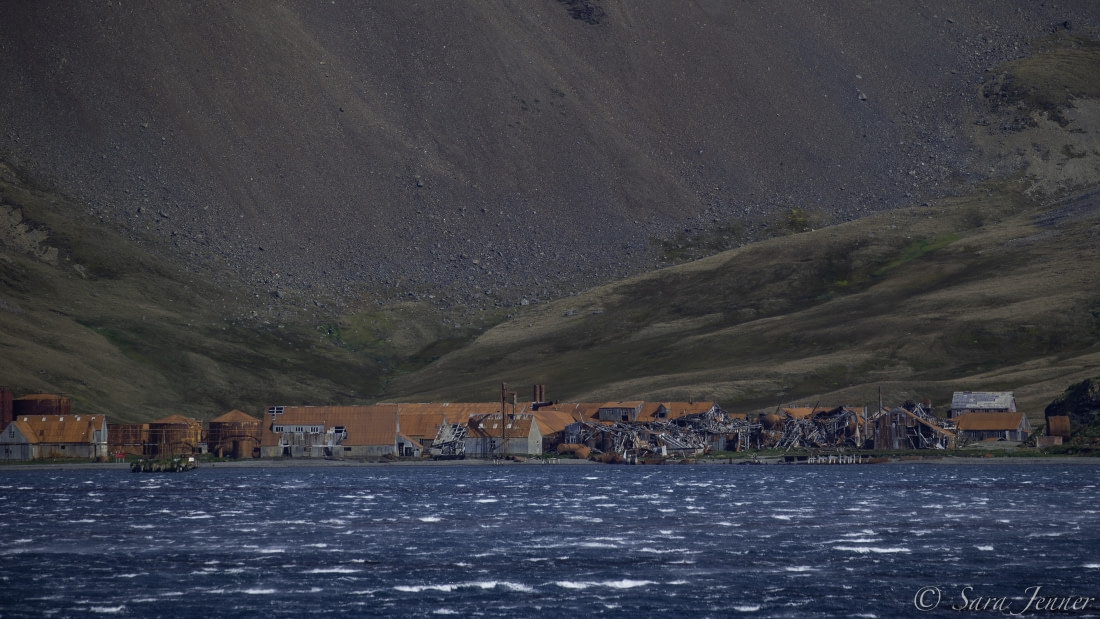
The largest of the South Georgia whaling stations, Leith Harbour operated from 1909 to 1966. It experienced a series of landslides in its early years, forcing the site to be moved to its current location in 1911.
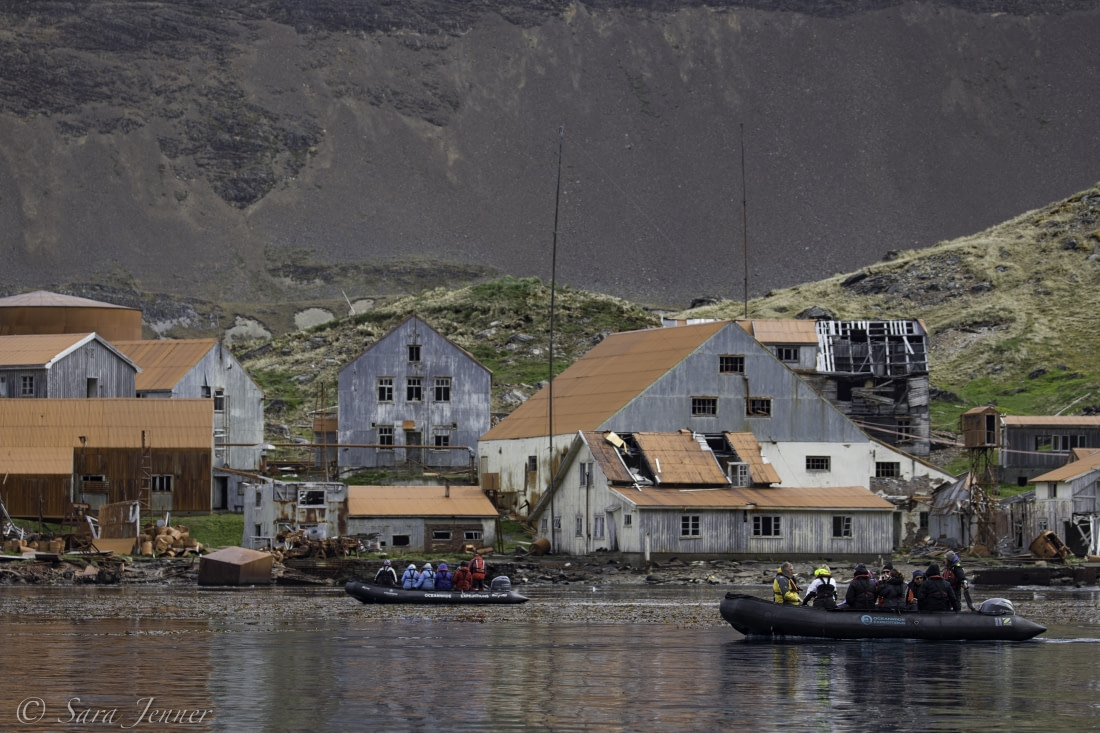
Leith has an intriguing history, having been briefly occupied by Argentine special forces who entered the station posing as scrap metal merchants in March 1982, one of the first events leading to the Falklands War. This South Georgia whaling station, also known as Jericho, was the last whaling site to be closed in the archipelago.
Stromness
Like Husvik, Stromness began as a floating offshore whaling station in South Georgia. The shore station was built in 1912, and after 1931, the South Georgia Company of Leith used it as a ship repair yard. Except for Grytviken, Stromness is perhaps the best-known whaling station in South Georgia, partly due to its association with Ernest Shackleton’s Imperial Trans-Antarctic Expedition of 1914 – 1917, the Endurance shipwreck, and subsequent rescue mission.
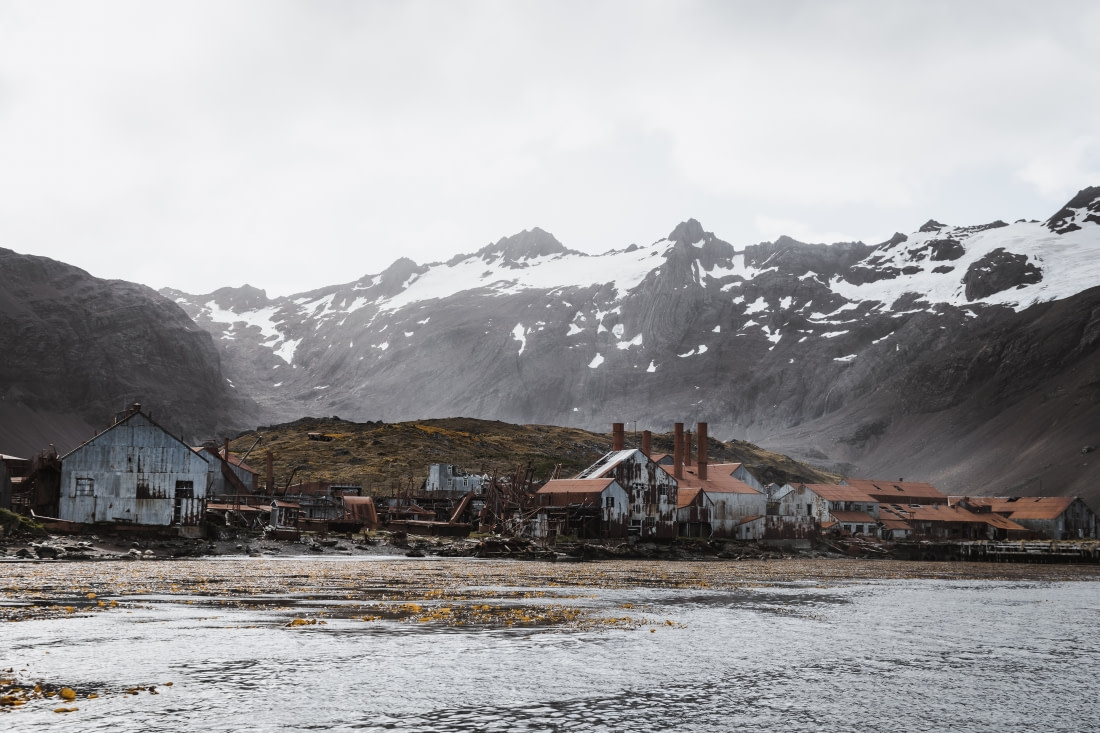
After sea ice crushed the Endurance in the Weddell Sea in 1915, Shackleton and his crew sailed by lifeboat to Elephant Island. From there, he and five of his men sailed to South Georgia: 1,336 km (830 miles) in their 6-meter (20-foot) open-air lifeboat. They arrived in hurricane winds fifteen days later, trekking 36 hours to Stromness to find a rescue team for their fellows back on Elephant Island.
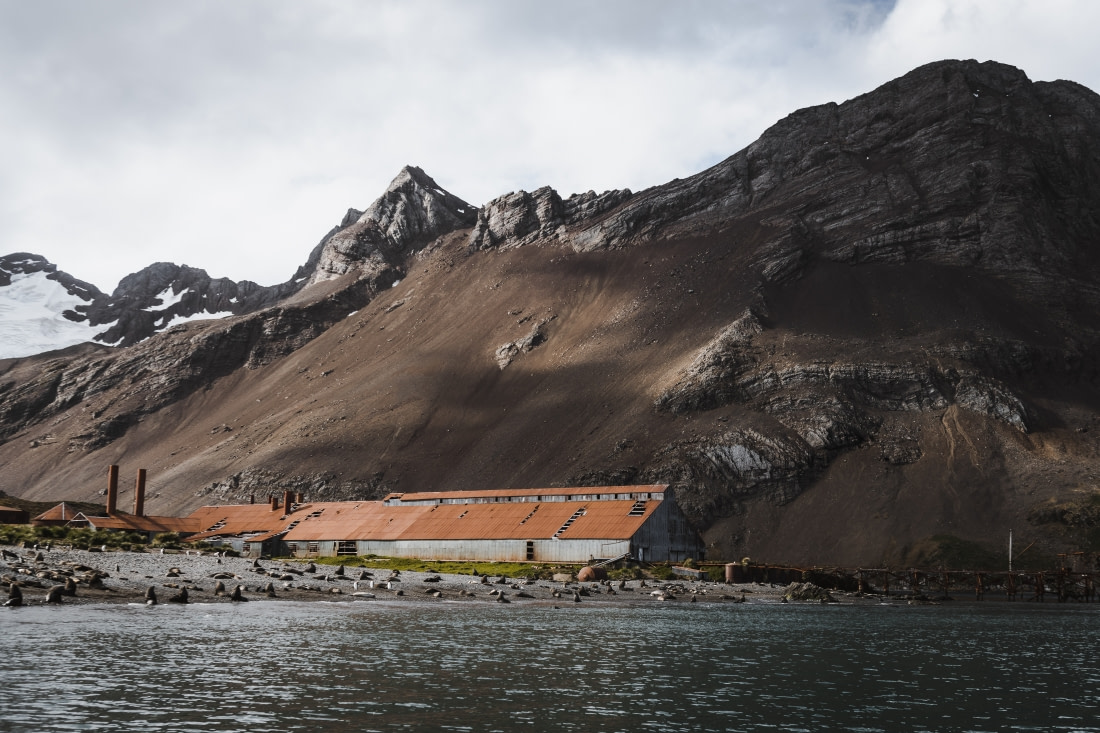
We occasionally land at the beach near Stromness and walk the perimeter of the safety zone, though we cannot approach the station due to the usual risks of airborne asbestos and weakened structures. Some of our cruises, however, allow you to hike part of the Shackleton Traverse between Stromness and Fortuna Bay. We also occasionally walk to the nearby Shackleton’s Waterfall.
Amazingly, the Endurance was recently found on the 100th anniversary of Shackleton’s burial at Grytviken. We sail close to its resting place during our Weddell Sea cruises.
Prince Olav
In contrast to the longstanding Leith Harbour, Prince Olav had a relatively short period of operation. It was the last South Georgia whaling station to be built and the first to be closed, completed in 1912 and shuttered 20 years later.
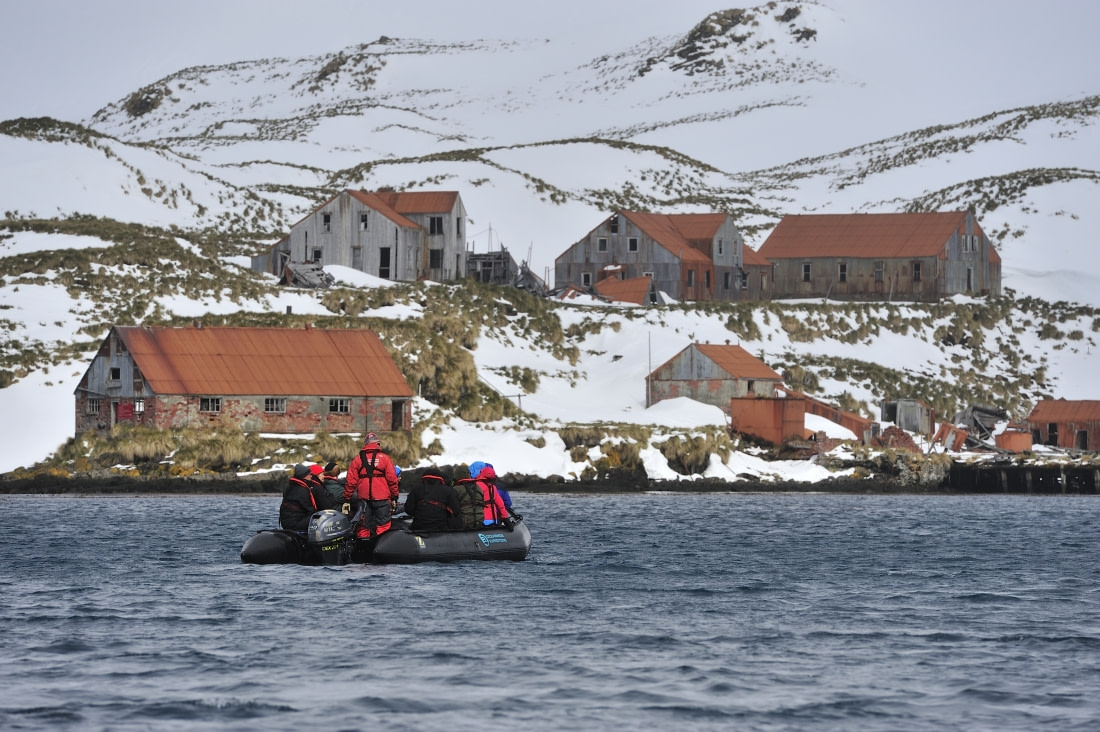
Like many other stations in South Georgia whaling history, Prince Olav began as a floating facility and was later augmented by shore structures. Many of these were moved to Leith after the closure of Prince Olav, which is one of the few South Georgia whaling stations we do not visit or see during our Antarctica cruise program.
Godthul
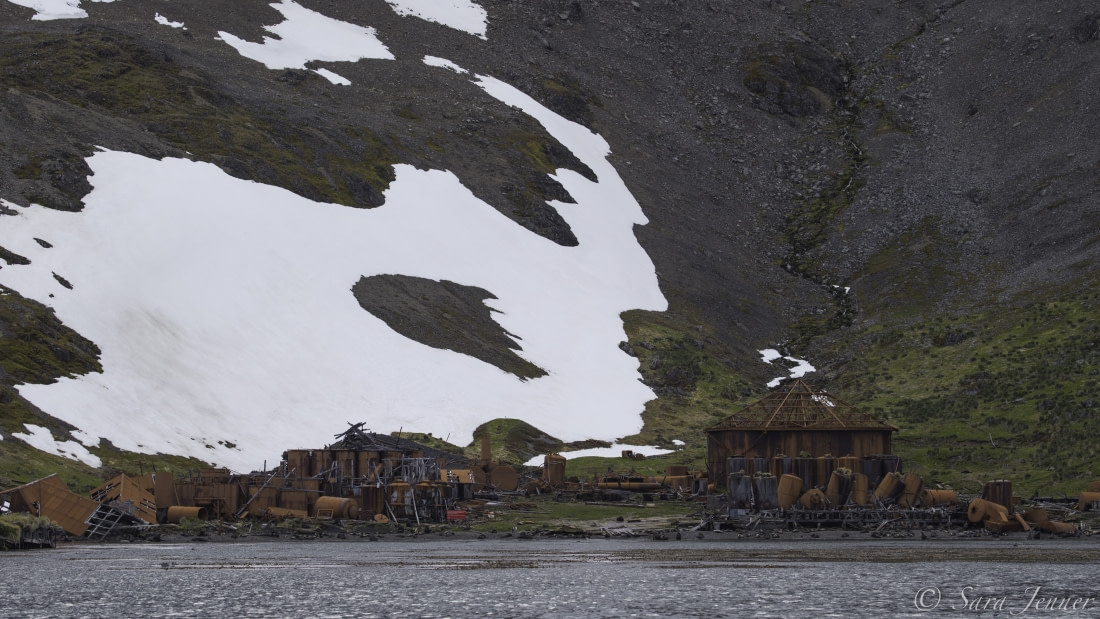
Another short-lived South Georgia whaling station is Godthul, active from 1908 – 1929 and one of the few stations safe for polar cruise passengers to visit. We have made landings near Godthul in the past, during our visits to Cobblers Cove and Rookery Point, but it is not a standard part of our South Georgia itineraries.
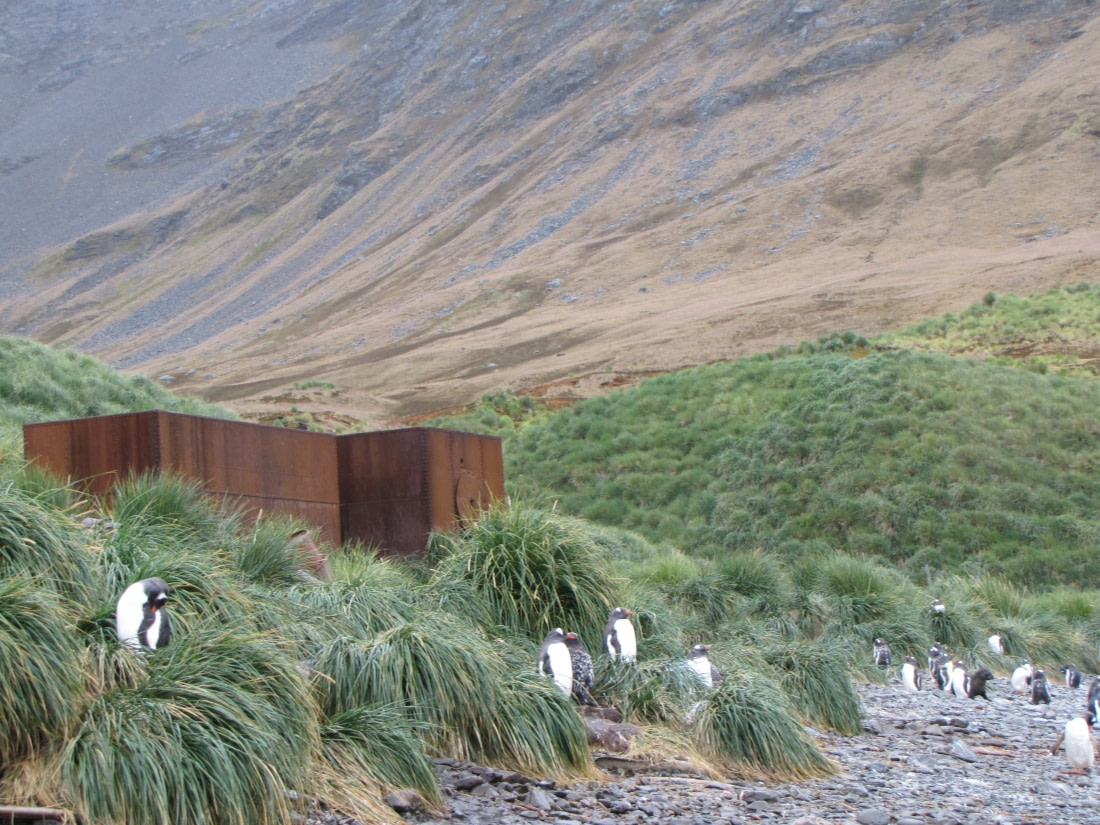
Godthul supported factory ships and was one of the more basic whaling stations in South Georgia. Today, its surroundings are home to gentoo and macaroni penguins, fur and elephant seals, sooty albatrosses, and giant petrels.
Ocean Harbour
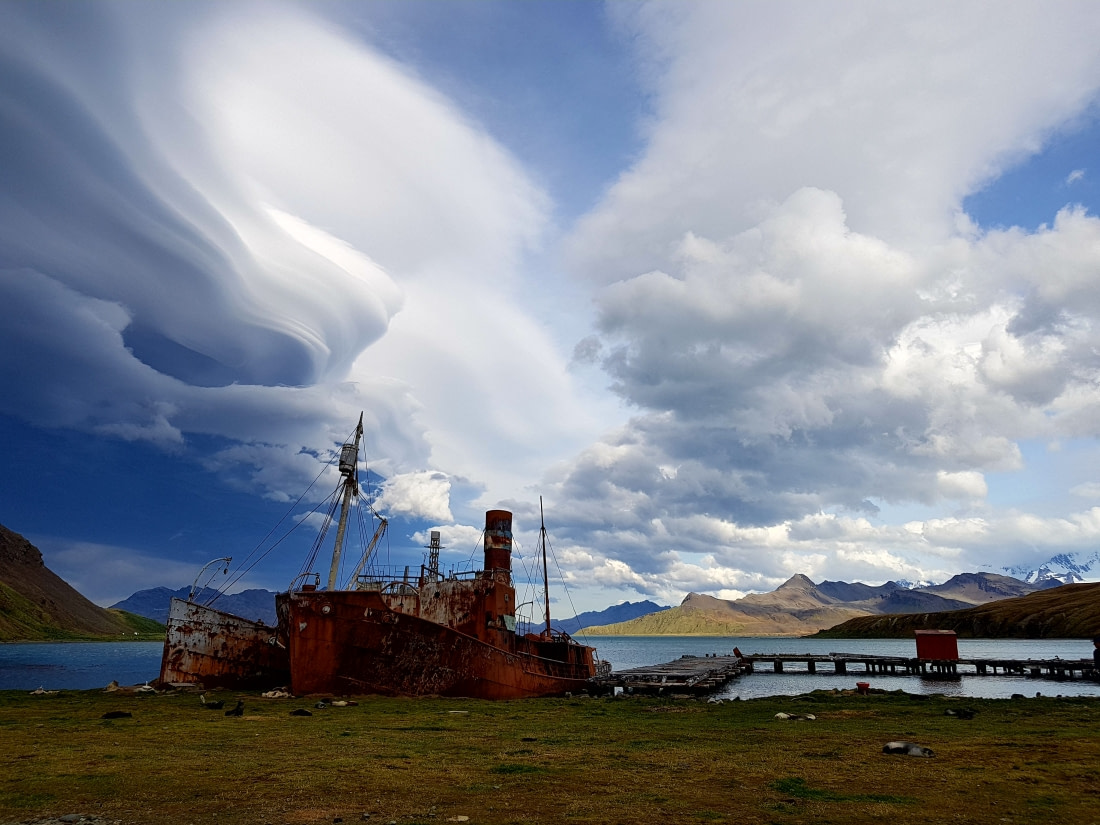
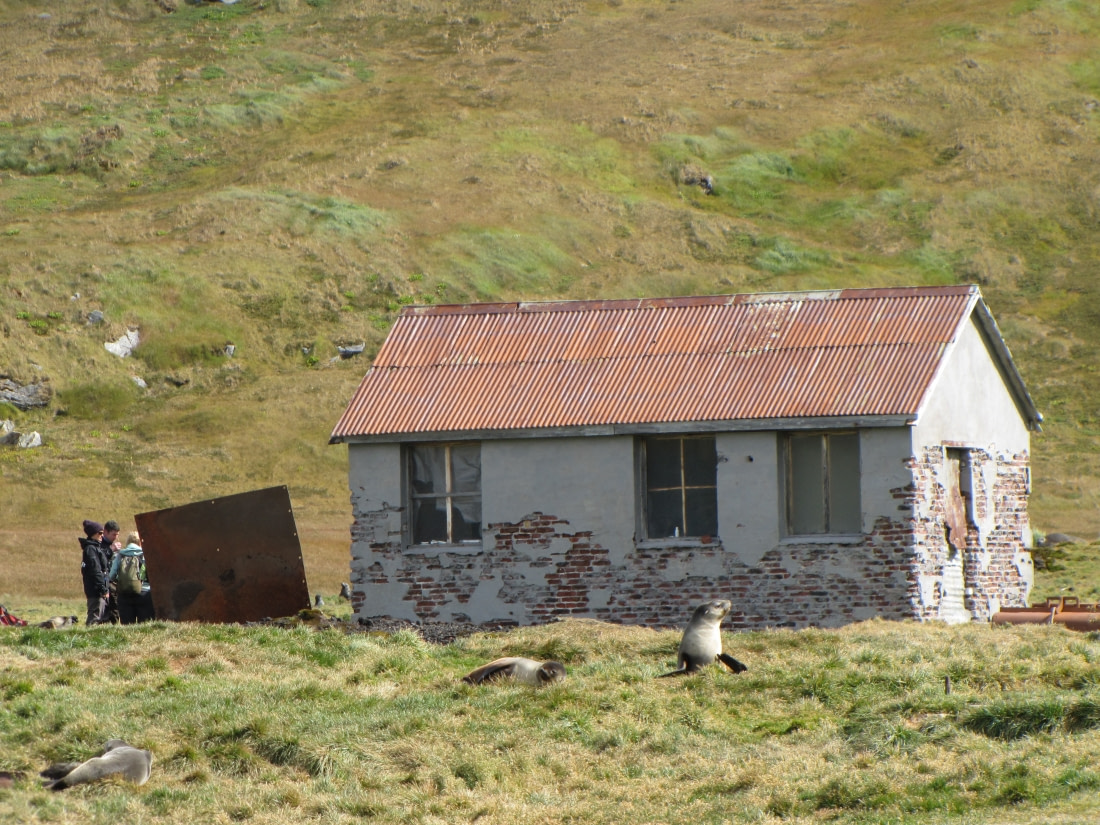
Even shorter-lived than Godthul was Ocean Harbour, which operated from 1909 to 1920. It is the site of the oldest grave on South Georgia, belonging to sealer Frank Cabrial, who died there in 1920. While we don’t visit Ocean Harbour, you can see most of its infrastructure at Stromness, where it was moved after 1920.
Grytviken
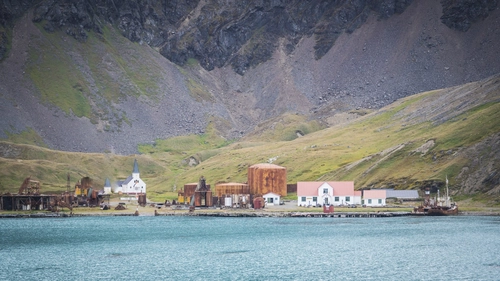
We conclude our list with what is probably the most well-known whaling station in South Georgia. Grytviken is also perhaps the most accessible, a long-running Norwegian station operated from 1904 to 1965. It owes much of its fame to the fact that it’s the location of legendary explorer Ernest Shackleton’s gravesite, though this would not have saved Grytviken from near-total abandonment had it not been for major renovations in 2003.
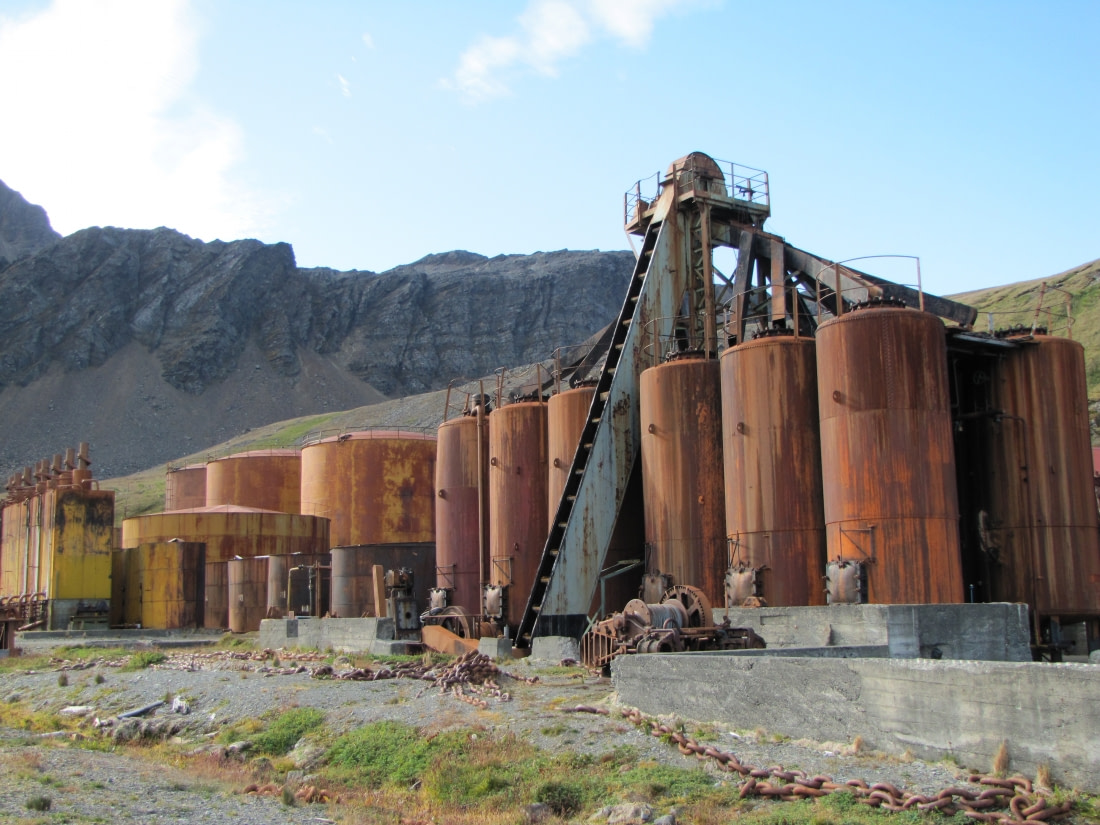
While this work dramatically changed the appearance of Grytviken, it also removed the danger of airborne asbestos so common to the whaling stations of South Georgia and allowed for safe visitation by expedition cruisers. During our visits there, you will enjoy seeing the current residents of Grytviken, including elephant seals, fur seals, and king penguins.
Experience the whales, whaling history, and whaling stations of South Georgia
South Georgia has a dark history when it comes to whales, but fortunately, it is only history. A number of efforts by the South Georgia Heritage Trust, Friends of South Georgia Island, and British Antarctic Survey are dedicated to whale study and conservation.
Photo-identification of South Georgia whales submitted to Happywhale now suggests whale populations are in recovery, and the waters around the islands have recently become part of a 1.24-million square km (half million square miles) Marine Protected Area.
Depending on your choice of trip, you might see or visit a whaling station to experience firsthand the remains of the once-thriving South Georgia whaling industry. But more importantly, you stand a chance of spotting one of the beautiful whale species that call South Georgia home. These include blues, humpbacks, seis, and sometimes southern right whales, among others.
On top of that, you can enjoy one of the most dramatic landscapes in the sub-Antarctic. For more about all you can see, do, and enjoy in this incredible location, don’t forget to check out our detailed South Georgia seven article. You can also find loads of great South Georgia photos at our website.
 21 Dec - 08 Jan 2026
 19 Jan - 06 Feb 2026
 22 Jan - 18 Feb 2026
 28 Jan - 16 Feb 2026
 16 Feb - 10 Mar 2026
Related Trips
Falkland Islands - South Georgia - Antarctica
21 Dec 2025 - 08 Jan 2026  19 Days / 18 Nights
Falkland Islands - South Georgia - Antarctica
19 Jan 2026 - 06 Feb 2026 19 Days / 18 Nights
Remote Weddell Sea Explorer incl. South Georgia - South Sandwich Islands - Neuschwabenland - Larsen Ice Shelf - Paulet and Devil Island - Elephant Island, incl. helicopters
22 Jan 2026 - 18 Feb 2026 28 Days / 27 Nights
Falkland Islands - South Georgia - Antarctica
28 Jan 2026 - 16 Feb 2026 20 Days / 19 Nights
Falkland Islands - South Georgia - Elephant Island - Antarctica - Polar Circle
16 Feb 2026 - 10 Mar 2026 23 Days / 22 Nights
Atlantic Odyssey, excl. Antarctic Peninsula
01 Apr 2026 - 24 Apr 2026 24 Days / 23 Nights

Falkland Islands - South Georgia - Antarctic Peninsula - Photography special
24 Oct 2026 - 13 Nov 2026 21 Days / 20 Nights
Falkland Islands - South Georgia - Antarctic Peninsula
03 Nov 2026 - 23 Nov 2026 21 Days / 20 Nights
Falkland Islands - South Georgia - Antarctic Peninsula
23 Nov 2026 - 11 Dec 2026 19 Days / 18 Nights

Falkland Islands - South Georgia - Antarctic Peninsula - Birding
11 Dec 2026 - 29 Dec 2026 19 Days / 18 Nights
Falkland Islands - South Georgia - Antarctica
27 Dec 2026 - 14 Jan 2027 19 Days / 18 Nights
Falkland Islands - South Georgia - Antarctica
16 Jan 2027 - 03 Feb 2027 19 Days / 18 Nights

Blog


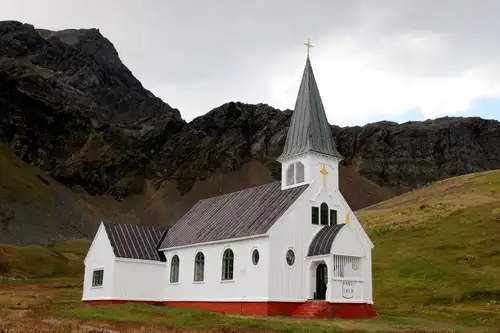
Churches in Antarctica
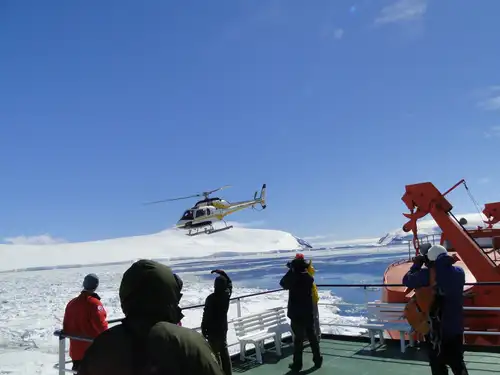
The Wonderful Weddell Sea: Places, Pics, and Impressions
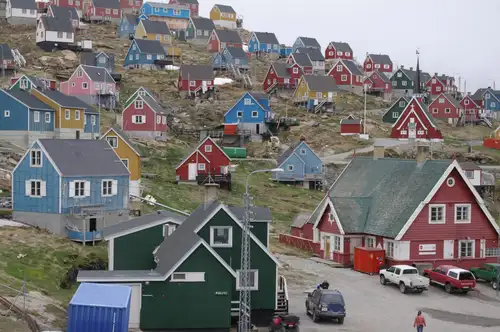
10 Traits of Post-Ice-Age Greenland
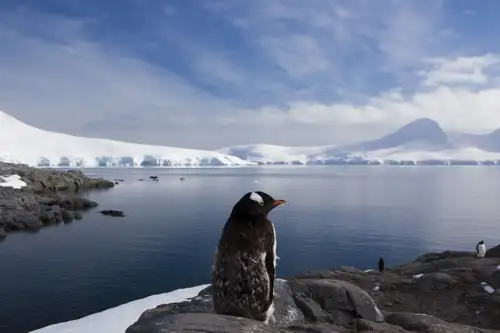
Guidelines for visitors to Antarctica
Day and night in Antarctica
The Emperor Penguin of the Drake Passage
8 Whales You Might See During Your Antarctica Cruise
Eight Ultimate Antarctica Adventures
Kayaking In Greenland
The Mysteries of the Beluga Whale
Seizing the Season: Spitsbergen’s Late Spring, Early Summer
Six Seal Species You Might See On Your Greenland Cruise
Flowers in Antarctica
Of Treacherous Rocks & Audacious Fin Whales
Greenland's History: When Vikings Ruled the Ice Age
The Norse Settlement of Greenland
South Georgia Whaling Stations
Exploration of the Polar Regions
Peaks, Fjords, and Auroras: 14 East Greenland Attractions