

Puffins are part of a family of 22 seabird species known as auks, which are pigeon-sized birds that thrive on a diet of small fish and crustaceans.
They capture their prey by swimming underwater and pursuing it, much like penguins do.
There are four puffin species. The Atlantic puffin, one of these species, stands about 26-29 cm (10.2-11.4 inches) tall and weighs between 320-480 grams (.71-1.06 pounds). This species is found across a broad geographic range, from France to the Gulf of Maine.
It is the Atlantic puffin that is often seen on some Arctic voyages.

Arctic sea parrots
The Atlantic puffin is often referred to as a “sea parrot” due to its bill, which features vibrant grooves of red, yellow, and blue. During the breeding season, the bird's plumage includes a black crown, neck, and upperparts, while the belly and sides are white.
The sides of their heads are grey-white, and their legs are orange-red. In winter, their heads turn a dark grey, and their legs become yellowish. Their bills also become paler and smaller as several layers fall off during the colder months.

Puffins around Svalbard
The Atlantic puffins occasionally seen on Svalbard cruises are slightly larger than those in the sub-Arctic regions like Iceland, the Faroe Islands, Scotland, and Jan Mayen Island. In Svalbard, puffins breed in about 50 colonies along the west coast of Spitsbergen.
Unlike their sub-Arctic counterparts, which breed in large numbers on the top edges of tall cliffs, Svalbard puffins have limited breeding sites due to permafrost and lack of soil. This forces them to breed on steep cliffs and in crevices between boulders, often sharing these spaces with guillemots and kittiwakes.

The puffins of Greenland
In Greenland, the Atlantic puffin population is around 5,000 pairs. Approximately 70 breeding colonies are located along the west coast, from Cape Farewell to Hakluyt Island, with each colony typically housing around 400 birds.
Breeding on the east coast is rare. Most birds breed in earthy burrows, but in the colder north, they breed in cracks and beneath stones and boulders, often near razorbills.

Sea parrot cuisine
Atlantic puffins have a varied diet that includes small fish, crustacea, squid, and marine worms. Adult puffins are known to bring a wide variety of fish to their young. One study found that parents brought their chicks more than 50 species of fish.
The most common food for their young is sandeel, small, elongated, silver-colored eel-like fish. However, once the chicks have finished fledging, adult puffins provide no further care, forcing the young to fend for themselves.

Braving the new world
When a young Atlantic puffin is ready to leave its nest, it does so under the cover of darkness to avoid predators, heading to the cliff edge. The young bird then makes a leap of faith, half-falling to the sea below before flying into the water.
While the puffin can instinctively swim, it takes longer to learn how to dive and fish. Fortunately, the young puffin has ample fat reserves from being well-fed, allowing it time to learn these new skills. During this vulnerable stage, the bird is at risk from predators like gulls and skuas. However, the young puffin finds safety at sea, spending its first winter there before returning to the colony in the summer.

Where the puffin goes
Scientists have tracked puffins migrating to the Thule area of Greenland, the northernmost extent of the Atlantic puffin’s breeding range. In this area, puffin colonies are small, typically consisting of 5-10 birds each. Until recently, the exact population numbers, migration timing, and wintering locations were unknown.
In 2013, researchers began a large-scale monitoring project at this colony, aiming to annually census the colony and capture, band, and sample as many individuals as possible. They also used geolocators to determine the wintering locations of these birds. In 2014, two geolocators were recovered, providing a year’s worth of data for one bird and 150 days for another.
The year-long data revealed that the bird traveled up and down the west coast of Greenland during migration but spent most of the winter in the middle of the Atlantic, over 1,000 km (620 miles) from the nearest landmass.

What puffins do
Many long-lived birds, including Atlantic puffins, are known for monogamous pairings. Their reproductive success is influenced by the strength and longevity of their pair bonds, with long-established pairs having more success in rearing their offspring.
However, little is known about how puffins that migrate to distant wintering grounds maintain their pair bonds. Do they part ways during the winter, or do they stay together?
Researchers recently published a study focusing on puffin pairs during this period. Over six years, researchers from Oxford’s Department of Zoology and the London Institute of Zoology used geolocators to track the migratory movements and behavior of 12 puffin pairs.

The study found that while the birds migrated separately to their wintering grounds, their routes were very similar, making it easy for them to reunite. On the return trip, the partners followed different paths but synchronized their timing to return to the colony simultaneously in spring.
A key finding was that pairs following similar migration routes bred earlier and more successfully the following spring. The scientists speculated that the proximity of their return trip might make it easier for pairs to reunite quickly.
The study also found that females foraged more than males during the winter. This increased foraging activity was directly related to the females' ability to lay eggs earlier and rear their chicks more successfully, as they were in better pre-breeding condition.

Future puffin research
Scientists aim to study puffins further to understand their activities at the end of the breeding season. Researchers plan to combine miniature tracking devices with computer programs to identify behaviors in tracking data, allowing them to know not only where puffins go but also what they are doing at sea.
This data will be invaluable to conservationists working to protect these vibrant seabirds.

Bonus video on our top 10 puffin facts
In addition to these great photos and facts about puffins, we also have a brief (but fact-filled) video all about these colorfully beaked seabirds. By the time you're done watching, you'll be fully prepared to see puffins in person on your own Arctic cruise!
 24 Apr - 01 May 2026
 01 May - 08 May 2026
 27 May - 05 Jun 2026
 29 May - 05 Jun 2026
 05 Jun - 12 Jun 2026
Related Trips
Alpine Peaks of Spitsbergen, Ski & Sail
24 Apr 2026 - 01 May 2026  8 Days / 7 Nights
Alpine Peaks of Spitsbergen, Ski & Sail
01 May 2026 - 08 May 2026 8 Days / 7 Nights
Arctic Ocean - Fair Isle, Jan Mayen, Ice Edge, Spitsbergen, Birding
27 May 2026 - 05 Jun 2026 10 Days / 9 Nights
North Spitsbergen - Arctic Spring , Hike & Sail
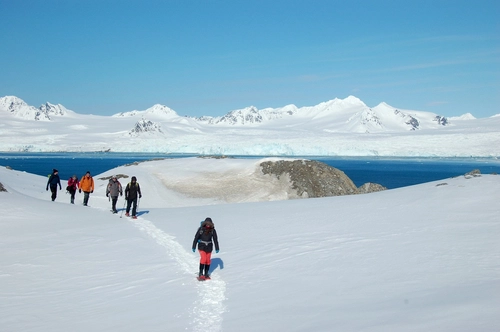
29 May 2026 - 05 Jun 2026 8 Days / 7 Nights
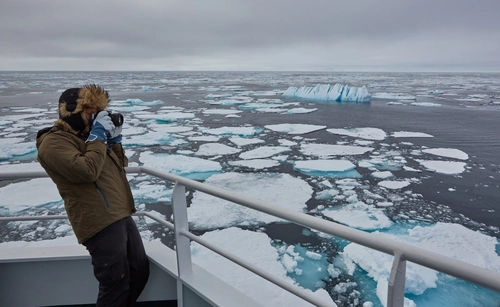
North Spitsbergen Explorer - Into the pack ice - Polar Bear Special
05 Jun 2026 - 12 Jun 2026 8 Days / 7 Nights

Arctic Ocean - Jan Mayen, Ice edge, Spitsbergen, Birding
05 Jun 2026 - 13 Jun 2026 9 Days / 8 Nights
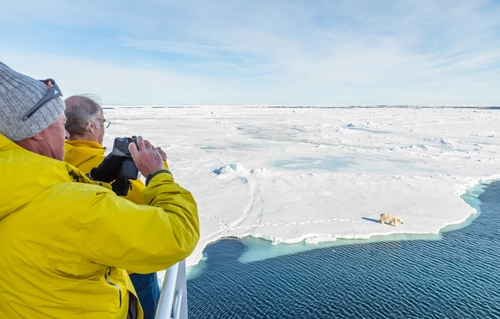
Arctic Ocean - Fair Isle, Jan Mayen, Ice edge, Spitsbergen, Birding - Summer Solstice
12 Jun 2026 - 21 Jun 2026 10 Days / 9 Nights
North Spitsbergen Explorer - Into the pack ice - Polar Bear Special
12 Jun 2026 - 19 Jun 2026 8 Days / 7 Nights
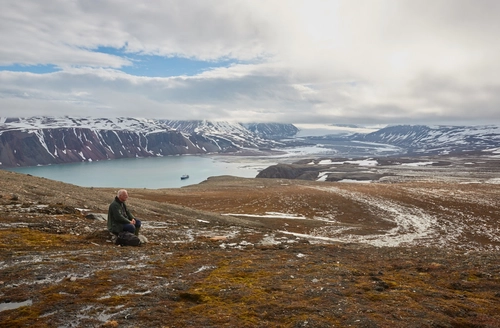
North Spitsbergen Explorer - Versatile landscapes, sea ice & wildlife
13 Jun 2026 - 20 Jun 2026 8 Days / 7 Nights
North Spitsbergen Basecamp – Summer Solstice - Free Kayaking, Hiking, Photo Workshop, Diving (supplemented)
19 Jun 2026 - 26 Jun 2026 8 Days / 7 Nights
North Spitsbergen Explorer - Versatile landscapes, sea ice & wildlife - Summer Solstice
20 Jun 2026 - 27 Jun 2026 8 Days / 7 Nights
North Spitsbergen Explorer - Versatile landscapes, sea ice & wildlife - Summer Solstice
21 Jun 2026 - 28 Jun 2026 8 Days / 7 Nights

Blog



Eight Antarctic Misconceptions
10 Books and Films To Prepare for your Antarctica cruise
Six Must-See Svalbard Sites
10 Terrific Antarctic Bird Facts
Camping in Antarctica: a True Expedition Experience
Polar Diving: A Supreme Underwater Adventure
Humpback Whales: the Stars of the Western Antarctic Peninsula
Greenland's History: When Vikings Ruled the Ice Age
Five Reasons Why Snowshoeing is a Perfect Polar Activity
The Giant Petrels of King George Island
Day and night in Antarctica
The South Georgia Seven: Hikes, Fjords, Whales, & Penguins
The Seven Best Things to Do in Antarctica
Diving in Antarctica: The Ultimate Underwater Experience
Freshwater ecosystems in the Arctic
10 Popular Bird Watching Binoculars
Top 10 Tips for Packing Your Polar Photography Equipment
A Day on m/v Plancius
12 Things to Do in Antarctica