Large And In Charge Antarcticas Southern Elephant Seals - Nexta Expeditions
Large and in Charge: Antarctica’s Southern Elephant Seals

Large and in Charge: Antarctica’s Southern Elephant Seals

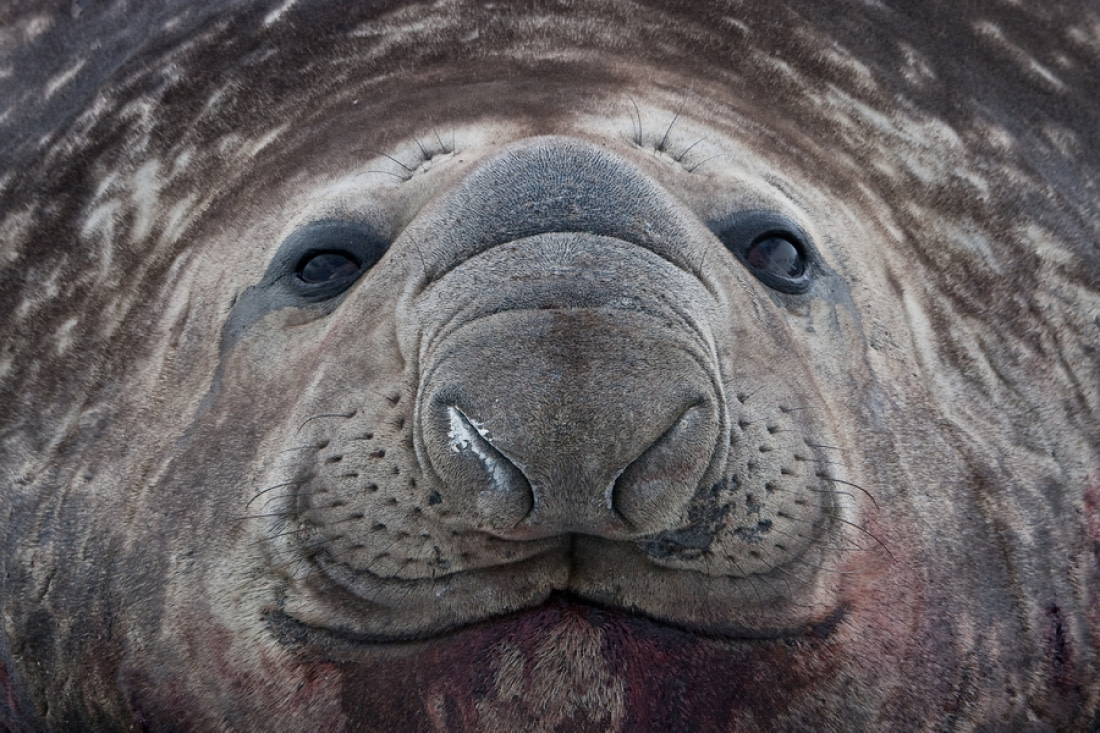
Southern elephant seals are the largest species of seal on the planet and a highlight among Antarctica cruise wildlife.

You can most often see southern elephant seals along the Antarctic coastline, dozing in the sun, nursing their pups, or swimming in the waters just off shore. And if you don’t see them first, you’ll almost certainly smell them.
blog-image

Southern elephant seals vs. northern elephant seals

At first glance, northern elephant seals and southern elephant seals appear quite similar.

They’re both large, loud, and (among males) share a distinctive elephant-like nose. There are two main differences, however, between the species.

The first difference is habitation range: Northern elephant seals range from the southern tip of Baja, Mexico, to the Aleutian Islands of Alaska. On the opposite end of the globe, southern elephant seals are restricted to the colder waters of the Southern Ocean.

The second difference is size: Southern elephant seals seriously outweigh their northern counterparts. Male southern elephant seals can reach up to 3,700 kg (8,150 pounds), while northern elephant seals usually only grow to about 2,300 kg (5,070 pounds).

Male adult southern elephant seals, or bulls, can be 4.2 to 5.8 meters (14 to 19 feet) long.

It may be that, at some point in their history, all elephant seals were one species. Over time, environmental factors like ocean temperature, food availability, predation, and geography may have caused them to diverge into the two distinct species alive today.
blog-image

The deep dives of southern elephant seals

Southern elephant seals have been recorded diving up to 2,133 meters (7,000 feet) and can stay underwater for nearly two hours.

Their large eyes allow them to seek prey in areas with low light. When it gets dark, their sensitive vibrissae whiskers also let them probe the water for prey. Using their sharp teeth, southern elephant seals can dig through mud or snatch prey out of the water.

Southern elephant seal diet is largely composed of squid, mollusks, krill, cephalopods, and algae. They may eat more, but their long and deep dives make dietary studies difficult.

blog-image

Southern elephant seal breeding season

The southern elephant seal breeding season, which lasts from August to November, is the best time to see these animals hauled out on land.

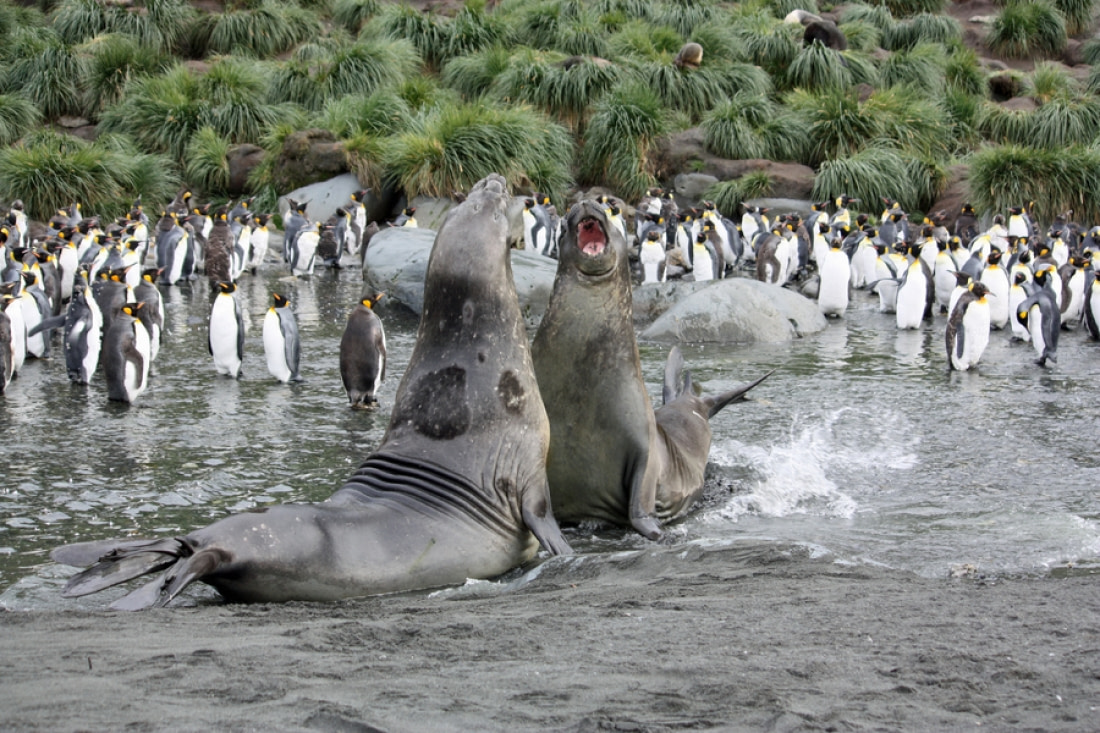
During this time, the larger males fight one another to establish dominance over a particular section of beach. Dominance fights can last for hours and end in serious injuries to both elephant seals. Vocalizations are also common during these fights and are amplified by inflating their trunk-like noses with air.

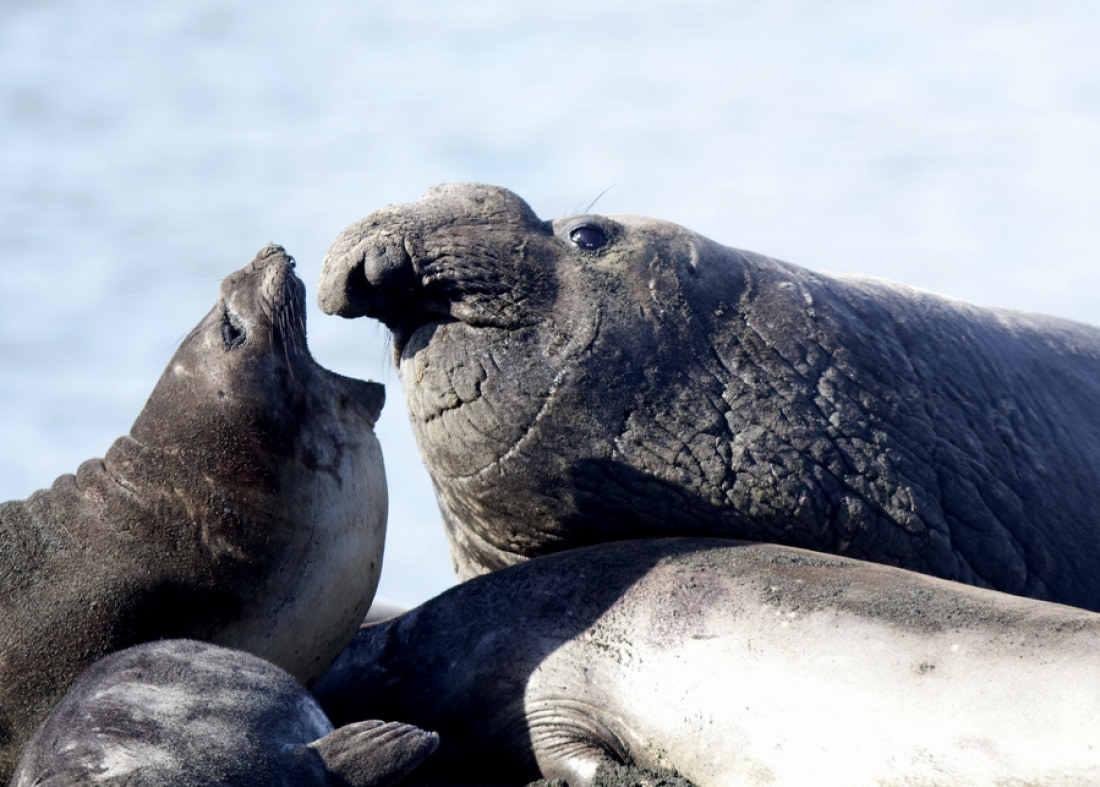
Once a beach master has been established, he will gather a harem of 40 to 50 females that he will vigilantly monitor and defend until the end of the breeding season. Female southern elephant seals give birth to one pup that they nurse for up to 23 days, then head back into open water to feed and regain energy. The pups, or weaners, are left to fend for themselves, congregating into pods for four to six weeks.

These weaner pods next face the dangerous task of leaving the beach and descending into the open ocean. Orcas, one of the only known predators of southern elephant seals, can be lethal adversaries during this vulnerable period.
blog-image

Working with southern elephant seals

On King George Island in the Antarctic Peninsula, southern elephant seals are monitored from October to March using non-invasive methods.

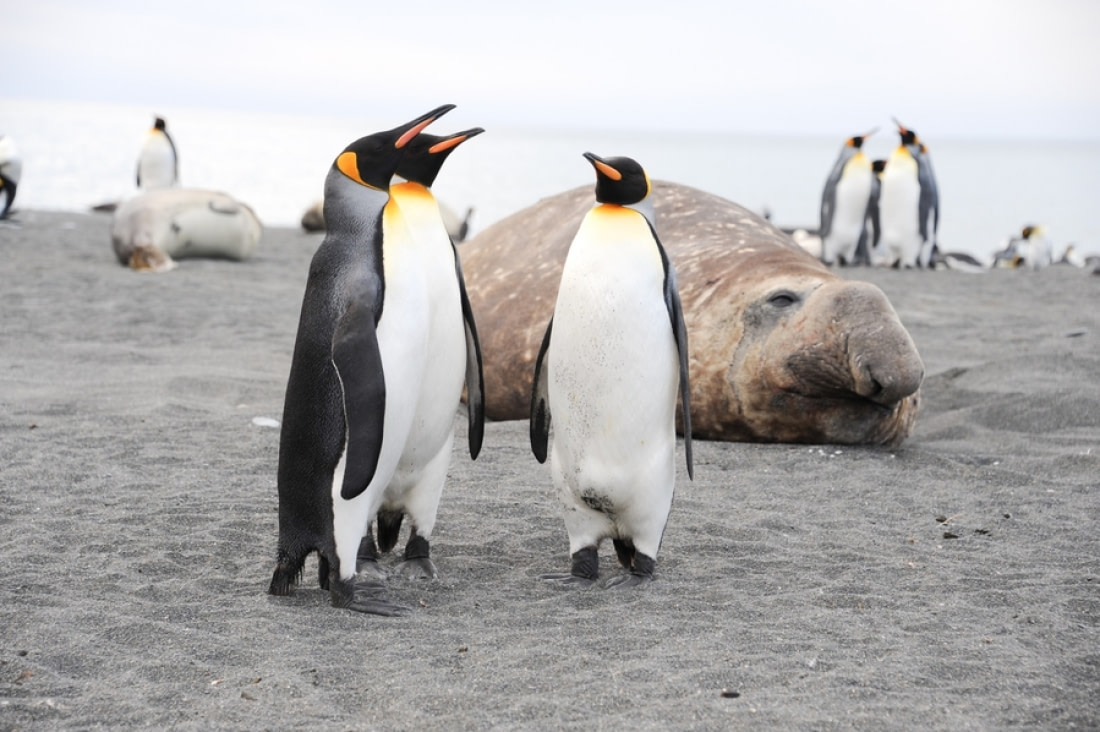
Every week, scientists at the Copacabana Field Camp walk along King George Island’s beaches and record how many southern elephant seals they see. Adults, sub-adults, young adults, and pups are included in the survey, along with their behaviors. Occasionally, southern elephant seals can be seen hauling their way through an entire penguin colony, disturbing everything in their path.

Slow though they move, southern elephant seal size alone poses a threat to unhatched penguin eggs and even adults. This is bad news for scientists trying to study the penguins, but it is also worth documenting these events.

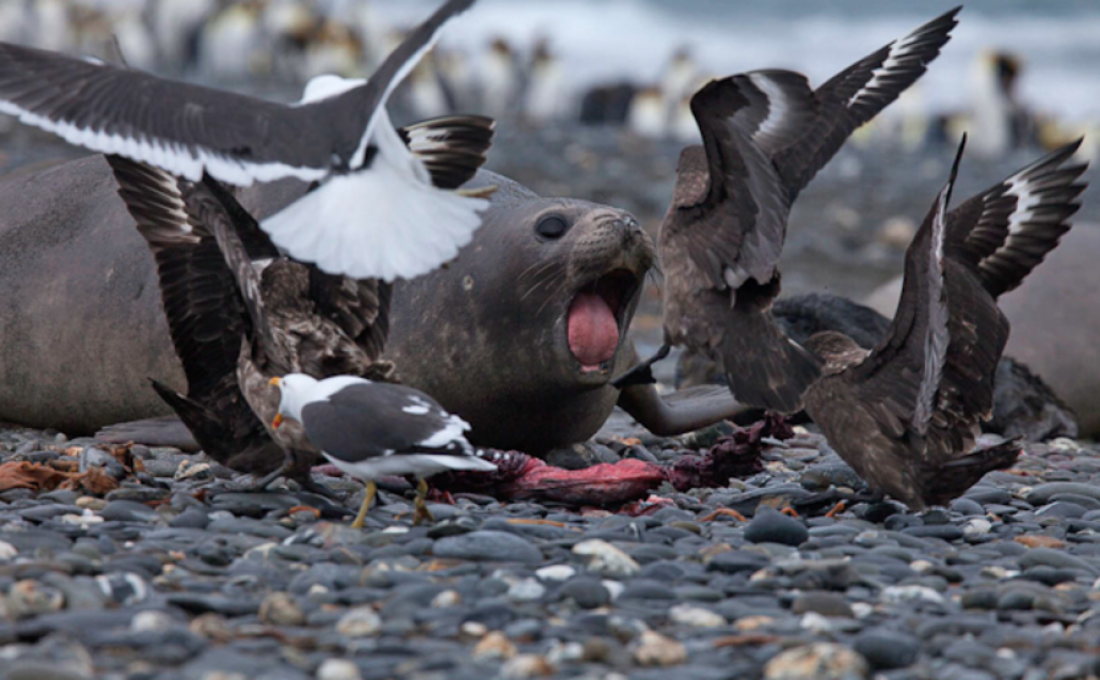
On rare occasions, a southern elephant seal’s decision to haul out in the middle of a penguin colony has resulted in the failure of every one of the colony’s nests. Southern elephant seals can also be dangerous for scientists: If a southern elephant seal wakes up and sees an unfamiliar object, such as a scientist, walking towards them, they’ll open up their large mouths and display their many sharp teeth.

This is usually only meant as a warning, but if they feel especially threatened they’ll vocalize and advance.

At this point, it’s best for the scientist to abandon the survey and find a safe escape route. Southern elephant seals may seem slow, but they can move surprisingly fast (and cause a lot of damage) if they feel threatened.
blog-image

Southern elephant seal conservation concerns

Southern elephant seals were hunted nearly to extinction during the eighteenth and nineteenth centuries, desired for their blubber.

In response to the decline of southern elephant seals and other marine mammals, conservation efforts such as the Marine Mammal Protection Act and Antarctic Treaty were passed. Southern elephant seals have since witnessed a significant increase in population.

But though they are no longer considered vulnerable, southern elephant seal populations have seen downward trends in the modern world.

Scientists predict that changing ocean temperatures have lead to a decrease in food availability for southern elephant seals. Even so, more concrete evidence concerning the unique diet and behavior of southern elephant seals is needed to help researchers understand how to better protect these giants of the sea.

blog-image

Blog
go-leftgo-right

Port Pastimes: 7 Fun Things to Do in Longyearbyen - Nexta Expeditions
Blog

Port Pastimes: 7 Fun Things to Do in Longyearbyen

Waiting in port for an Arctic expedition cruise to begin might seem a little like waiting for water to boil or coffee to brew or a Seinfeld reunion to materialize: Time seems to defy its own laws, life slows to a crawl, and you begin to wonder if it’s really going to be worth it.
A Bug’s Life in Svalbard - Nexta Expeditions
Blog

A Bug’s Life in Svalbard

When you think about Svalbard wildlife, you might imagine reindeer, Arctic foxes, polar bears – the primary animal attractions that draw passengers to an Arctic cruise. But in fact, the Svalbard archipelago is a thriving location for over 1,000 species of terrestrial and freshwater invertebrates: animals that lack backbones. Despite this richness of life, however, these invertebrates are only found in the Isfjord and Kongsfjord areas of these wonderfully diverse islands.
The Eight Great Penguin Species of Antarctica - Nexta Expeditions
Blog

The Eight Great Penguin Species of Antarctica

There are 17 species of penguin on the planet, but the eight you’ll most likely recognize live in Antarctica, its nearby islands, and the sub-Antarctic archipelagos of South Georgia and the Falklands. These are the core species we tend to see on our expedition cruises.
Not Eskimos: 10 Enlightening Facts About the Inuit - Nexta Expeditions
Blog

Not Eskimos: 10 Enlightening Facts About the Inuit

If you are planning to join an Arctic cruise, you might be intrigued by the Inuit culture. To help you gain a deeper understanding of these people, especially if you are considering a trip to Greenland, here are 10 fascinating facts about the Inuit that everyone should know.
Fierce and Feathered: the Skuas of Antarctica - Nexta Expeditions
Blog

Fierce and Feathered: the Skuas of Antarctica

At first glance, the skuas you encounter in Antarctica may appear to be merely darker-feathered seagulls. But looks can be deceiving.
Flowers in Antarctica - Nexta Expeditions
Blog

Flowers in Antarctica

The polar regions are among the most inhospitable environments for plants and animals. Life here faces numerous challenges, including low temperatures, high winds, solar radiation, and cell freezing. The Antarctic continent experiences extreme conditions, with darkness during winter and continuous light during summer. Winter temperatures can drop to -60°C or lower.
12 Tips to Help Keep Birds Safe During an Antarctic Cruise - Nexta Expeditions
Blog

12 Tips to Help Keep Birds Safe During an Antarctic Cruise

One of the most incredible experiences on an Antarctic cruise is observing the numerous penguins in their natural environment. Naturally, passengers often worry about the potential of disturbing the penguins and other Antarctic birds, which could disrupt their breeding and nesting patterns.
10 Weather-Fueled Facts about Antarctica - Nexta Expeditions
Blog

10 Weather-Fueled Facts about Antarctica

Most of us have at least a vague notion of what makes the North and South Poles so brutally, bone-chillingly cold: They receive less sunlight than the rest of the planet, what sunlight they do receive arrives at an angle, and they’re usually buried under endless mounds of ice and snow. This holds especially true for the South Pole and its centerpiece, Antarctica. Fewer people know, however, what drives Antarctic weather, or what results from it. Here are ten weather-related facts about the most southern continent that will put your polar meteorology ahead of the curve.
Amphibian, reptiles and herbivore mammals in the Arctic - Nexta Expeditions
Blog

Amphibian, reptiles and herbivore mammals in the Arctic

Arctic ecosystems are relatively young in geological terms, having primarily developed over the past three million years. Generally, species richness is lower in the Arctic compared to more southerly regions, aligning with scientific observations that biodiversity decreases from the Equator to the poles.
What’s so Special about East Spitsbergen? - Nexta Expeditions
Blog

What’s so Special about East Spitsbergen?

We’ve previously discussed our north Spitsbergen journeys and Spitsbergen circumnavigations, but the eastern parts of this incredible island have not received the attention they deserve. Despite the name, our east Spitsbergen voyages explore much more than just the eastern side of Spitsbergen.
Discover the Scoresby Sund Fjord System in East Greenland - Nexta Expeditions
Blog

Discover the Scoresby Sund Fjord System in East Greenland

Are you considering a trip to Greenland? One destination you absolutely must visit is the world's largest fjord with stunning landscapes: Scoresby Sund.
Ancient Arctic Exploration - Nexta Expeditions
Blog

Ancient Arctic Exploration

When it comes to polar exploration, the Arctic boasts a much longer history compared to Antarctica.
Coming Back from the Brink: The Fur Seals of Antarctica - Nexta Expeditions
Blog

Coming Back from the Brink: The Fur Seals of Antarctica

Once hunted to the brink of extinction, the Antarctic fur seal is now one of the most populous and charismatic species of seal you’re likely to encounter during your Antarctica trips. Unlike other members of its large family, the fur seal has external ears, or pinnae, a short snout, and a thick coat of dark brown fur. Male seals tend to be larger than females, with weights ranging from 91 kg (200 lbs.) to 215 kg (474 lbs.).
Diving in Antarctica: The Ultimate Underwater Experience - Nexta Expeditions
Blog

Diving in Antarctica: The Ultimate Underwater Experience

Ice diving offers an extraordinary experience on an Antarctica diving trip. The dive sites are teeming with a unique array of colorful marine life, including penguins and leopard seals, which are exclusive to this region.
Polar Cruises: The Ultimate Icebreaker - Nexta Expeditions
Blog

Polar Cruises: The Ultimate Icebreaker

Travel is one of life’s great eye openers. It brings you into contact with new people and perspectives, challenges old assumptions you haven’t held to the light in years, and invites you to make unexpected discoveries about the world around you – and most of all, yourself. Added to which, you get to visit places you never knew you loved until you saw them.
The Classic Polar Cruise: Antarctic Peninsula Facts, Pics, and More - Nexta Expeditions
Blog

The Classic Polar Cruise: Antarctic Peninsula Facts, Pics, and More

When it comes to experiencing the vast wonders of Antarctica, the Antarctic Peninsula stands out as an unparalleled destination.
What to pack for your Atlantic Odyssey voyage? - Nexta Expeditions
Blog

What to pack for your Atlantic Odyssey voyage?

When packing, avoid burdening yourself with excessive clothing or gear. Opt for casual, practical attire that can be layered. Consider including the following:
Adélie Penguins: the Little People of the Antarctic - Nexta Expeditions
Blog

Adélie Penguins: the Little People of the Antarctic

Described as “an object of endless pleasure and amusement” by Apsley Cherry-Garrard, survivor of Robert Falcon Scott’s ill-fated Terra Nova expedition to the South Pole, the Adélie penguin stands with the regal and iconic emperor penguin as one of only two penguin species found on mainland Antarctica.
12 Things to Do in Antarctica - Nexta Expeditions
Blog

12 Things to Do in Antarctica

Traveling to Antarctica is unlike traveling to any other place on Earth.
Peaks, Fjords, and Auroras: 14 East Greenland Attractions - Nexta Expeditions
Blog

Peaks, Fjords, and Auroras: 14 East Greenland Attractions

There really aren’t enough superlatives for East Greenland.