
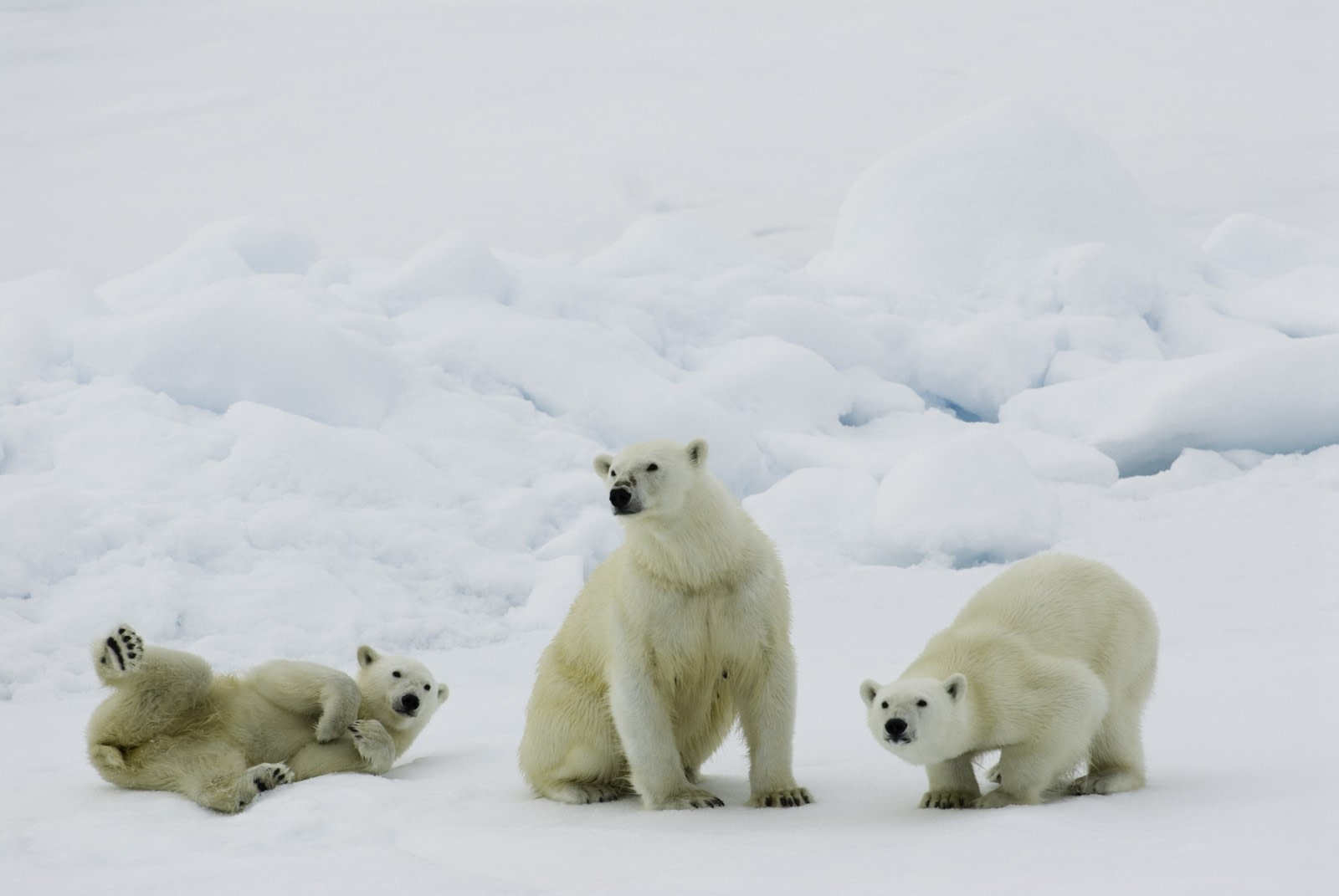
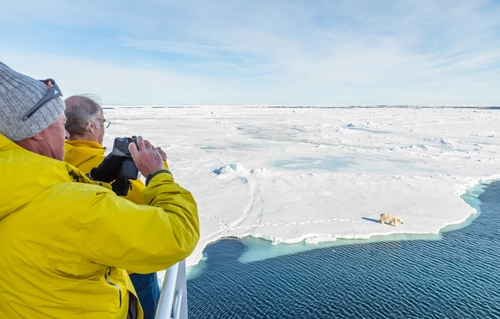
I watch the sea ice from the bridge of a ship in one of the fjords of Spitsbergen, an archipelago north of Norway. I observe a perfectly adapted animal moving on the ice, the results of hundreds of thousands of years of ecological fine-tuning. Snowshoe-sized paws distribute weight, fur handles the cold and sunlight to perfection, and an incredible sense of smell samples this monochromatic realm.
Polar bears searching for prey
The captain guides the ice-strengthened ship carefully in the ice and stops the engine. My privilege is to be an Expedition Leader at such a moment. I see a few polar bears searching for prey. I focused on a mother bear with two newborn cubs. In early summer the inner fjords in Spitsbergen are often covered in fjord ice from the previous winter.
This young stable ice is the preferred habitat for ringed seals and provides ideal hunting habitat for mother bears and their young cubs. On this day, the scenery unfolds under beautiful skies and clear weather conditions, with the bears roaming their environment—a spectacular Arctic scene!
Discipline in a polar bear family
A mother and two cubs move closer to the ship. The ice a bit thin and rotten around her with many holes and leads visible, yet, she seems to know her way, expertly leading the cubs—when to climb an ice ridge, when to jump, when to swim, and when to wait in stillness. All of a sudden she freezes and peers in one direction. She spots a ringed seal on the ice.
There is no movement for a few seconds, then, in slow motion, she turns her head and her cubs immediately hunker down in precise coordination. What is the signal she gave them? Is she just giving them a look or did she make some grunting or sniffing sounds? We will never know, but there is clearly discipline in the family.
Slowly she starts to move toward her target. Sometimes, when the seal looks up to scan the horizon, she freezes at the same moment, hiding her presence. You see her calculating the best way to avoid the open-water holes and routes to stay on the ice without crashing through. She turns her head to check on her cubs, keeping them in sight, and then she lowers herself slowly, backing into the water.
Polar bear hunting strategy
Every hunt is different; the light, the wind, the ice situation, the position of the seal. Every stalk requires its own strategy. She approaches the seal from the water, following open leads. Sometimes she lifts up her head very slowly to take a new bearing and to check on her cubs, who are laying down obediently watching their mom’s “hunting school.”
With her way temporarily blocked by ice she decides to continue her course underneath the ice like a submarine; she dives. After a short moment she emerges, she again takes a bearing and slowly disappears again, under the ice. This repeats itself a few times.
Suddenly the seal gets a sense of something.... it looks around nervously and takes no chance, quickly rolling off the ice into the water. For a moment, I thought this was a lucky seal, it got away. At that instant, the bear comes surging out of the water onto the ice with its prey wriggling between her powerful jaws. Death follows quickly, her skill dominant. The hunting drama completed, her two cubs come running to join the feast. Calorie and fat needs satisfied for another day.
Lucky times for a polar bear family
The mother bear and her two cubs finished the seal kill quickly. There is always a chance that another bear will come and steal it. This time she was lucky, they had it all for themselves. For the next two years the mother will have to share every kill with her offspring.
 24 Apr - 01 May 2026
 01 May - 08 May 2026
 27 May - 05 Jun 2026
 29 May - 05 Jun 2026
 05 Jun - 12 Jun 2026
Related Trips
Alpine Peaks of Spitsbergen, Ski & Sail
24 Apr 2026 - 01 May 2026  8 Days / 7 Nights
Alpine Peaks of Spitsbergen, Ski & Sail
01 May 2026 - 08 May 2026 8 Days / 7 Nights
Arctic Ocean - Fair Isle, Jan Mayen, Ice Edge, Spitsbergen, Birding
27 May 2026 - 05 Jun 2026 10 Days / 9 Nights
North Spitsbergen - Arctic Spring , Hike & Sail
29 May 2026 - 05 Jun 2026 8 Days / 7 Nights
North Spitsbergen Explorer - Into the pack ice - Polar Bear Special
05 Jun 2026 - 12 Jun 2026 8 Days / 7 Nights

Arctic Ocean - Jan Mayen, Ice edge, Spitsbergen, Birding
05 Jun 2026 - 13 Jun 2026 9 Days / 8 Nights
Arctic Ocean - Fair Isle, Jan Mayen, Ice edge, Spitsbergen, Birding - Summer Solstice
12 Jun 2026 - 21 Jun 2026 10 Days / 9 Nights
North Spitsbergen Explorer - Into the pack ice - Polar Bear Special
12 Jun 2026 - 19 Jun 2026 8 Days / 7 Nights
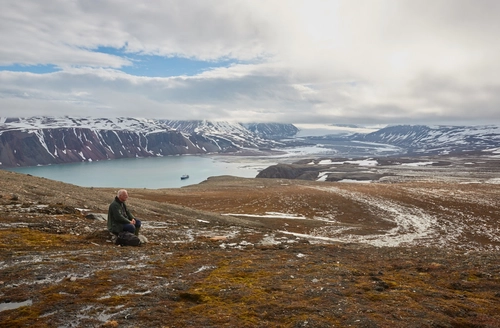
North Spitsbergen Explorer - Versatile landscapes, sea ice & wildlife
13 Jun 2026 - 20 Jun 2026 8 Days / 7 Nights
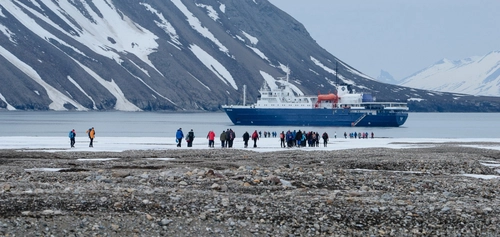
North Spitsbergen Basecamp – Summer Solstice - Free Kayaking, Hiking, Photo Workshop, Diving (supplemented)
19 Jun 2026 - 26 Jun 2026 8 Days / 7 Nights
North Spitsbergen Explorer - Versatile landscapes, sea ice & wildlife - Summer Solstice
20 Jun 2026 - 27 Jun 2026 8 Days / 7 Nights
North Spitsbergen Explorer - Versatile landscapes, sea ice & wildlife - Summer Solstice
21 Jun 2026 - 28 Jun 2026 8 Days / 7 Nights

Blog


Light in the Land of the Midnight Sun
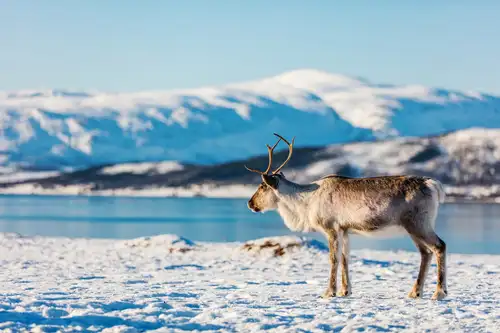
Eight Engaging Reindeer Facts
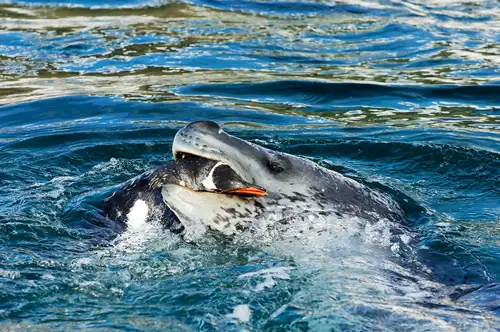
The Wildlife of Antarctica’s Seas and Skies
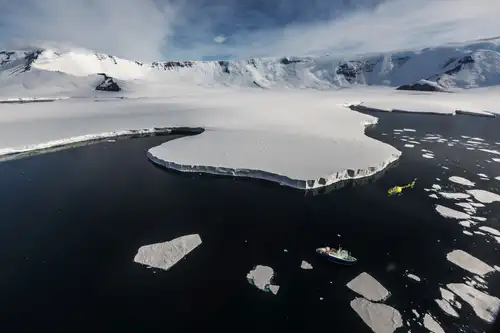
Taking a polar expedition cruise delivers no shortage of show-stopping highlights, but one of the most exhilarating is lifting off from the ship in a helicopter and taking flight over the incomparable Antarctic wilderness.
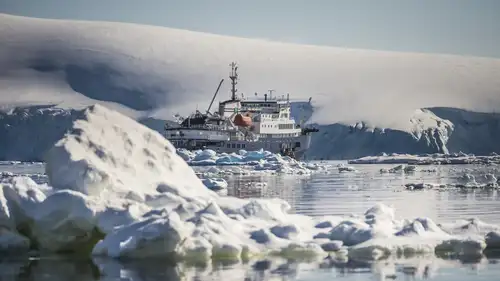
5 Life Lessons You'll Learn in Antarctica
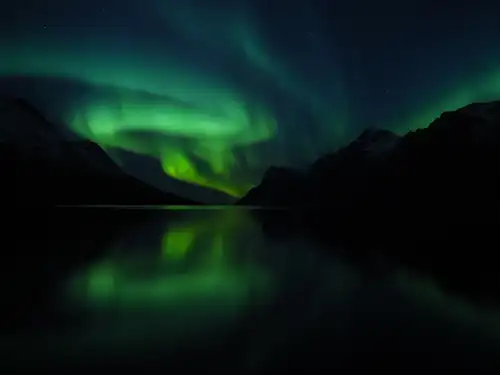
10 Illuminating Facts about the Northern Lights
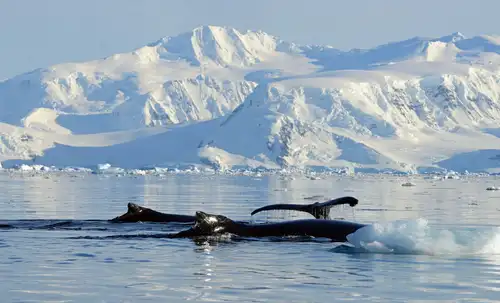
Humpback Whales: the Stars of the Western Antarctic Peninsula
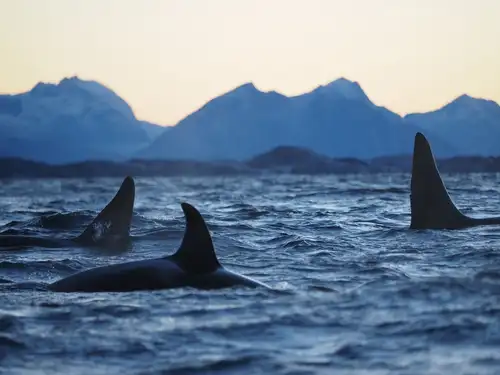
Orcas of the Polar Seas
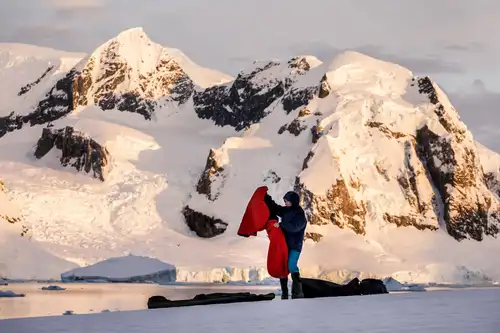
Camping in Antarctica: a True Expedition Experience
Port Lockroy: History, Post Office, and Resident Penguins
10 Books and Films To Prepare for your Antarctica cruise
Arctic on Foot: Hiking and Snowshoeing the Far North
12 Tips to Help Keep Birds Safe During an Antarctic Cruise
The Best Arctic and Antarctic Trips for Families
The Mysteries of the Beluga Whale
Seven Things to Do around Ushuaia
Tracking Greenland’s Wildlife from Space
The First Overwintering Hut in Antarctica
All things ice in the Antarctic