

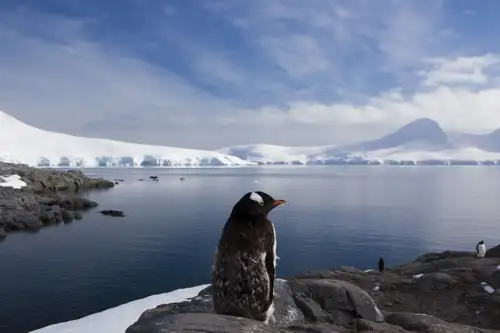
Captain Pieter J. Lenie Base, also known as Base Copacabana or simply Copa Base, is situated on King George Island off the western shores of the Antarctic Peninsula. This American research station has been home to scientists studying Adélie, gentoo, and chinstrap penguins for over three decades, aiming to understand how to best conserve these cherished species.
To achieve this, scientists need to gather extensive information about the behavior of these penguins. For six frigid months, Copa Base researchers bundle up and venture into the often-harsh Antarctic wilderness to observe penguin colonies at the start of their breeding season, which occurs in the Southern Hemisphere (austral) spring.
Establishing a mate is a top priority for penguins looking to breed. Male penguins arrive on shore in October, coming from their feeding grounds at sea, and form sizable colonies. Males arrive before females, building nests to attract mates using small rocks gathered from the nearby shore.

Over the next several weeks, male penguins add to their nests and may even decorate them with fish bones and seaweed. Some penguins are a bit sly, stealing rocks from their neighbors to speed up construction. If a penguin abandons his nest for any reason, neighboring penguins will quickly take over the rocks.
As male penguins finish their nests, females begin to arrive, and it's time to find a mate. Adélie and chinstrap penguins attract each other by vigorously wagging their heads back and forth while loudly vocalizing. It’s a noisy courtship, especially since penguin colonies can consist of many thousands of individuals, but it works nonetheless.
Gentoo penguins have a gentler approach. They begin their courtship by bowing to their potential mate, hissing, and sometimes nuzzling beaks. If the hiss is not executed correctly or the bow lasts too long, the penguins will walk away from each other and try again with another candidate. In a penguin colony, there are no hurt feelings.

Every season, there are occasional bachelors or bachelorettes that just can’t seem to find a mate. These singletons are free to do whatever they please for the rest of the breeding season and are often found lounging among the rocks or carelessly strolling until it’s time to migrate again.
Several days after males have finished their nests and found mates, females lay one to two eggs. They then return to sea to feed again while the males keep the eggs warm by placing them on their feet and sheltering them under skin flaps below their bellies.
This is an especially exciting time for the scientists, as this is when data collection can really begin. Sometimes, to properly count all the eggs within a penguin colony, scientists will lift the tail feathers of some penguins and sneak a quick peek. In penguin colonies, hurt feelings are as rare as embarrassment, and the seabirds do not often mind.

One of the questions researchers ask during their studies concerns Adélie nest attendance. The time penguins spend foraging can give scientists an idea of the distance traveled to find a suitable source of krill, the Adélie penguin’s primary food source. Answering this question requires a lot of walking around the penguin colonies and observing individual nesting pairs. Sometimes scientists take a whack to the legs for their trouble.
To deter intruders, penguins often “flipper flap” anyone who comes too close. Their flippers, though thin, are extremely strong, powered by thick pectoral muscles that they use primarily for swimming. Getting beaten repeatedly by a penguin is one of the more painful aspects of research.
When chicks begin to hatch, it is up to adult penguins to catch enough krill to feed them. This means longer foraging trips away from the nest and penguin colony. Adult penguins have the ability to detect their chicks even in penguin colonies numbering in the tens of thousands, returning fattened with food that they can regurgitate to their young.

Penguin bellies grow so large, in fact, that they sometimes make it difficult for the seabirds to get through narrow cracks and crevices in the ice. Scientists call this bloated look “krill gut.” It may not work on the catwalk, but it’s an exciting sight for a hungry chick.
The feeding frenzy continues at the penguin colony for a few weeks, and it becomes exhausting for scientists to keep track of the penguins’ patterns. Fitting some of the penguins with a satellite transmitting device (Platform Transmitter Terminal, or PTT), researchers can record the location and diving depths of penguins when they are out foraging.
This may sound like an easy task, but it’s not. It usually takes one scientist to catch a penguin with a net, then two more scientists to carefully hold on to the penguin while the tag is attached. The tag, roughly the size of a small candy bar, is fitted onto the lower back of the penguin with epoxy glue. This reduces drag while the penguin swims and causes no harm to the animal, as the feathers that the glue adheres to are shed at the end of summer.

The tags begin recording data as soon as they are attached and will not be seen again until the penguins return from their foraging trip. Upon returning to the penguin colonies, foragers carrying tags must be immediately recaptured and relieved of their data. Though the net is an unfortunate necessity, the tag comes off painlessly with a small pair of scissors.
Some penguins decide to migrate to different locations with their tags still attached. Others lose them in the middle of the ocean. There is never a 100% success rate with this method of data collection, but it’s currently the best technology that exists for such studies.
As the months pass, the time comes for adult penguins to start teaching their young how to survive on their own. The chicks have already formed into small groups, or crèches, where they learn various behaviors. Adults do not stray far from them during this period and are often found on the perimeter of these crèches, guarding their young from predators.

While it’s important for adult penguins to keep an eye on their young, it is even more important to teach them self-reliance. Weaning chicks off freely provided krill is no easy task, however. Hungry chicks can often be seen chasing their parents or other adult penguins down the beach, begging for a handout. Even with their short legs, penguins can move surprisingly fast.
Eventually, young penguins start walking around together, learning how to swim in the shallow pools of glacial run-off, and cautiously inspecting anything that resembles krill. Soon they will molt their chick-fuzz and grow their waterproof adult feathers so that they can begin their own krill hunts through the frigid ocean waters. Though krill is usually numerous, it is not getting easier to find.
Tiny shrimp-like crustaceans, krill are one of the primary food sources for most penguins. They are found in the open ocean or aggregating under the sea ice, feeding on plankton and algae. Recent studies have indicated that rising global temperatures have significantly decreased Antarctic Peninsula sea ice. Without this critical habitat, krill populations have sharply declined, putting more stress on penguin populations.
These are concerns that further underscore the importance of understanding life in a penguin colony, which is one of the planet’s most fascinating societies and a beloved sight among both our expedition guides and guests.

 21 Dec - 08 Jan 2026
 28 Dec - 09 Jan 2026
 29 Dec - 10 Jan 2026
 08 Jan - 18 Jan 2026
 09 Jan - 19 Jan 2026
Related Trips
Falkland Islands - South Georgia - Antarctica
21 Dec 2025 - 08 Jan 2026  19 Days / 18 Nights
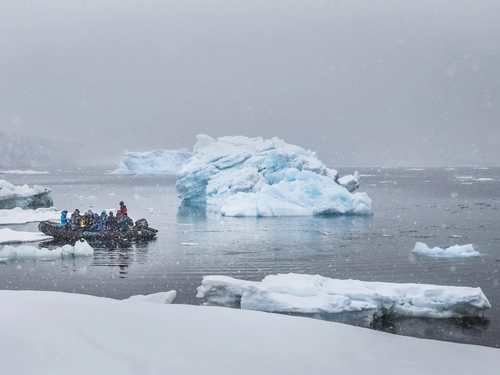
Antarctica - Basecamp - free camping, kayaking, snowshoe/hiking, mountaineering, photo workshop
28 Dec 2025 - 09 Jan 2026 13 Days / 12 Nights
Antarctica - Basecamp - free camping, kayaking, snowshoe/hiking, mountaineering, photo workshop
29 Dec 2025 - 10 Jan 2026 13 Days / 12 Nights
Antarctica - Discovery and learning voyage
08 Jan 2026 - 18 Jan 2026 11 Days / 10 Nights
Antarctica - Discovery and learning voyage
09 Jan 2026 - 19 Jan 2026 11 Days / 10 Nights
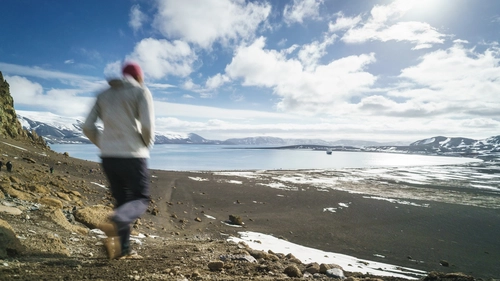
Antarctica - Discovery and learning voyage
18 Jan 2026 - 28 Jan 2026 11 Days / 10 Nights
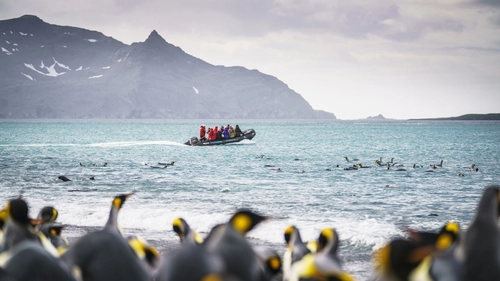
Falkland Islands - South Georgia - Antarctica
19 Jan 2026 - 06 Feb 2026 19 Days / 18 Nights
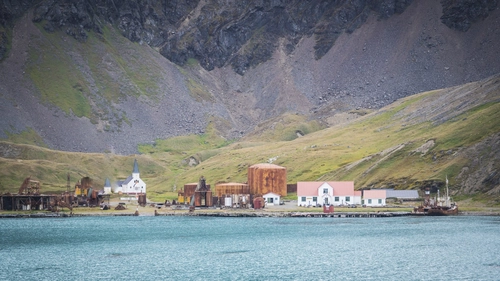
Falkland Islands - South Georgia - Antarctica
28 Jan 2026 - 16 Feb 2026 20 Days / 19 Nights
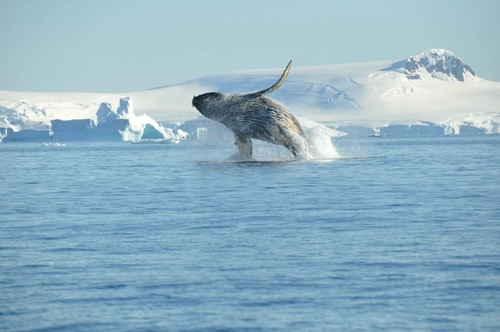
Antarctica - Discovery and learning voyage
06 Feb 2026 - 16 Feb 2026 11 Days / 10 Nights
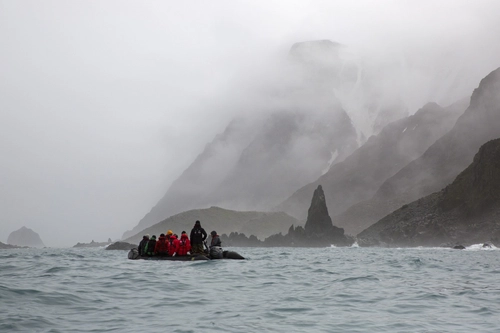
Falkland Islands - South Georgia - Elephant Island - Antarctica - Polar Circle
16 Feb 2026 - 10 Mar 2026 23 Days / 22 Nights
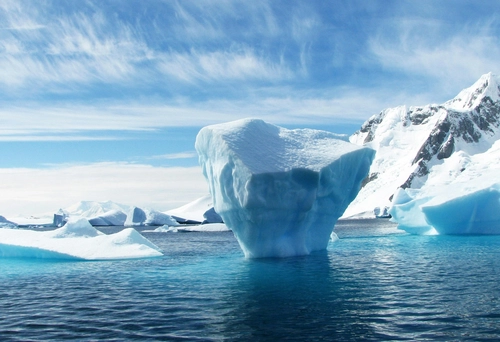
Antarctica – Uncharted islands of the Deep South
18 Feb 2026 - 04 Mar 2026 15 Days / 14 Nights
Deep South Basecamp experience
04 Mar 2026 - 17 Mar 2026 14 Days / 13 Nights

Blog


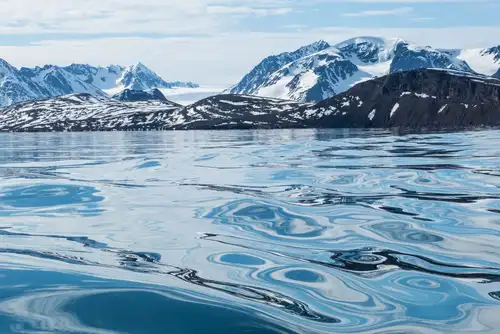
Freshwater ecosystems in the Arctic
Guidelines for visitors to Antarctica
Ancient Arctic Exploration
The Eight Albatrosses of Antarctica and the Sub-Antarctic
The Return to Franz Josef Land
Top 10 Tips for Packing Your Polar Photography Equipment

15 Fantastic Photos of Antarctica
Seven Tips to Get the Most out of Your Expedition Cruise
All About Ice: Glaciers and Icebergs of the Arctic and Antarctica
Birding Opportunities Abound in Spitsbergen
Northeast Greenland National Park
Five Reasons Why Snowshoeing is a Perfect Polar Activity
Churches in Antarctica
The Impact of Small vs. Large Cruise Ships
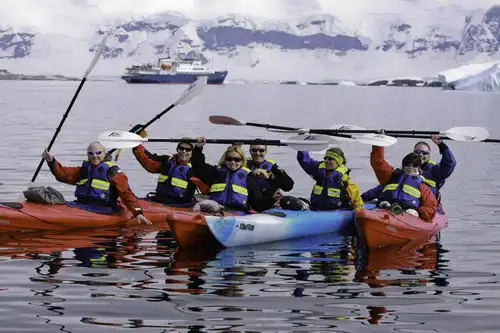
A Day of Basecamp in Antarctica – Paradise Harbour
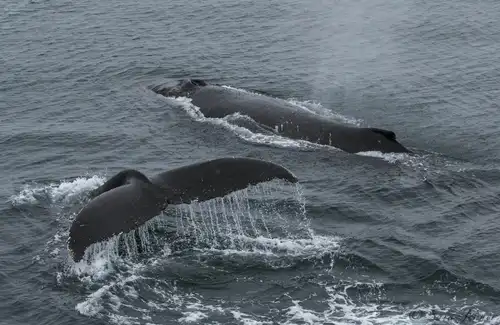
Polar Marine Visitors: the Whales of Antarctica and the Arctic
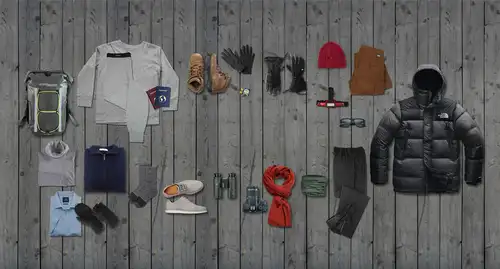
What to Pack for Your Expedition Cruise to the Arctic or Antarctica
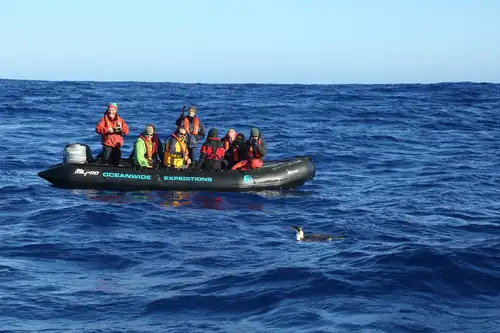
The Emperor Penguin of the Drake Passage
Keep It Green: Our Commitment to Sustainable Polar Travel