The Impact Of Small Vs Large Cruise Ships - Nexta Expeditions
The Impact of Small vs. Large Cruise Ships

The Impact of Small vs. Large Cruise Ships

The generalization that larger ships impact the environment more than smaller ships seems like such a no-brainer that if someone said it to you, you’d be easily forgiven for thinking you were being tricked.

Well, you’re not.

Larger ships do tend to impact the environment more than smaller ships, especially passenger-packed cruise ships – though obviously there are many exceptions, which we’ll address later.

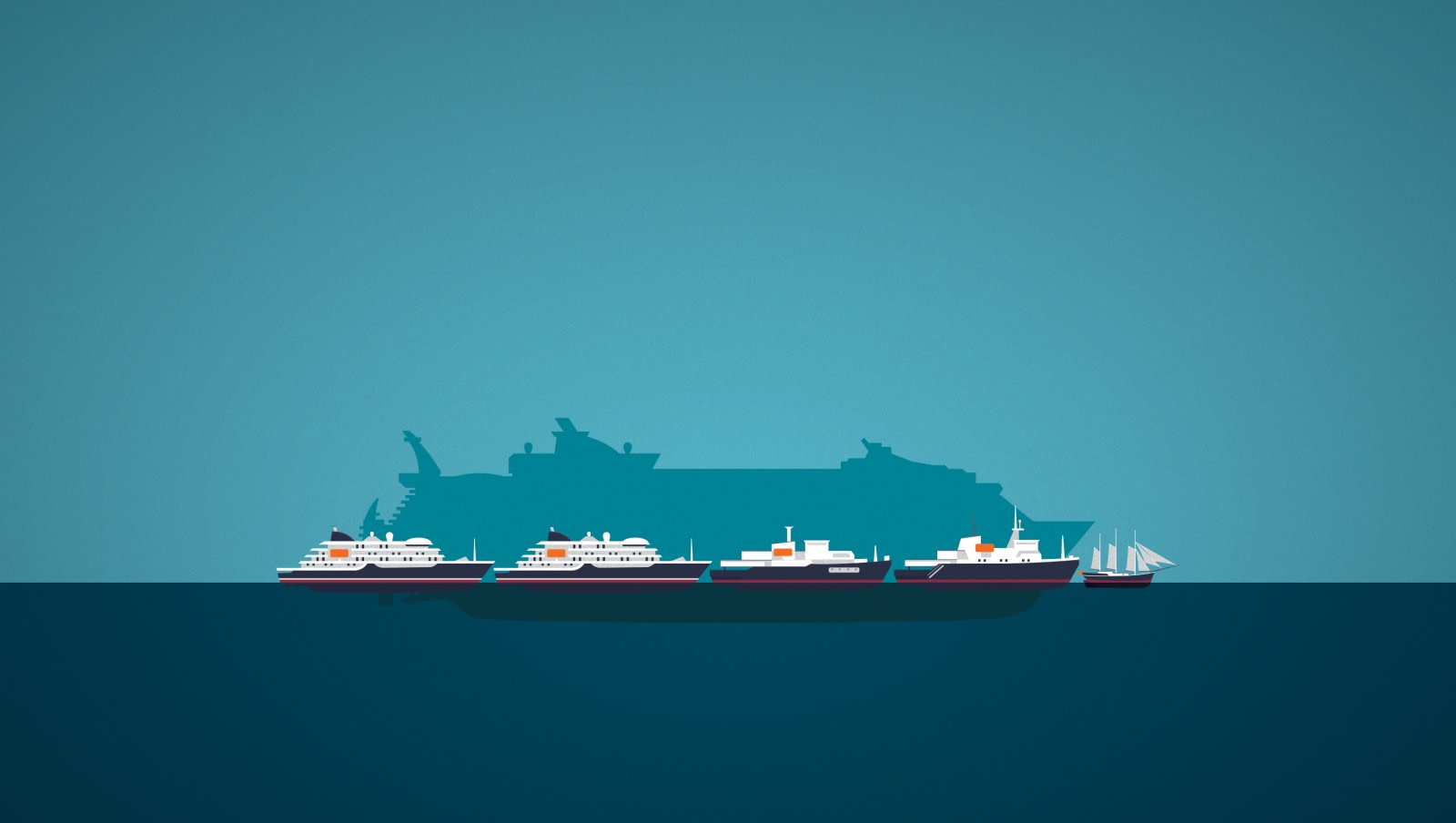
Here a few ways larger cruise ships (thousands of passengers) impact the environment more than smaller ones (100 – 200 passengers), followed by a few ways they don’t.
blog-image

Fewer passengers per cruise ship

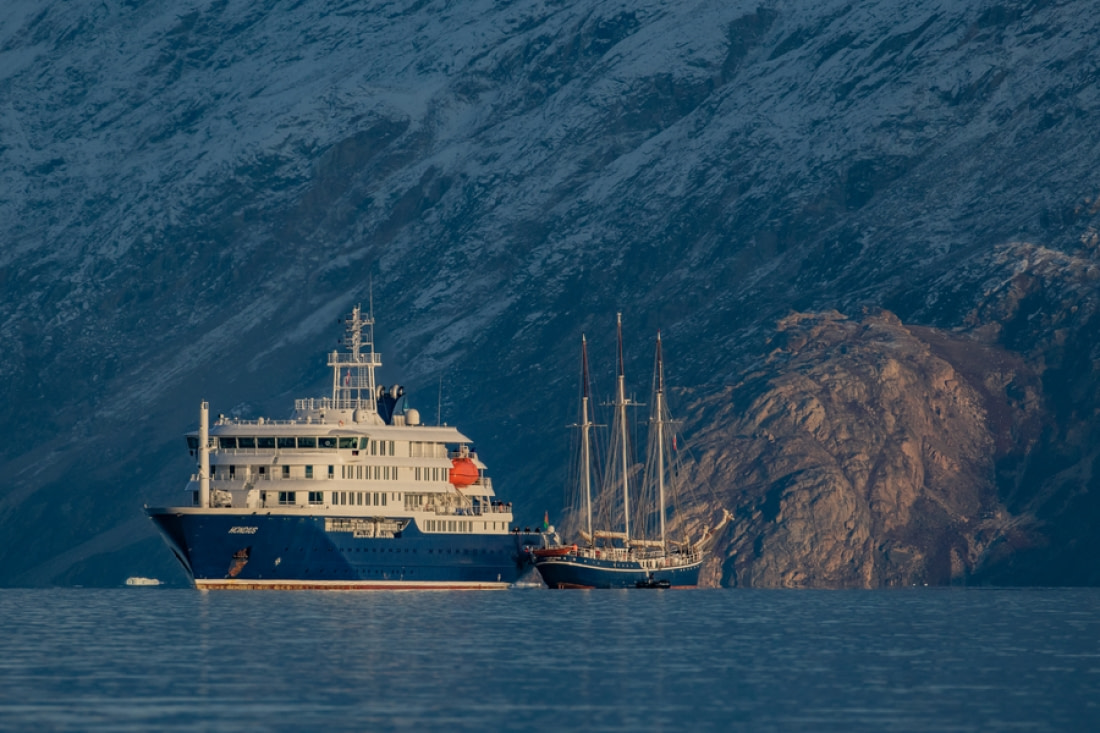
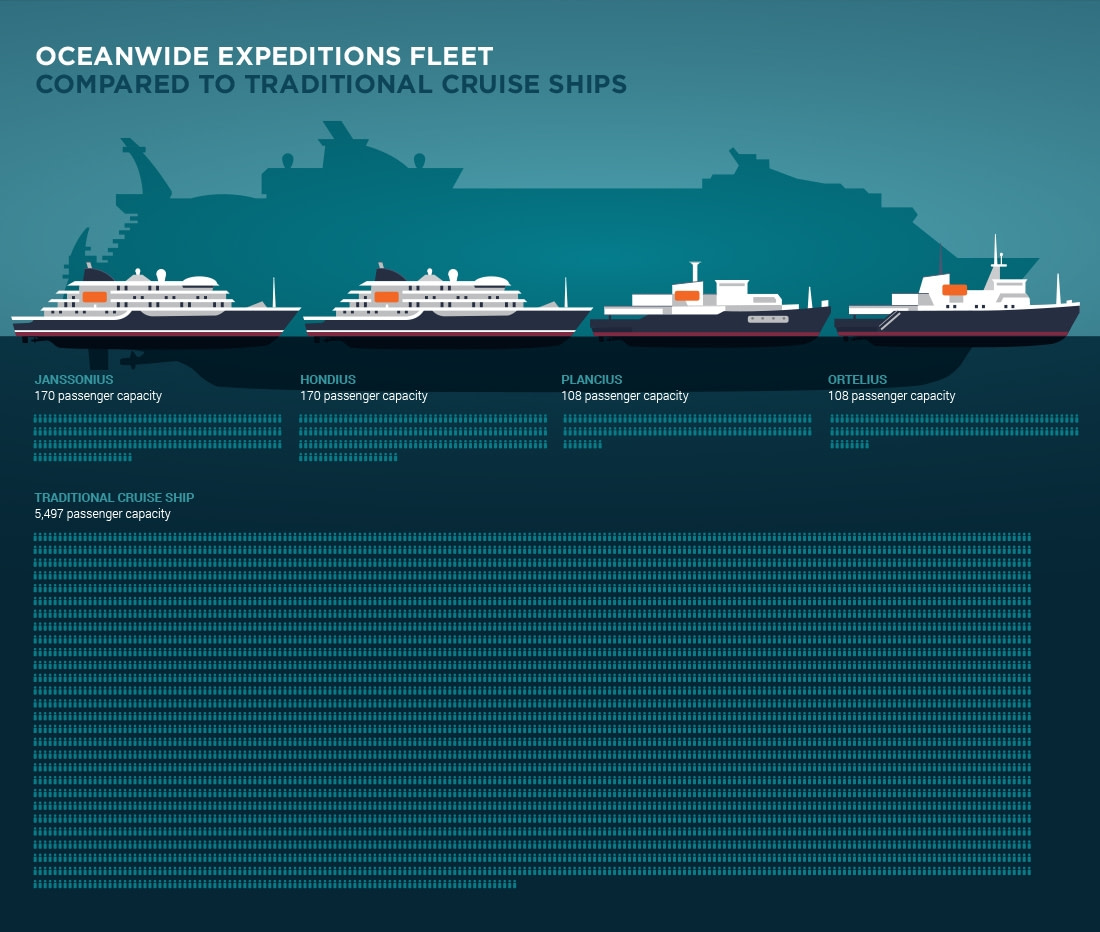
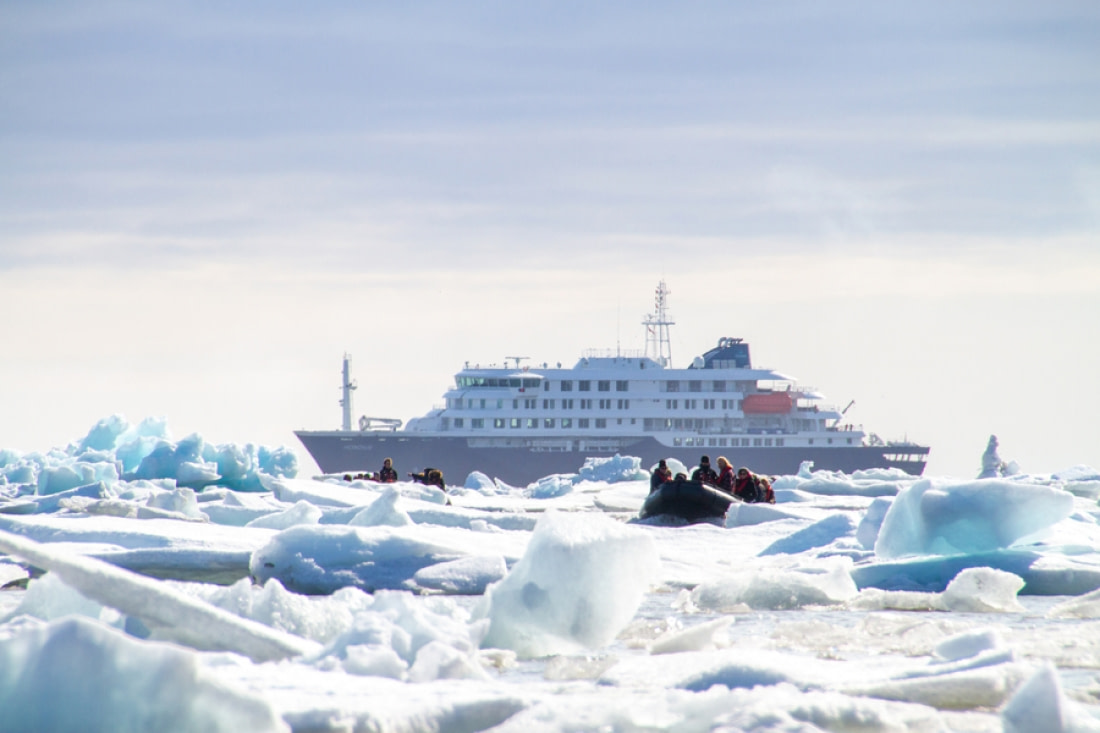
The largest of our ships, m/v Hondius, carries 174 passengers. The smallest, s/v Rembrandt van Rijn, carries only 33.

Compare that to traditional cruise ships, the largest of which carry well over 5,000 passengers, not including entertainment staff and crew.

You don’t have to be a mathematician to see that such a large passenger load will by necessity generate far more environmental impact than several smaller ships ever could, assuming they are of equivalent technological sustainability.
blog-image

Cruise ship fuel consumption

You also don’t have to be an engineer to see that hauling thousands of people requires more fuel than carrying fewer than two hundred. Some estimates put the larger cruise ships at up to 250 tons of fuel burned per day (roughly 80,000 gallons).

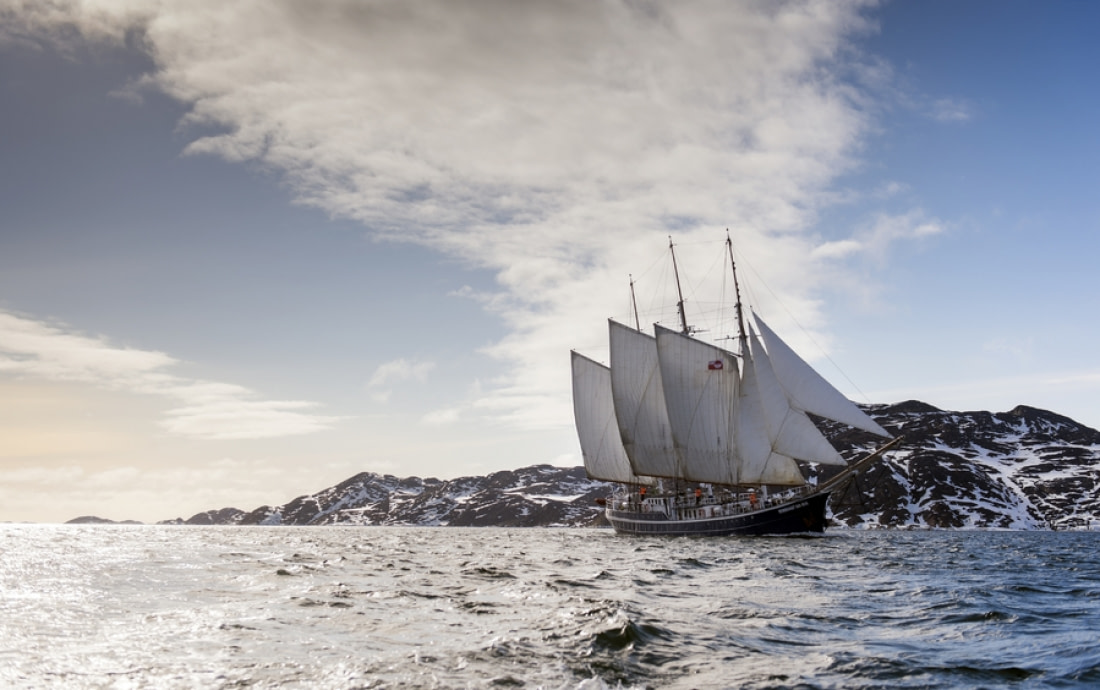
Meanwhile, our schooner Rembrandt van Rijn can sometimes sail by wind power during parts of its voyages, if the weather cooperates.
blog-image

Assisting with climate science on cruise ships

Lastly, one of the side benefits of polar expedition cruise ships is that they’re often refurbished research vessels. This means they can easily be used again for such purposes in a limited way, such as when scientists need to do small-scale polar work.

We often have researchers on board who are experts in such fields as glaciology, meteorology, and other climate-related sciences. Indeed, our guides often have backgrounds in these fields.

Two of the specific projects we have assisted with recently include the placement of Argo weather profilers and the study of invasive species.
blog-image

We’re also devoted participants of waste removal efforts like Clean Up Svalbard and the Clean Seas campaign. And we are proud, active, longtime members of both AECO and IAATO, with many of our principal colleagues serving in chief positions within these organizations.

So if you’re considering either an Arctic or Antarctica cruise, thinking small can (in most cases) help us keep the polar regions closer to how they were before we ever set foot in them.

Why cruise ships aren’t always better when smaller

This is as much a no-brainer as our main premise, because clearly there are multiple reasons smaller ships are better for the environment.

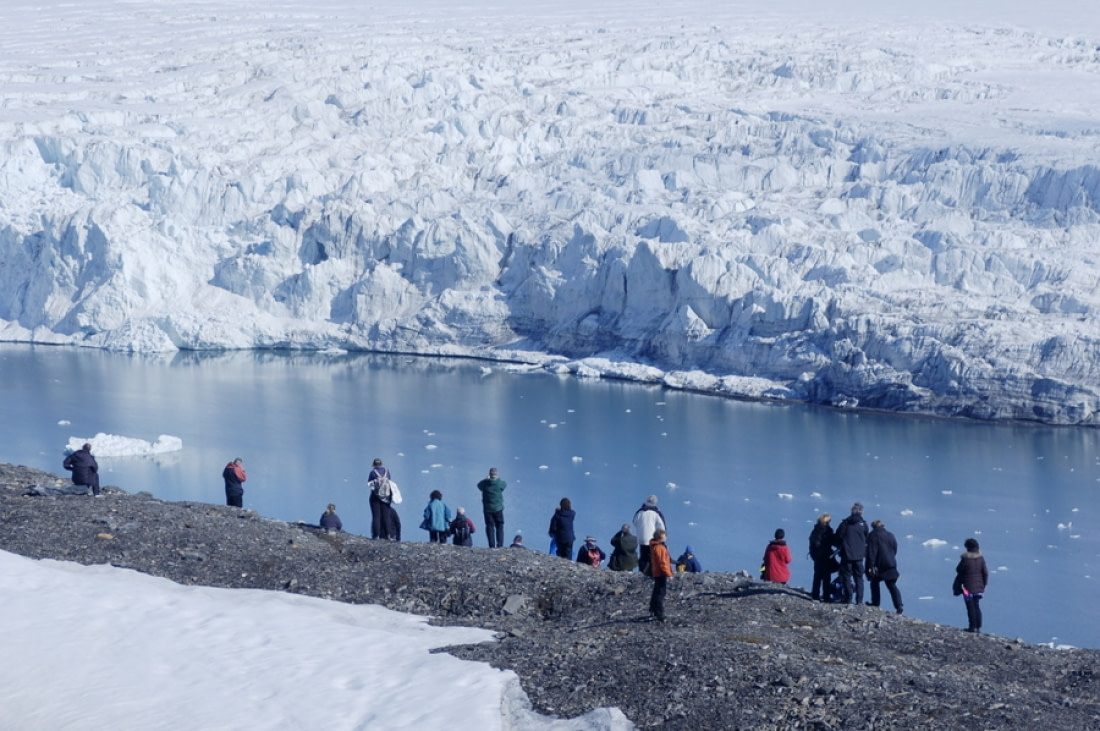
Indeed, carbon emissions per passenger usually drop with larger cruise ships compared to smaller ones. But much of our impact in the polar regions comes from our landing groups, and in this regard larger cruise ships (thousands of passengers) are not really applicable, since they wouldn’t be able to make landings there anyway.

This is because there is a rule of AECO and IAATO that states there can be no more than 100 guests on shore at any one time, regardless of whether your ship holds 100 or 500 – the current limit that a ship can be classified as an expedition cruise vessel.

So clearly, it’s not so black and white as simply “small vs. large.”
blog-image

Sure, we come out favorably if we compare our ships with those that hold 5,000 people or more. But if you take 5,000 people to Antarctica or the Arctic on one of our ships and compare the impact in CO2 emissions and landings, it’s likely we would have the greater impact.

The issue, then, becomes more about sustainable technology and the reduction of non-degradable waste than ship size, which is why we’re currently in the process of reducing single-use plastics on our ships, among other sustainability efforts.

However you measure it, impact is a complex and systemic issue that requires equally systemic and complex solutions.

blog-image

Blog
go-leftgo-right

11 South Orkney Animals: Whales, Seabirds, and Penguins Aplenty - Nexta Expeditions
Blog

11 South Orkney Animals: Whales, Seabirds, and Penguins Aplenty

The South Orkney Islands are often overlooked as a destination for Antarctic travel.
Arctic and Antarctic Basecamp Cruises – Choose Your Own Adventure - Nexta Expeditions
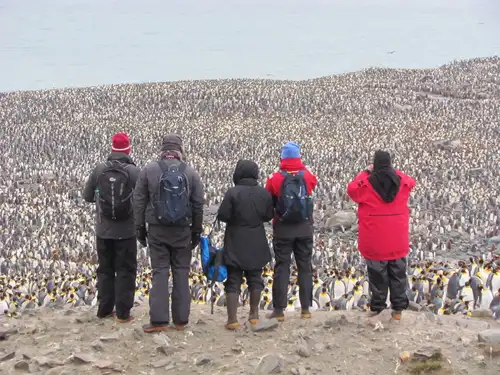
Blog

Arctic and Antarctic Basecamp Cruises – Choose Your Own Adventure

There’s an astonishing variety of activities to choose from when planning an Arctic trip or Antarctic cruise, which can be a bit overwhelming. How do you choose just one voyage over another when you want to experience everything? Happily, you don’t have to give up one activity for another. Basecamp cruises have you covered.
Scenes from St. Andrews Bay:  12 Pics of Penguins, Seals, and More - Nexta Expeditions
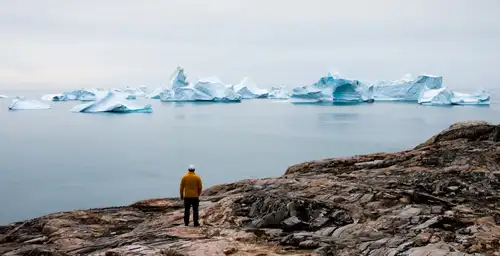
Blog

Scenes from St. Andrews Bay: 12 Pics of Penguins, Seals, and More

If you ever find yourself exploring the breathtaking sub-Antarctic island chain of South Georgia, one of the most captivating spots you'll encounter is the picturesque shoreline of St. Andrews Bay.
Tracking Greenland’s Wildlife from Space - Nexta Expeditions
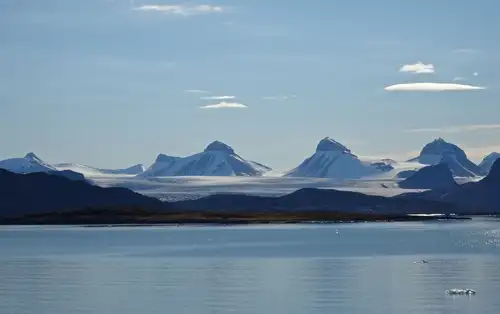
Blog

Tracking Greenland’s Wildlife from Space

Despite Greenland’s harsh environment, life has found a way to thrive there. If you’re lucky enough to embark on a Greenland cruise, you stand the chance of encountering many species of cold-adapted mammals, birds, and fish.
The Arctic Borderland of Kongsfjorden, Svalbard - Nexta Expeditions
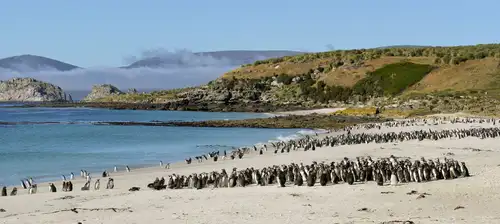
Blog

The Arctic Borderland of Kongsfjorden, Svalbard

Kongsfjorden is a glacial fjord in Svalbard that hosts a diverse array of flora and fauna.
17 Reasons to Cruise the Falklands - Nexta Expeditions
Blog

17 Reasons to Cruise the Falklands

Maybe you’ve already marveled at the colossal penguin colonies of South Georgia, sailed among the plunging seals of the Antarctic Peninsula, and watched whales in the Weddell Sea lunge among titanic tabular icebergs.
Churches in Antarctica - Nexta Expeditions
Blog

Churches in Antarctica

'Below 40 degrees South there is no law; below 50 degrees South, there is no God', goes the old adage. When faced with a storm in the turbulent and freezing waters of the Drake Passage, one might think so.
Weddell Sea: the Original Antarctic Adventure - Nexta Expeditions
Blog

Weddell Sea: the Original Antarctic Adventure

According to historian Thomas R. Henry, visiting the Weddell Sea requires a brave heart. In his 1950 book, "The White Continent," he described sudden “flash freezes” that occur in the region. It was one of these flash freezes that trapped Ernest Shackleton’s ship, Endurance, in January 1915, forcing his crew to endure over a year in the harsh environment before they could escape.
Large and in Charge: Antarctica’s Southern Elephant Seals - Nexta Expeditions
Blog

Large and in Charge: Antarctica’s Southern Elephant Seals

Southern elephant seals are the largest species of seal on the planet and a highlight among Antarctica cruise wildlife.
The Evolving Shipboard Eco-traveler - Nexta Expeditions
Blog

The Evolving Shipboard Eco-traveler

Feeling stuck in the monotony of everyday life? Looking for a change of scenery? Look no further! Most of us spend our lives on solid ground, despite our bodies being composed of 71.5% water. You'd think we'd have a natural inclination to be in or on the water! So why not try something different? Consider an Arctic holiday adventure on the same waters that famous explorers once navigated!
Birds of the South: 33 Antarctic Birds and Seabirds - Nexta Expeditions
Blog

Birds of the South: 33 Antarctic Birds and Seabirds

Of the many compelling reasons people travel to Antarctica and the sub-Antarctic, bird life is among the most beloved.
Svalbard’s Texas Bar - Nexta Expeditions
Blog

Svalbard’s Texas Bar

Texas Bar is one of the historic areas we visit on certain Svalbard trips, and it always proves to be a cherished landing site among both our guides and guests. This might be surprising, however, given that its name can be a bit misleading.
Light in the Land of the Midnight Sun - Nexta Expeditions
Blog

Light in the Land of the Midnight Sun

The midnight sun, also referred to as the polar day, is a fascinating natural event observed within the Arctic and Antarctic circles. During the polar summer, the sun remains above the horizon for 24 hours a day, resulting in continuous daylight without any sunrise or sunset. This phenomenon occurs due to the Earth's seasonal tilt towards the sun during the summer months in these regions.
Top 10 Antarctic Attractions - Nexta Expeditions
Blog

Top 10 Antarctic Attractions

There’s a reason people go to such lengths to visit Antarctica, and its abundance of whales, seals, penguins, and seabirds are only part of the polar story.
Secrets of the Snowy Owl: Habitat, Adaptations, and Other Facts - Nexta Expeditions
Blog

Secrets of the Snowy Owl: Habitat, Adaptations, and Other Facts

The snowy owl (Bubo scandiacus), also known as the great white owl or Arctic owl, is one of the most distinctive bird species on the planet. While you won’t find them in all areas of the Arctic – they don’t exist in Svalbard due to the lack of lemmings – snowy owls are seen in the polar regions of Eurasia and North America and are a potential visitor during Greenland cruises. The binomial species name, “scandiacus,” is derived from Scandinavia, as this is where the bird was first discovered. The snowy owl is the official bird of Quebec, and they are a must-see for countless bird watchers and naturalists.
Camping in Antarctica: a True Expedition Experience - Nexta Expeditions
Blog

Camping in Antarctica: a True Expedition Experience

We often think of camping as a summer activity, filled with warm nights, campfire dinners, and serene mountain lakes. However, there's a whole other world of camping to explore.
True South: A New Flag for a Global Antarctica - Nexta Expeditions
Blog

True South: A New Flag for a Global Antarctica

When Evan Townsend signed up to spend the winter of 2018 working at an Antarctic research station, he had no reason to expect he would end the season by designing a new flag for the continent. He had even less reason to expect the support it would receive.
Northeast Greenland National Park - Nexta Expeditions
Blog

Northeast Greenland National Park

Northeast Greenland National Park is the world’s largest national park and the ninth largest protected area on Earth. It should come as little surprise, then, that it’s also bigger than most countries, covering an impressive 972,000 square km (375,300 square miles).
Danger Beneath the Water: 10 Facts About Leopard Seals - Nexta Expeditions
Blog

Danger Beneath the Water: 10 Facts About Leopard Seals

If your thirst for adventure leads you to Antarctica, you may be lucky enough to cross paths with a leopard seal while you’re there. These amazing animals are wonderful to observe both in and out of the water, and they are a coveted part of the polar wildlife experience.
The secrets of Antarctic seals revealed - Nexta Expeditions
Blog

The secrets of Antarctic seals revealed

There are only six species of seals that inhabit the Antarctic: Southern elephant seals, Antarctic fur seals, crabeater seals, leopard seals, Ross seals, and Weddell seals. While we are familiar with these species, much about their lives remains a mystery.