
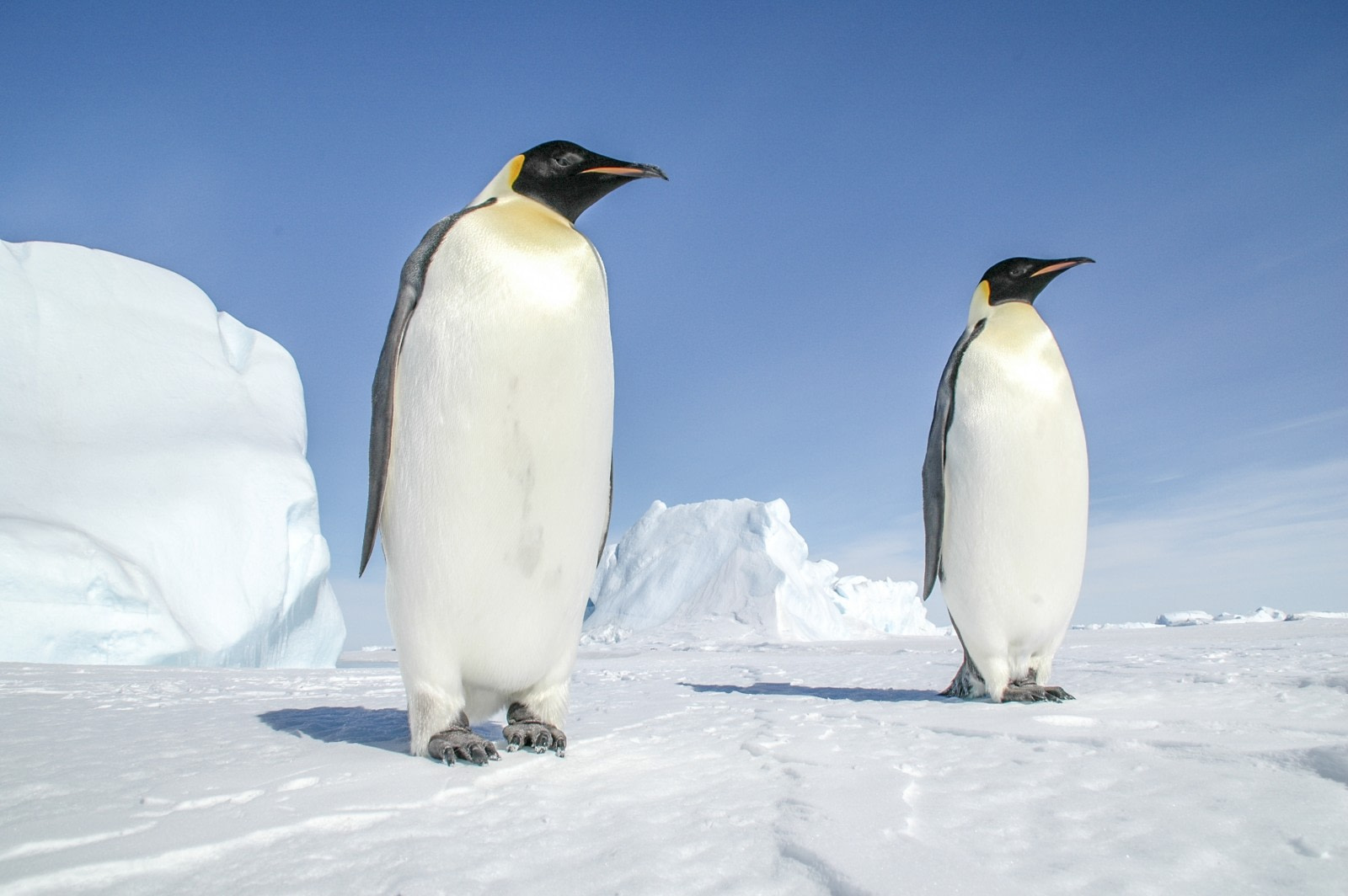
What polar bears are for the Arctic, emperor penguins are for Antarctica. These flightless aquatic birds are probably the most recognizable animals in the southern polar regions and certainly among the most popular wildlife attractions for our passengers.
They also happen to be the largest, deepest diving, and hardiest species of penguin (at least in terms of breeding) on the planet, adorned with the classic “tuxedo” appearance we all know and love. But popular as emperor penguins are, we’ve only just scraped the surface in terms of the facts that make them so fascinating.
That’s why we have created this massively detailed list of our 44 favorite emperor penguin facts, quite possibly the largest of its kind on the internet. All the below facts about emperor penguins have been neatly categorized and divided into easy-to-digest bullet points, the perfect pre-trip primer for your own Antarctic emperor penguin adventure!
Emperor penguin height, weight, appearance, lifespan, and genus
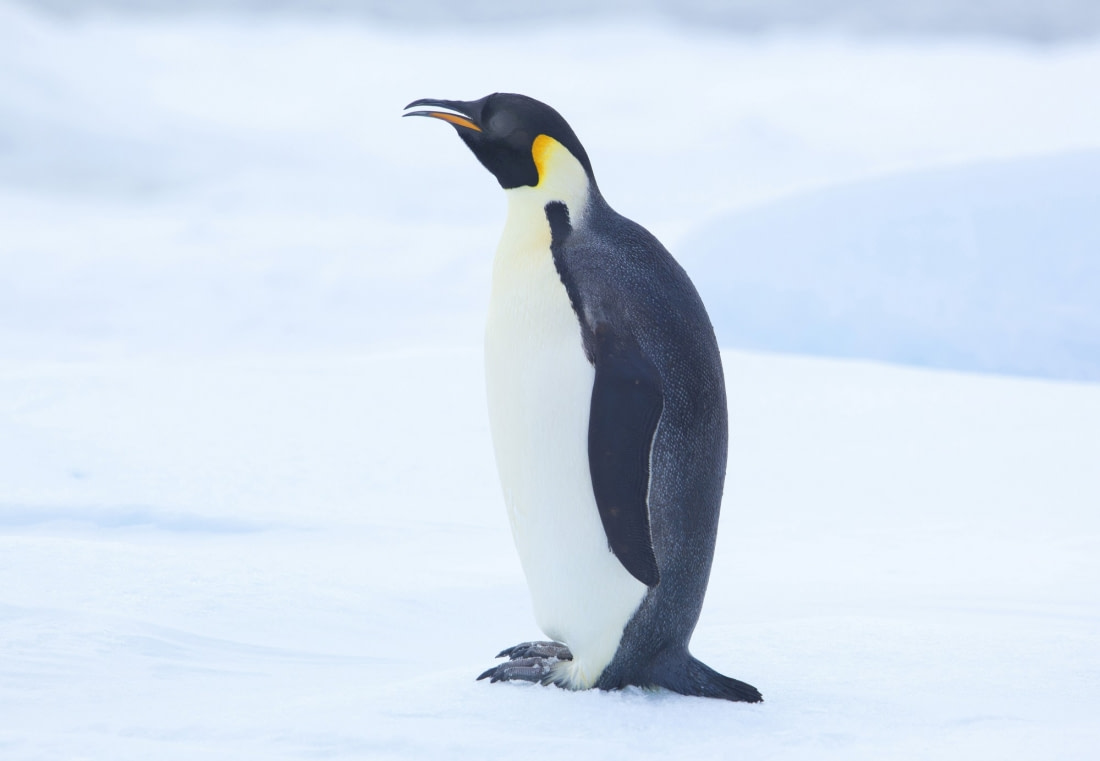
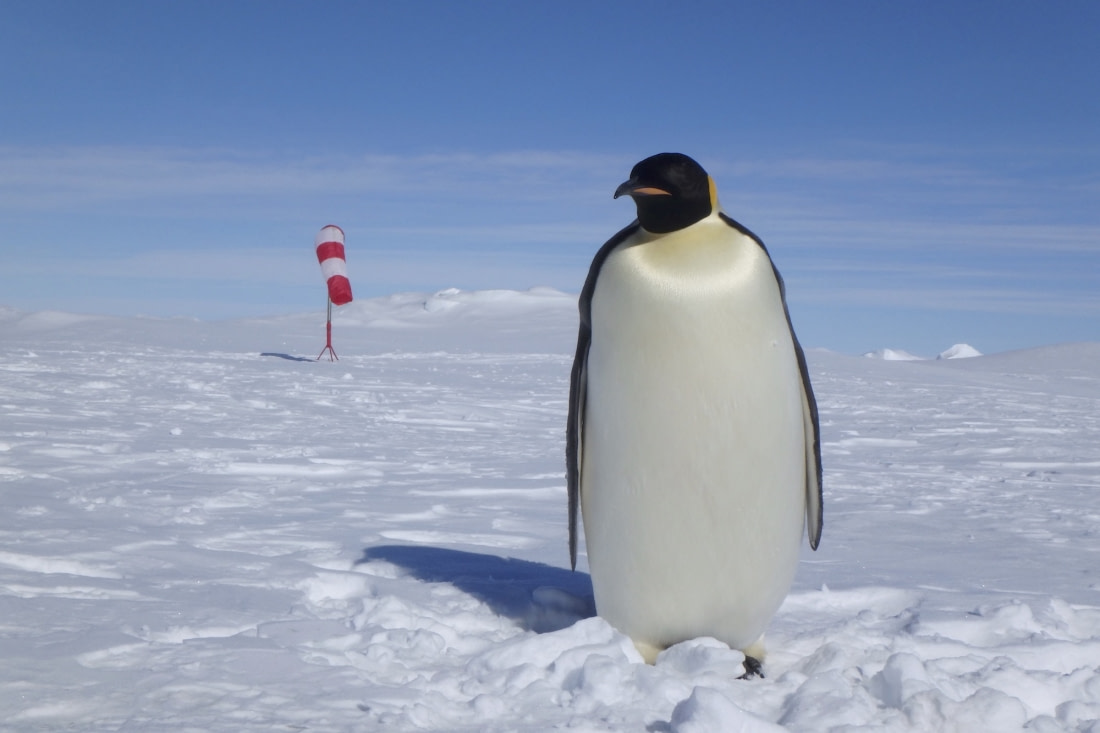
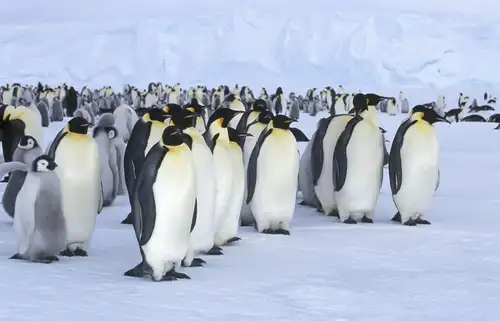
1. Both male and female emperor penguins grow to about 122 cm (four feet) tall and weigh anywhere from 20 – 45 kg (44 – 100 pounds).
2. Their tuxedoes serve a purpose: white underbellies camouflage emperor penguins against light from above, and dark backs camouflage them against the sea depths below.
3. Emperor penguins live about 20 years in the wild.
4. The emperor penguin genus name, Aptenodytes, means “without-wings-diver.”
5. Emperor penguin chicks are preyed upon by birds like the southern giant petrels and south polar skua, while orcas (killer whales) and leopard seals hunt adults.

Male and female emperor penguin breeding facts
6. Emperor penguins are the only penguin species to breed during the Antarctic winter.
7. They begin courtship in the Southern Hemisphere autumn (around April), when sea ice reforms and becomes thick enough to support colonies.
8. To attract a mate, emperor penguin males strut around, push their bills to their chests, and sing with breeding calls that last for about two seconds.
9. After breeding, emperor penguin females lay a single egg in May or June before handing the egg over to the males while they go to sea to feed.
10. Emperor penguins build no nests, breeding only on the sea ice.
11. Male emperor penguins huddle together and put the eggs on their feet, covering them with a skin fold (brood patch) that keeps them warm.
12. Protecting eggs for around four months, male emperor penguins do not eat anything in that time and instead rely on body fat accumulated over the summer.
13. After female emperor penguins return and find their mates using their unique calls, males can then feed after their long months of fasting.
14. Emperor penguins are serially monogamous, staying with one mate for the entire season but usually choosing a different mate the next season.
Emperor penguin eggs and chicks
15. It takes between 65 to 75 days for emperor penguin eggs to hatch.
16. The eggs are kept around 38°C (100°F), even if air temperatures plummet below -35°C (95°F), the males’ skin folds.
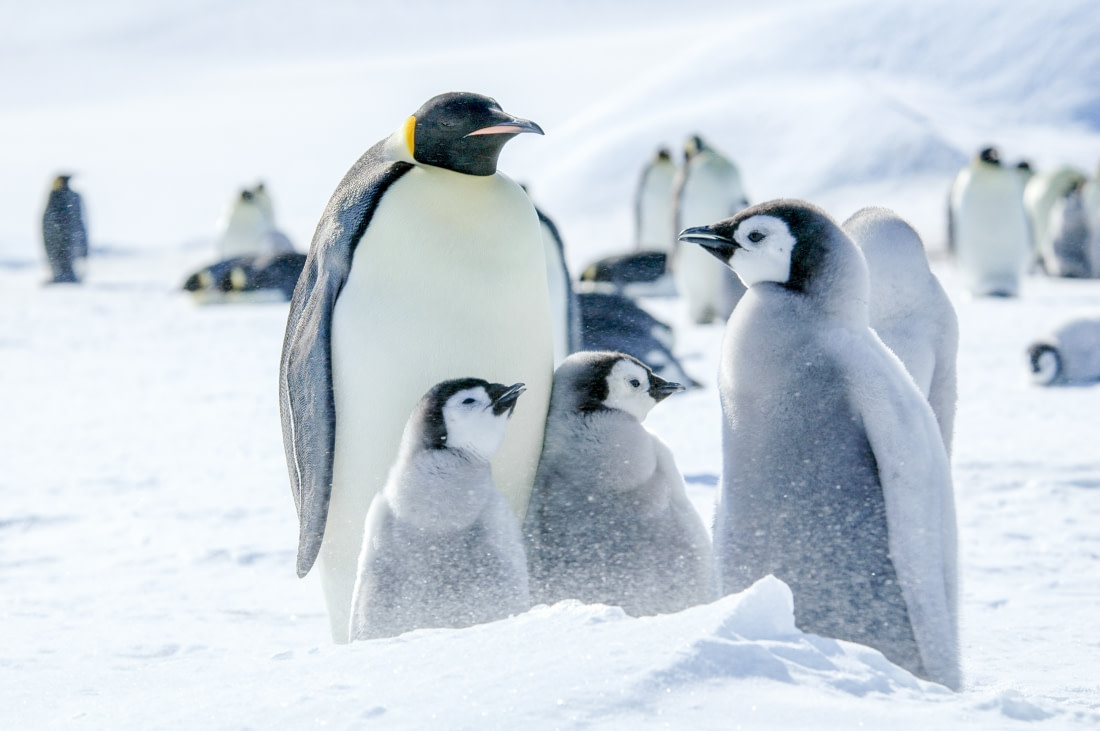
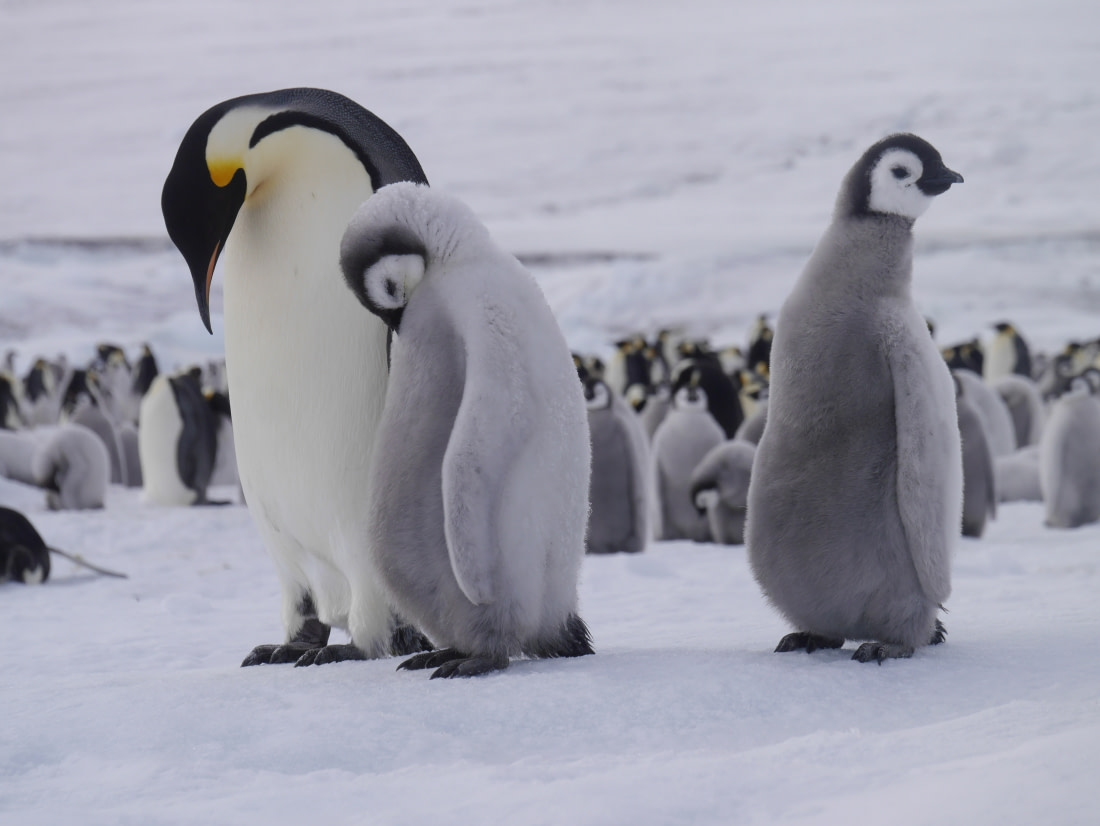
17. Chicks are born small, weighing about 150 – 200 grams (5.3 – 7.8 ounces), while adult emperor penguins weigh around 22 – 30 kg (48 – 66 pounds) at this time of year.
18. Emperor penguin chicks have a thin layer of down but are unable to regulate their own temperature in the first 50 days of life, so their parents must keep them warm.
19. If left alone in the night, emperor penguin chicks form warming huddles.
Energy conservation and heat-saving facts about emperor penguins
20. Emperor penguins conserve energy with their small bills and small flippers, while their nasal chambers enable them to recover heat normally lost during exhalation.
21. To save energy during the harsh Antarctic winter, emperor penguins stay idle and pack a large amount of nutrient-giving fat.
22. Emperor penguins can recycle their own body heat, as their close vein structure delivers pre-cooled blood to their feet, wings, and bill, then warms the blood up on its way back to their heart.
23. They can also reduce their metabolic rate and blood flow to non-essential organs.
24. Emperor penguins have incredible insulation, with several layers of scale-like feathers that pack so tightly that it takes very strong winds – over 60 knots – to ruffle them.
25. The surface of emperor penguin feathers is colder than the surrounding air, which researchers believe helps them conserve heat.
26. The only parts of emperor penguins warmer than the Antarctic air are their eyes, beaks, and feet – and their eyes are only just above freezing.
Emperor penguin sociability and huddling facts
27. Emperor penguins are the only non-territorial species of penguin.
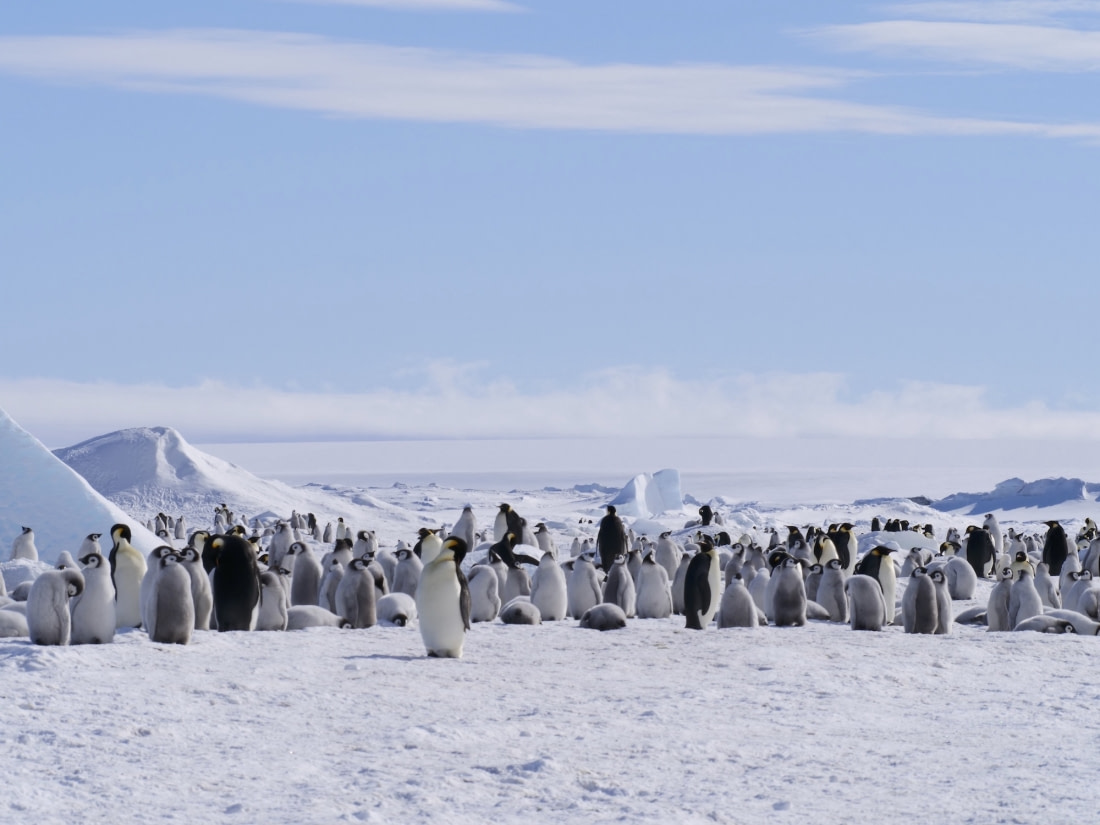
28. Because of their social nature, huddling is a useful emperor penguin strategy for warmth.
29. Huddling helps emperor penguins face cold temperatures and katabatic winds, and on especially cold days up to 10 males may huddle together.
30. Emperor penguin huddling reduces heat loss by up to 50 percent, as temperatures inside the huddle can reach upwards of 24°C (75°F).
31. They take turns occupying warmer and colder parts of the huddle in a continuous cycle.
Diet and diving among emperor penguins
32. Emperor penguins are near the top of the food chain in the Southern Ocean.
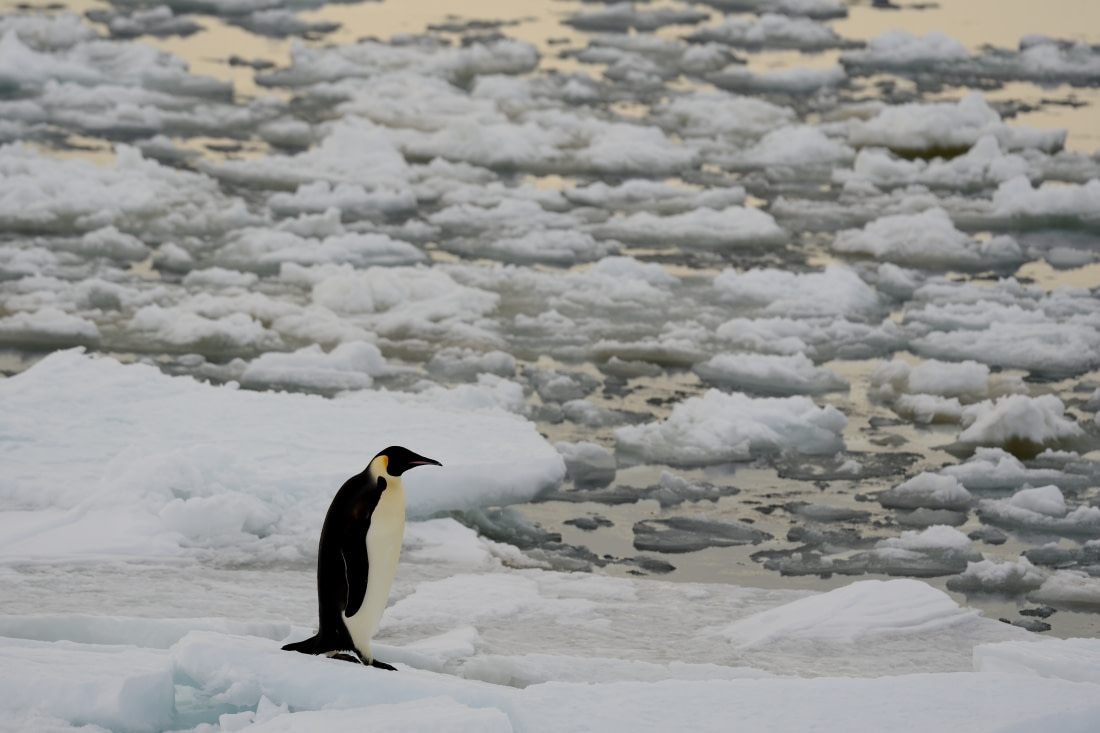
33. They hunt in the open sea and often use cracks or other such access points in the sea ice.
34. One of the most popular emperor penguins foods is Antarctic silverfish, but Antarctic krill and some species of squid are also favored.
35. Most emperor penguin prey is cold but small, enabling them to bring the food to body temperature quickly for digestion.
36. Adult emperor penguins eat between two and three kg (4.4 to 6.6 pounds) of food per day, but this increases to about six kg (13.2 pounds) before a molt or at the start of breeding season.
37. Emperor penguins typically forage at depths of 150 – 250 meters (490 – 820 feet) but have been recorded at 565 meters (1,853 feet), deeper than any aquatic bird.
38. Average emperor dives last between three to six minutes, with one dive timed at 22 minutes.
39. Emperor penguins can handle deep dives due to their solid bones, as opposed to the hollow bones common to flying birds.
Emperor penguin colonies, population, and distribution facts
40. In a 2012 study, the British Antarctic Survey found the global population of emperor penguins was twice what was previously thought: 595,000 compared to 270,000 –350,000.
41. By contrast, a 1992 study stated that only 135,000 – 175,000 emperors lived in Antarctica, though scientists say this disparity is due to technological advancements in animal counting.
42. Various counts have found that between 44 – 46 emperor penguin breeding colonies reside in Antarctica.
43. As a species, they are listed as having a “near threatened” conservation status.
44. Emperor penguins are one of two penguin species to live on mainland Antarctica, the other being Adélie penguins.
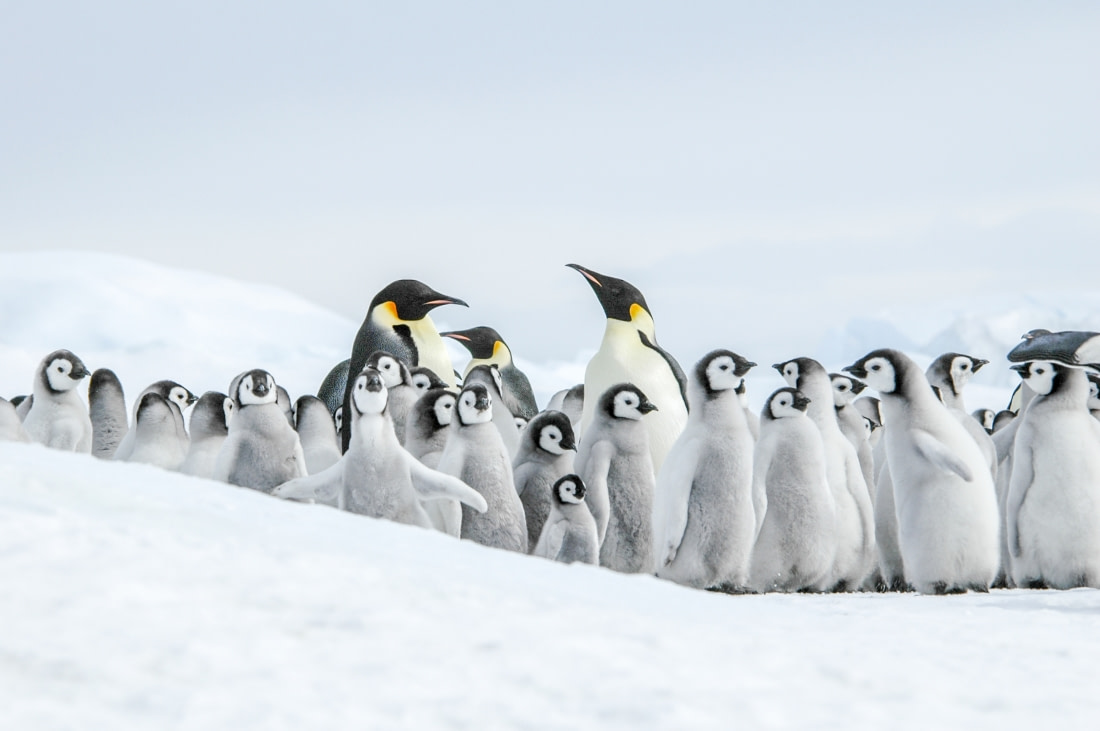
Want to see emperor penguins for yourself? These Antarctica trips will give you the chance
Our Weddell Sea cruises offer one of the best opportunities for spotting emperor penguins, especially if conditions permit us to make helicopter landings on Snow Hill Island. Please keep in mind, however, that while we have been successful with these landings in recent years, local weather and ice conditions determine our ability to use helicopters.
When offered, a Ross Sea voyage might also grant you a sighting: we sometimes see single emperor penguins along the ice edge of the nearby Amundsen Sea – as well as groups of seals, orcas (killer whales), minkes, and different species of fulmarine petrel. (The Ross Sea may have even once acted as a place of refuge for emperor penguins during the last ice age.)
Wherever in Antarctica you see them, however, emperor penguins will make an impression on you. They are as beautiful and deserving of awe as Antarctica itself, as much an essential part of its ecosystem as glaciers, icebergs, and all those endless fields of snow.


Blog


Antarctica: When to Visit, How to Plan, What to Expect
Spitsbergen: a true polar bear trip
Greenland: Where the Kayak Was Invented

The First Overwintering Hut in Antarctica
The Ice-Jewelled Geology of Spitsbergen
Six Seal Species You Might See On Your Greenland Cruise
The South Georgia Seven: Hikes, Fjords, Whales, & Penguins
Antarctica Cities (and Five Other Things That Don’t Exist There)

An igneous paradise: Franklin Island
Imperial Antarctica: the Snow Hill Emperor Penguins
The bio-richness of the Ross Sea
Adélie Penguins: the Little People of the Antarctic
Cruising Solo: The Benefits of Single-Passenger Polar Travel
What to Expect When Crossing the Drake Passage
Why You Should Visit Greenland: 11 Things to See, Do, and Explore
Greenland: East vs. West
Peaks, Fjords, and Auroras: 14 East Greenland Attractions
Weddell Sea, Shackleton’s Endurance, and New Swabia

Around Spitsbergen vs. North Spitsbergen