Deep Sea Dwellers 10 Facts About The Antarctic Giant Isopod - Nexta Expeditions
Deep Sea Dwellers: 10 Facts about The Antarctic Giant Isopod

Deep Sea Dwellers: 10 Facts about The Antarctic Giant Isopod

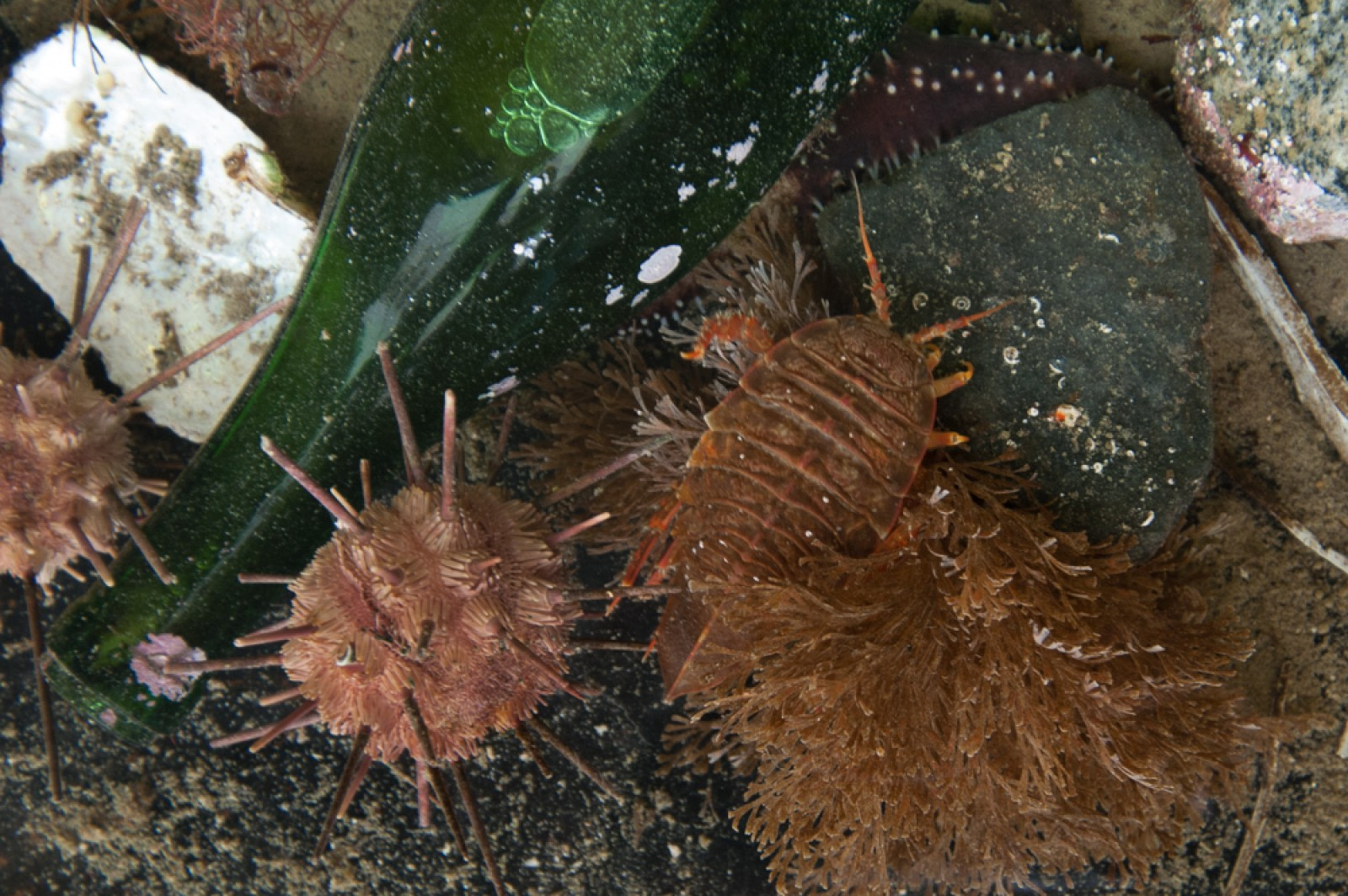
On average, the Giant Antarctic Isopod grows to 9cm (3.5in.) in length. This may not seem very large, but factors including low light levels, freezing cold water, and a lack of oxygen prevent these isopods from growing very large. Other species of isopods, including the Giant Isopod, have been known to grow up to 40 cm (16 inches) in length!

Giant Antarctic isopods almost exclusively eat carrion

Isopods are opportunistic scavengers, meaning that they’ll eat just about anything that crosses their path, no matter how long it’s been dead. Anything that makes its way down to their part of the neighborhood in the benthic zone is fair game, and makes for a reliable source of food, as long as there’s no competition. While food is available, isopods will gorge themselves to ensure they have enough to survive until their next meal. As a bottom feeder and a scavenger, you may have to wait a while until something ends up that far down in the ocean. Besides carrion, isopods have also been observed to feast on small, marine prey items such as young sponges and small fish.

Their metabolism is extremely slow

Living 600 meters (2,000 feet) down in the ocean has its drawbacks. Since food can be scarce at times this deep down, isopods rely on their impressively slow metabolism to keep them going. This means limiting their bodily movements as much as possible, and not really exerting any energy unless they encounter a meal or a predator. A slow metabolism can really come in handy when food is scarce, and isopods have been observed to go a whole eight weeks without any need for food.

No bugs here!

Don’t let appearance fool you. Isopods may look like a common garden insect, but they belong to the extremely diverse group of organisms called ‘crustaceans’, and are more closely related to crabs, shrimp, and pill bugs than they are to any true insect.

Antarctic giant isopods are skillful swimmers

In addition to swimming upright and straightforward like a normal sea creature, the Giant Antarctic Isopod can also swim upside down, and does so with great gusto! Scientists are unsure why they exhibit this behavior, but it is very well documented.

Antennae lead the way

To help guide them around the murky depths of the ocean, giant isopods rely on two sets of antennae. Additionally they have two large, fixed, compound eyes, much like an insect’s, to further help them find their way throughout their dark environment. These eyes, however, have been found to be more ornamental than anything, and don’t necessarily assist in the ways of vision, according to researchers. Even with these highly specialized eyes, their vision is very poor, thanks to their lightless environment.

Even with poor vision, their eyes glow

If any light happens to shine on their eyes, a part of their eye called the tapetum, which is located at the back of the retina, reflects any visible light back through the retina, creating a glowing effect. The tapetum has evolved in many different species of animals, and serves to assist with vision in low light conditions.

To deter predators, Antarctic giant isopods will roll into a ball

Just like their cousins, the pill bugs, isopods will roll up into a tight ball when faced with a predator. Only when they’re certain that the predator has moved on will they unroll. If their hard, external segments don’t protect them from predation, they can always rely on their four pairs of sharp jaws, which are meant for ripping prey apart, to help them out. Considering their size, number of jaws and overall diet, the isopod doesn’t seem like a very attractive prey item.

…Or they warn with their legs

It can be difficult to maneuver three pairs of small legs, and four pairs of large, spiny legs. The only time having this many legs comes in handy is when a predator presents itself. In this case, the isopod will raise its legs up in the air and try to make itself appear as large and as dangerous as possible. Hopefully this display makes a potential predator rethink its decision.

Females protect the eggs

Not only do isopods have the largest eggs of any marine invertebrate at 1.3cm in length, but the female will carry them with her in a special ‘brood pouch’ until the babies are ready to hatch. To minimize threats from predators, females will bury themselves in the soft, sandy bottoms of the ocean and sit with her eggs until they are fully developed. This is a time when having a slow metabolism definitely comes in handy.


Blog
go-leftgo-right

Large and in Charge: Antarctica’s Southern Elephant Seals - Nexta Expeditions
Blog

Large and in Charge: Antarctica’s Southern Elephant Seals

Southern elephant seals are the largest species of seal on the planet and a highlight among Antarctica cruise wildlife.
12 photo tips to make better pictures on your Antarctica cruise - Nexta Expeditions
Blog

12 photo tips to make better pictures on your Antarctica cruise

During your trip in the Arctic or Antarctic cruise you and your camera equipment will be exposed to a variety of challenging conditions. Be careful with your equipment and protect it from the salty spray when in Zodiacs, on a beach, or on deck. Salt water and electronics is not a good mix!
Antarctica: When to Visit, How to Plan, What to Expect - Nexta Expeditions
Blog

Antarctica: When to Visit, How to Plan, What to Expect

Antarctica is an astonishing location loved in equal measure by ice enthusiasts and continent hoppers, but it also asks a lot in return for its prestigious polar status.
How Arctic Wildlife Differs from Antarctic - Nexta Expeditions
Blog

How Arctic Wildlife Differs from Antarctic

While the north and south poles share certain characteristics, they are also remarkably distinct. Both regions are cold and dry, yet each has its own unique terrain and climate. The Antarctic is particularly harsh and inhospitable, with only two native vascular plant species, whereas the Arctic tundra supports a wider range of fauna due to its relatively warmer temperatures and greater plant diversity. Here are some of the animals you can find in the Arctic compared to the Antarctic.
Hondius Photography and Video Workshops - Nexta Expeditions
Blog

Hondius Photography and Video Workshops

There’s no shortage of great things to say about a Hondius expedition cruise, but among the best are the free video and photography workshops offered during some of this ship’s voyages. These informative, interactive, highly useful supplements allow you to not only capture your memories in the best way possible but also make your friends back home maddeningly jealous.
A Day on m/v Plancius - Nexta Expeditions
Blog

A Day on m/v Plancius

Stepping aboard this long-running expedition vessel, it’s easy to forget that she’s been making voyages to the polar regions since “Afternoon Delight” by Starland Vocal Band was on the Billboard Hot 100.
Svalbard a Disneyland for geologists - Nexta Expeditions
Blog

Svalbard a Disneyland for geologists

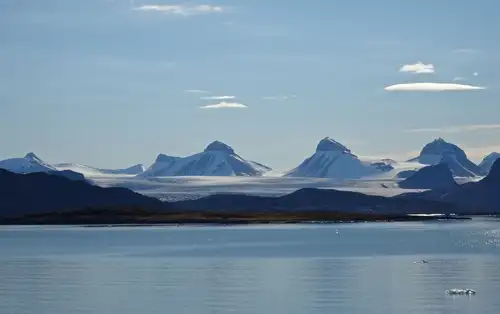
Svalbard is situated in the north-western corner of the Eurasian plate. Historically, Svalbard was part of a vast continent that included North America, Greenland, and Eurasia. At one point, both Northeast Greenland and Svalbard were submerged under the ocean before resurfacing.
10 Traits of Post-Ice-Age Greenland - Nexta Expeditions
Blog

10 Traits of Post-Ice-Age Greenland

Grasses, sedges, and other species of heath were the first arrivals, and are still commonly found in Greenland. Scientists have been able to work out how plants colonised Greenland by examining ancient pollen samples found in deposits at the bottom of lakes: Dwarf birch came to western Greenland around 9,000 years ago, and around 4,500 years ago – roughly the same time humans were first boating onto Greenland shores – green alders were taking up residence there.
Not Eskimos: 10 Enlightening Facts About the Inuit - Nexta Expeditions
Blog

Not Eskimos: 10 Enlightening Facts About the Inuit

If you are planning to join an Arctic cruise, you might be intrigued by the Inuit culture. To help you gain a deeper understanding of these people, especially if you are considering a trip to Greenland, here are 10 fascinating facts about the Inuit that everyone should know.
Polar Marine Visitors: the Whales of Antarctica and the Arctic - Nexta Expeditions
Blog

Polar Marine Visitors: the Whales of Antarctica and the Arctic

Whales are the world’s largest mammals, found in the Arctic and Antarctica. This article covers some of the major species you may see on voyages to these remarkable areas.
Polar Diving: A Supreme Underwater Adventure - Nexta Expeditions
Blog

Polar Diving: A Supreme Underwater Adventure

Most scuba divers are drawn to warm waters and tropical reefs, and it's easy to see why. However, even the most thrilling experiences can become repetitive if done too often.
5 Life Lessons You'll Learn in Antarctica - Nexta Expeditions
Blog

5 Life Lessons You'll Learn in Antarctica

Embarking on a journey to the Antarctic might seem daunting. However, cruise lines strive to simplify the process as much as possible. They typically assist with travel insurance, guide you to the embarkation point, and advise on the appropriate clothing to bring.
The Seasons of Antarctica: When to Visit and Why - Nexta Expeditions
Blog

The Seasons of Antarctica: When to Visit and Why

You’ve decided to book your dream trip – an adventurous Antarctica cruise that will give you a winning chance to see otherworldly environments, encounter exotic wildlife, and take part in activities that will spoil your inner explorer like nothing else.
The Giant Petrels of King George Island - Nexta Expeditions
Blog

The Giant Petrels of King George Island

Antarctica is undeniably one of the world’s premier birding destinations.
The Small but Social Commerson’s Dolphin - Nexta Expeditions
Blog

The Small but Social Commerson’s Dolphin

Despite being one of the lesser-known Antarctic cetaceans, Commerson's dolphins are quite social and have been given various names over the years, including Piebald dolphins, skunk dolphins, and panda dolphins. These names have been in use since their discovery in 1767 by French naturalist Philibert Commerson.
Svalbard’s Texas Bar - Nexta Expeditions
Blog

Svalbard’s Texas Bar

Texas Bar is one of the historic areas we visit on certain Svalbard trips, and it always proves to be a cherished landing site among both our guides and guests. This might be surprising, however, given that its name can be a bit misleading.
Puffins: Clown Birds of the Atlantic - Nexta Expeditions
Blog

Puffins: Clown Birds of the Atlantic

Puffins are part of a family of 22 seabird species known as auks, which are pigeon-sized birds that thrive on a diet of small fish and crustaceans.
Spitsbergen: Alkefjellet magic - Nexta Expeditions
Blog

Spitsbergen: Alkefjellet magic

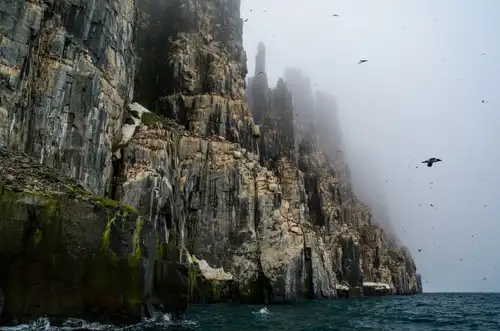
If they knew their way home, why not follow them? Equipped with GPS and compass, we approached the cliffs by zodiac. First, we heard the noise from the colony – the distinct calls of guillemots, kittiwakes, and Glaucous gulls. Then the cliffs gradually emerged from the mist.
Tracking Greenland’s Wildlife from Space - Nexta Expeditions
Blog

Tracking Greenland’s Wildlife from Space

Despite Greenland’s harsh environment, life has found a way to thrive there. If you’re lucky enough to embark on a Greenland cruise, you stand the chance of encountering many species of cold-adapted mammals, birds, and fish.
The Overlooked Treasures of Ascension Island - Nexta Expeditions
Blog

The Overlooked Treasures of Ascension Island

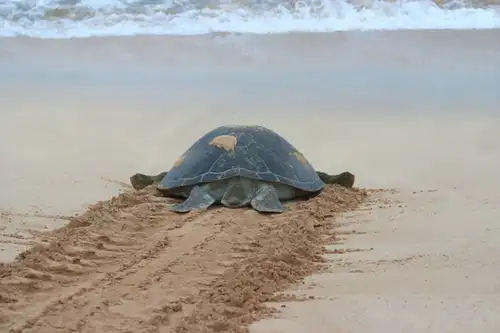
If you know anything about Ascension Island, which is unlikely, it probably has to do with the green turtle breeding population that exists there.