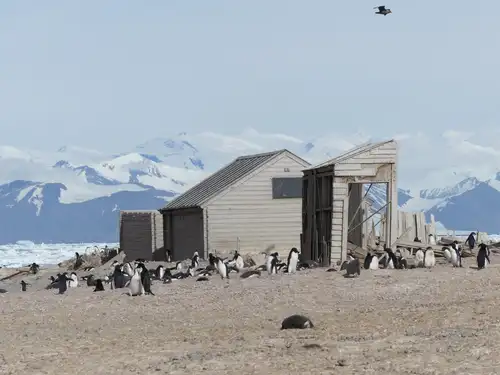

South Georgia’s location south of the Antarctic Convergence gives the island a more Antarctic-like climate compared to other regions at the same latitude. The climate here is marked by cold, cloudy, wet, and windy conditions with highly variable weather.
The southwest coast and the mountains bear the brunt of the extreme weather, while the northeast side is relatively milder and drier. The northeast is known for sudden strong winds that can be hazardous for small vessels. These winds can be foehn winds that reach up to 100 kph (62 mph) off the mountains and come with rapid temperature rises.
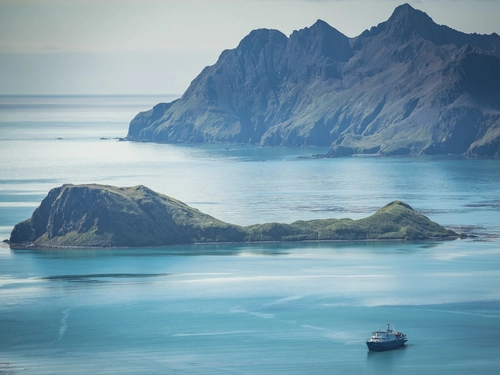
Here we discuss some of the features of the weather, flora, terrain, and especially seabird life that make up the incomparable sub-Antarctic archipelago that is South Georgia.
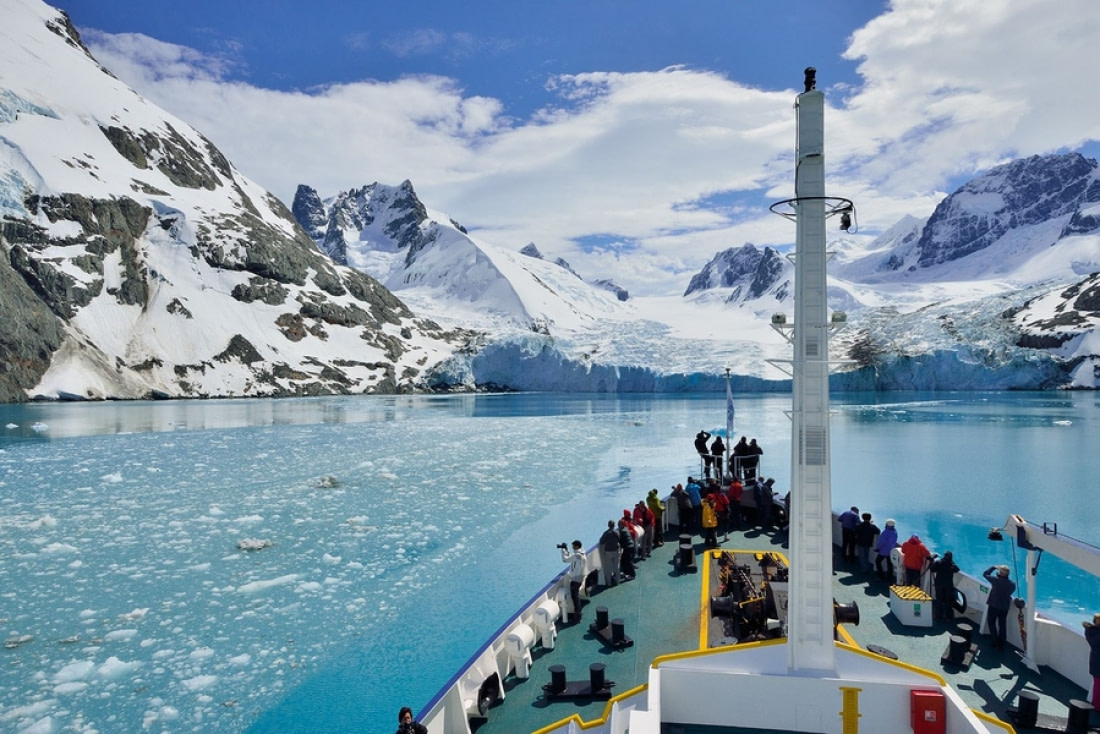
South Georgia’s balmy above-zero temperatures
Long-term weather data show the average annual temperature is 1.8°C (35.24°F) and ranges from -19.4°C (-2.92°F) to 26.3°C (79.34°F). Meanwhile, the South Sandwich Islands are a small island chain comprising 11 islands on the Scotia Arc, around 500 km (310 miles) southeast of South Georgia. All the islands have been formed from volcanic activity, so they are mostly made up of basalt and lava.
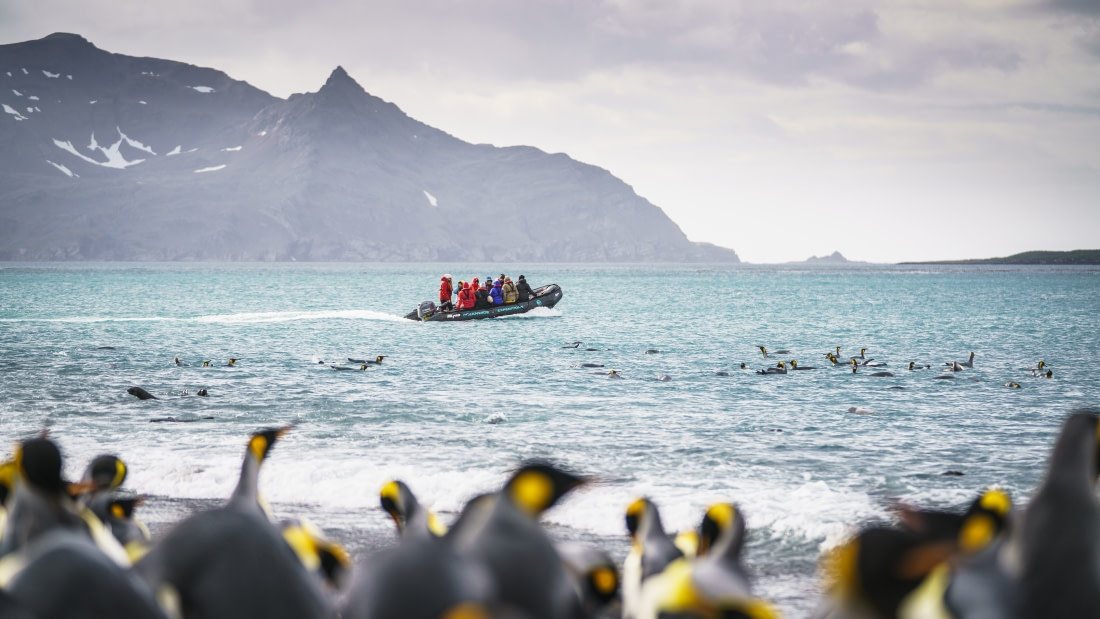
The sturdy flora of South Georgia
South Georgia is not barren, however, being home to 25 species of vascular plants in addition to over 125 species of moss, 85 species of liverworts, and more than 200 species of lichen. The most productive plant in the area is the tussock grassland, usually found in coastal regions. This grassland is an important habitat for nesting birds, in addition to supporting a large diversity of native invertebrates.
Overall, the landscape is a mosaic of bogs and herb fields mixed with other vegetation types. South Georgia and the South Sandwich Islands are also home to a number of penguin, albatross, and petrel species.
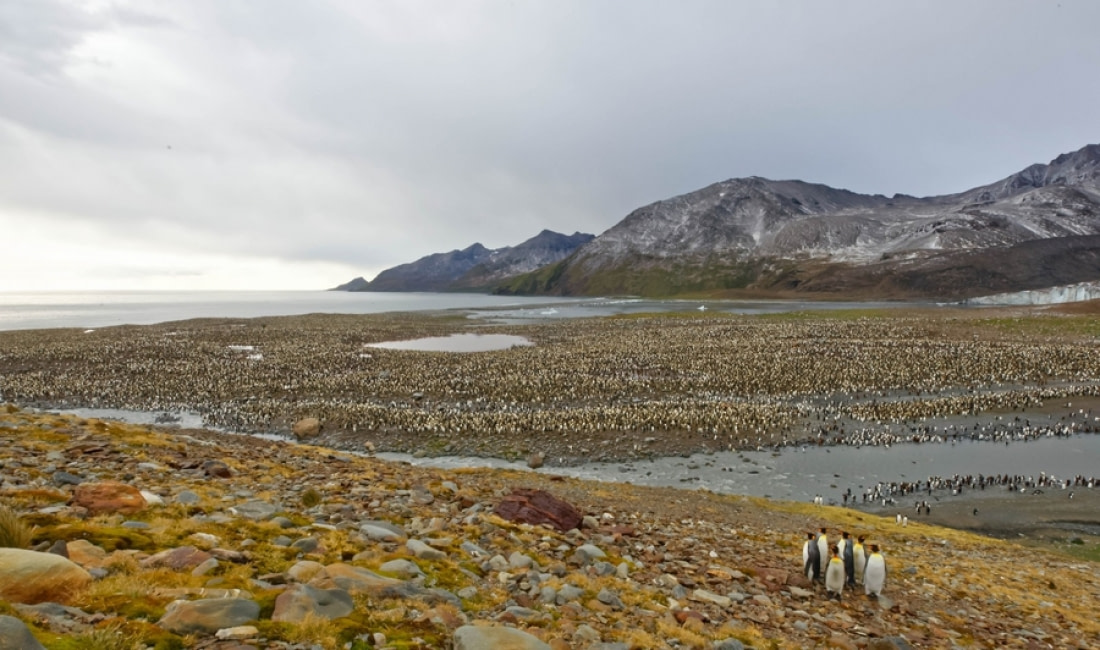
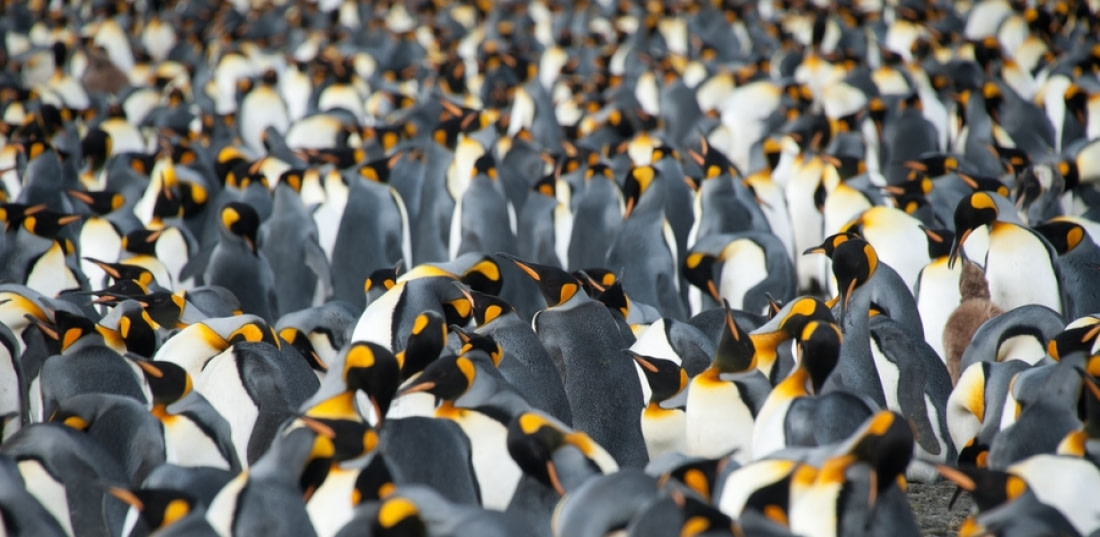
A King among South Georgia penguins
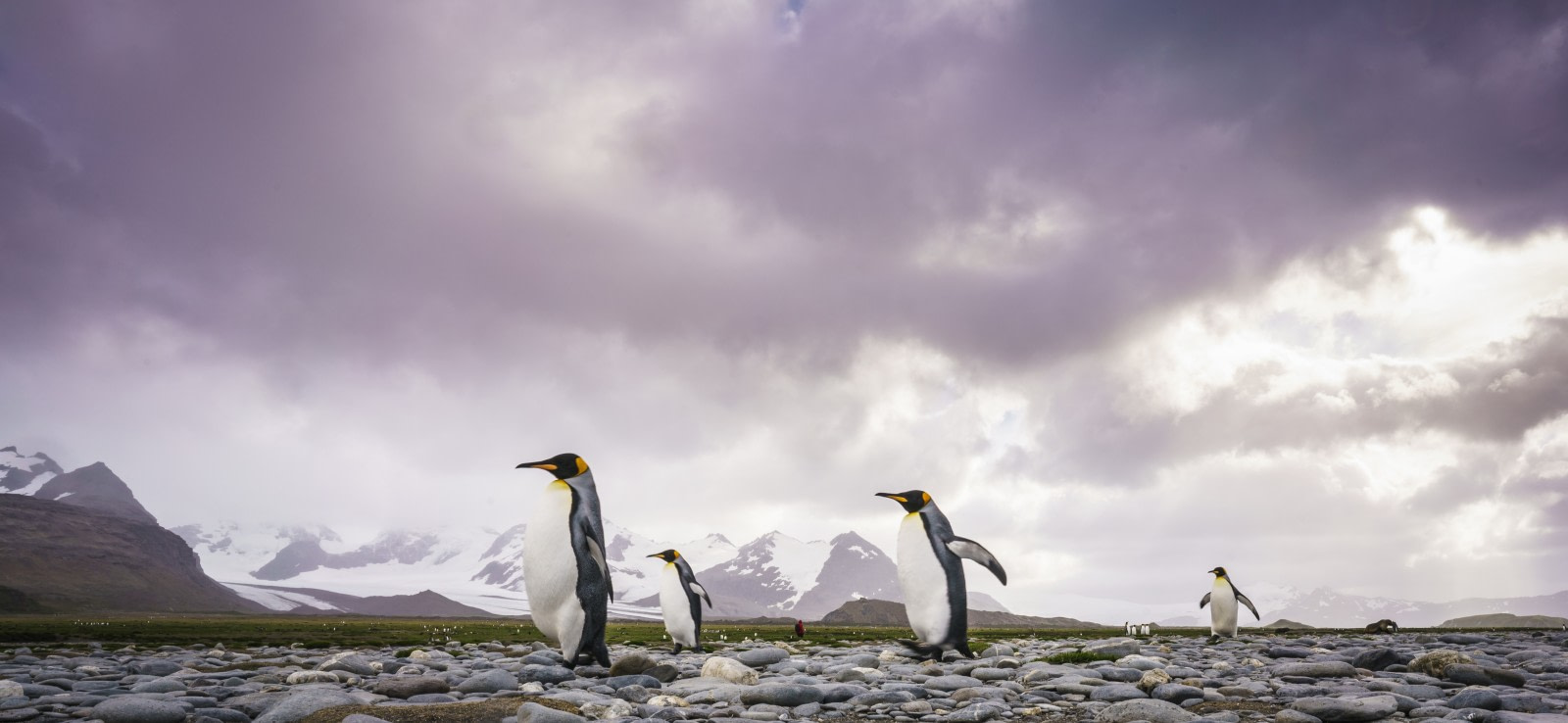
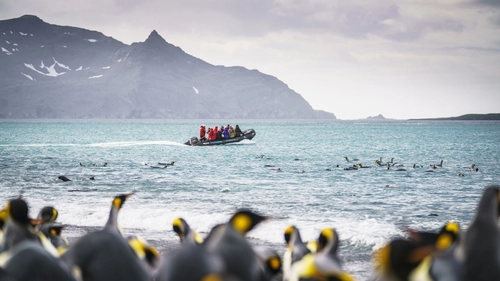
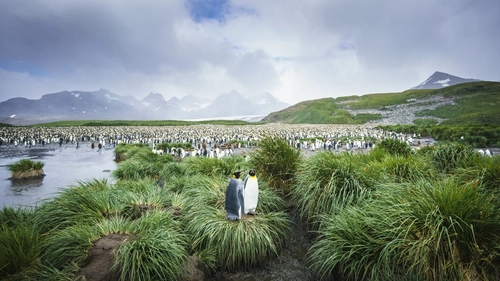
The king penguin is the second-largest penguin species, the largest to breed on the island, and a major attraction for South Georgia cruises. This penguin has a slate-grey back and white front separated by a narrow black line that runs up to its chin. While king penguins nest in dense colonies, they do not build a nest.
Instead, they incubate a single egg on their feet, under a flap of skin. This is done in tight spaces with other incubating birds standing just pecking-distance away. The incubation of the egg lasts around 55 days, and the fledging lasts almost a year. After five weeks, the chicks are placed in creches.
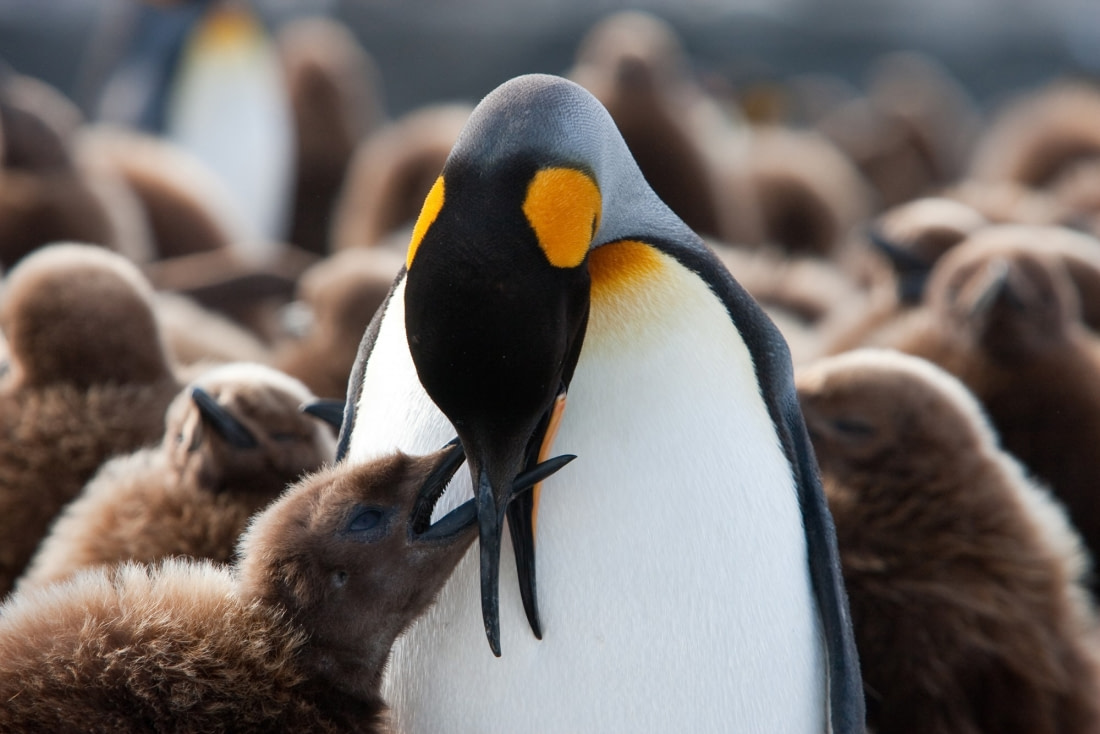
Because king penguins can raise two chicks every three years, their colonies can contain a variety of demographic groups: moulting adults, young chicks, older chicks, and eggs. The king penguin’s diet consists mainly of squid and lanternfish.
They are able to dive for up to 10 minutes, at times reaching depths of over 300 meters (almost 1,000 feet). The largest colonies of these penguins can be seen at St. Andrews Bay (150,000 pairs), Salisbury Plain (60,000 pairs), Royal Bay (30,000 pairs), Gold Harbour (25,000 pairs), and Fortuna Bay (7,000 pairs).
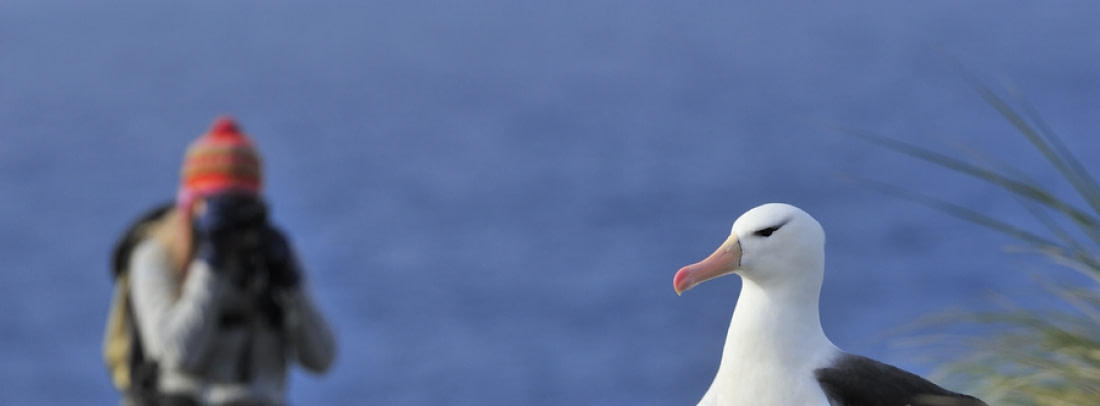
South Georgia’s black-browed albatross
The black-browed albatross has a circumpolar breeding distribution that includes South Georgia. When these birds are not breeding, they usually leave South Georgia for the Benguela Current upwelling system off southwest Africa, while others head to the Patagonian Shelf or farther afield to Australasia.
In South Georgia, the albatross has established colonies on steep slopes or terraces with tussock grass. There are about 15 colonies spread out across South Georgia, with the largest colonies located in the Willis Islands group as well as Bird, Annenkov, and Cooper Islands.
Albatrosses start to breed when they are 10 years old and breed annually. They build nests out of soil and vegetation, laying a single egg in late October to early November. The incubation period lasts between 65 and 72 days, while fledging ranges from 110 – 125 days, beginning in late April to May. Adult birds usually feed north of the main colony on South Georgia and in the Subantarctic waters during the incubation period. When they are rearing their chicks, black-browed albatrosses feed in Antarctic waters.
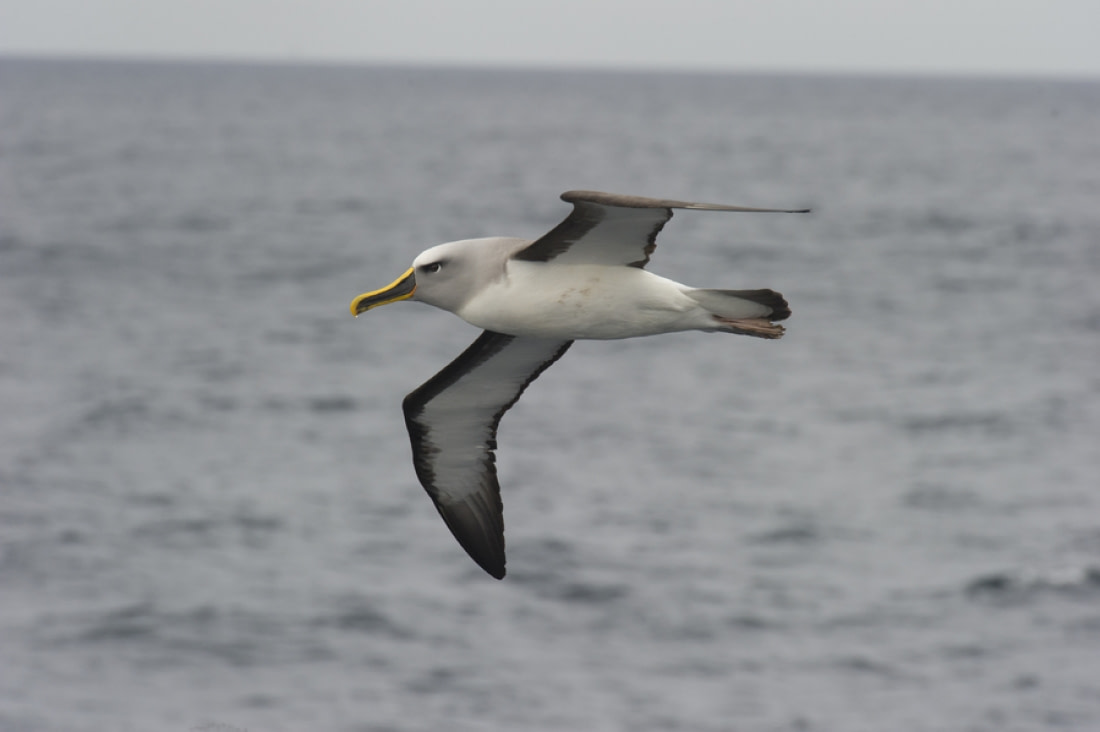
The grey-headed albatross of South Georgia
The grey-headed albatross is found in South Georgia and other circumpolar locations. During the non-breeding season, they are found throughout the Southern Ocean, mainly in open water. In South Georgia, these albatross colonies are usually located on clifftops and ledges, and the birds build nests out of soil and vegetation. The average age when they breed is 12 years old, and if successful they breed biennially.
Grey-headed albatross colonies are set across nine areas and islands in northwest South Georgia, with the largest colonies found in the Willis Island group, Bird Island, and Paryadin Peninsula. The grey-headed albatross lays a single egg in October, and the incubation period lasts between 69 and 78 days, with fledging taking around 140 days over the May – June period.
The adult grey-headed albatross feeds in the Antarctic Convergence and at times appears as far south as the Scotia Sea and even on Antarctic Peninsula trips. After they breed, these seabirds typically migrate to the southwest Indian Ocean or even complete one or two circumpolar migrations between breeding seasons.
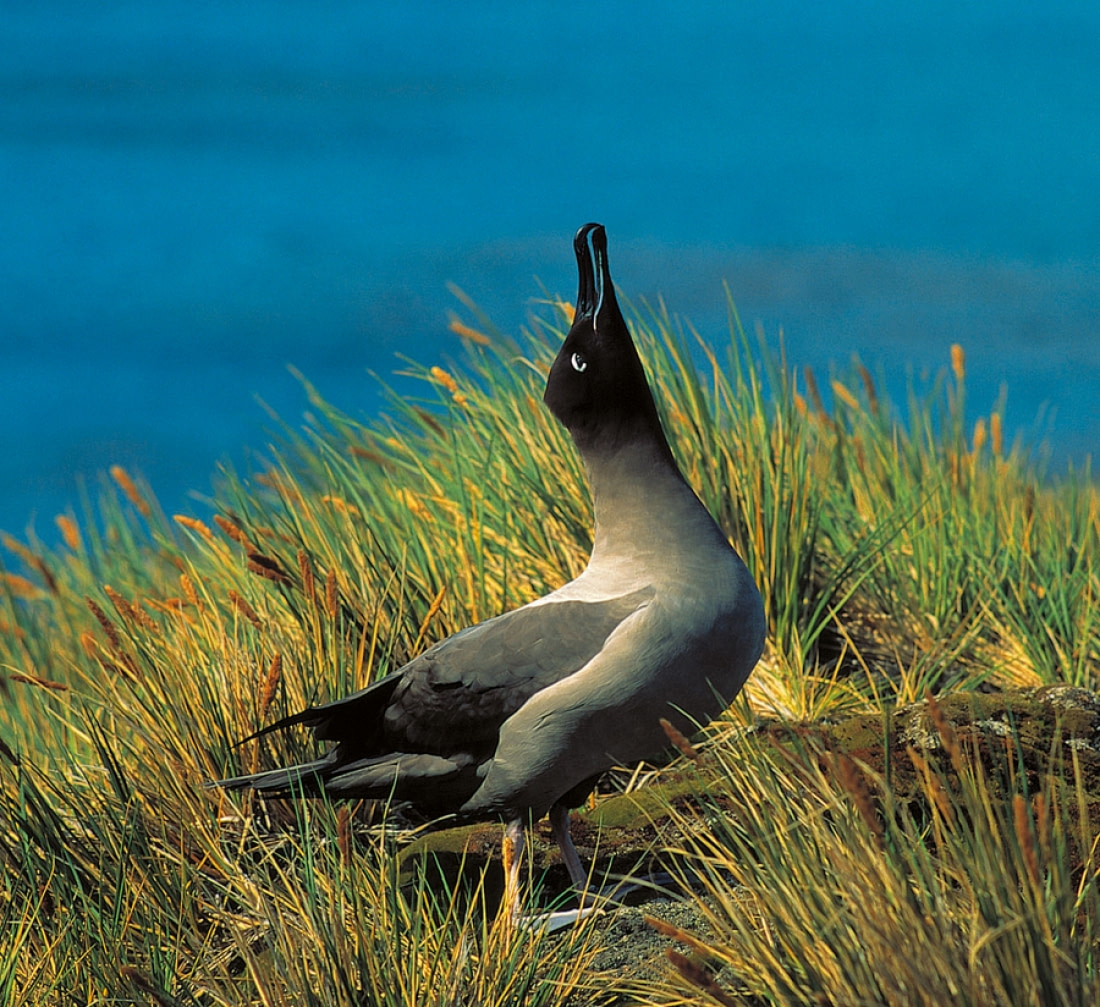
South Georgia’s light-mantled albatross
The light-mantled albatross is found during the breeding season in South Georgia. These medium-sized albatrosses, with grey bodies and long thin wings, set up nests alone or in small groups. These nests are located on cliff ledges around most of the South Georgia coast. Breeding pairs are known to fly in tandem, gliding to and from the coastal cliffs. At times the birds standing on the cliffs will stick their necks out and call to passing birds.
The albatross has a very long breeding season, laying a single egg in late October to early November, incubating for 65 to 71 days, and fledging for 141 to 170 days. The adult albatross has a longer foraging trip than the others, feeding farther south than all other albatrosses during the chick-rearing stage. Some of them even fly down to the marginal ice zone encountered on Weddell Sea voyage routes.
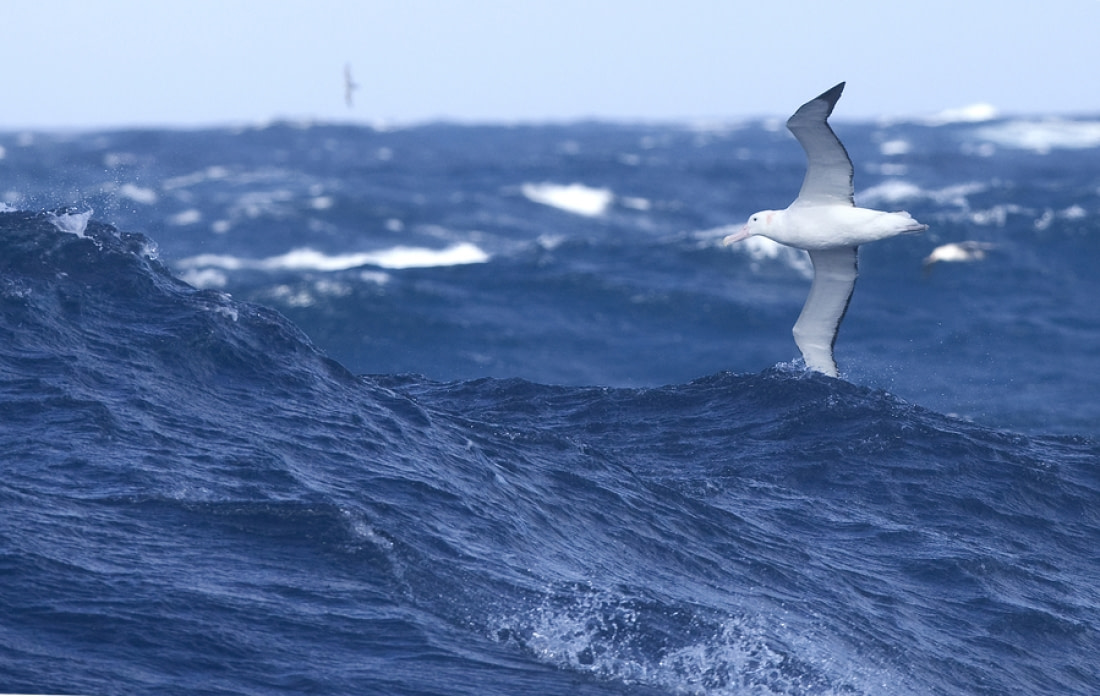
The wandering albatross of South Georgia
Wandering albatrosses spend the bulk of their lives in flight, cruising the skies for hours without so much as a flap of their wings, and they are one of the largest birds in the world. But these seeming superpowers come at a cost: The wandering albatross has to eat and eat a lot. They will, in fact, try to eat just about anything they happen across, trailing ships to feast on whatever garbage might be left in their wake.
Often it is only when wandering albatrosses have gluttonized so much that flight isn’t possible that they finally land, floating on the water until they have the steam to lift off again. They live around 50 years, breed every two, and mate for life. Their Latin name, Diomedea exulans, traces back to the Greek hero Diomedes, a great swordsman of the Trojan War who eventually assumed the crown of Argos.
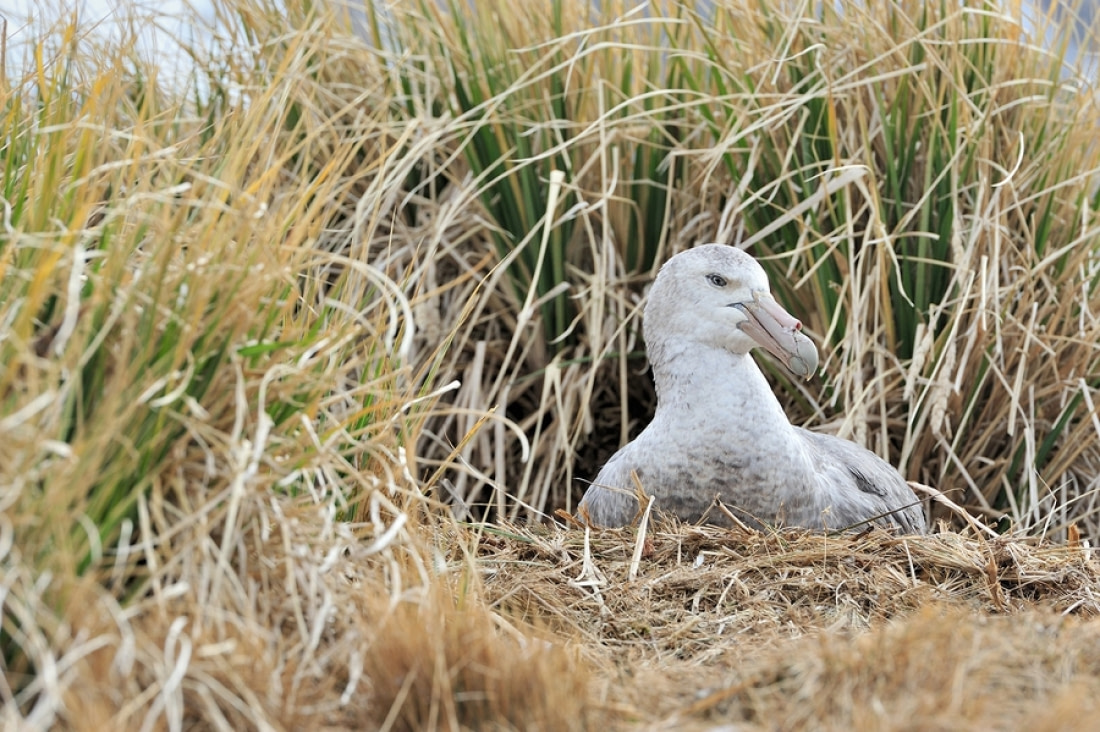
Southern giant petrels on South Georgia
Southern giant petrels take up in South Georgia during the breeding season. There they build nests in small colonies, making the nests out of vegetation or gravel. The albatross lays a single egg in early-to-mid November, incubates for 55 – 66 days, then fledges for 104 – 132 days in late April to May.
During the midsummer period, males are often found on the beaches, where they compete for fur seal carrion. After this, they feed out to sea around South Georgia and the Scotia Sea. Meanwhile, the females usually feed in Antarctic waters, stopping at the southern Patagonian Shelf.
South Georgia’s cape petrels
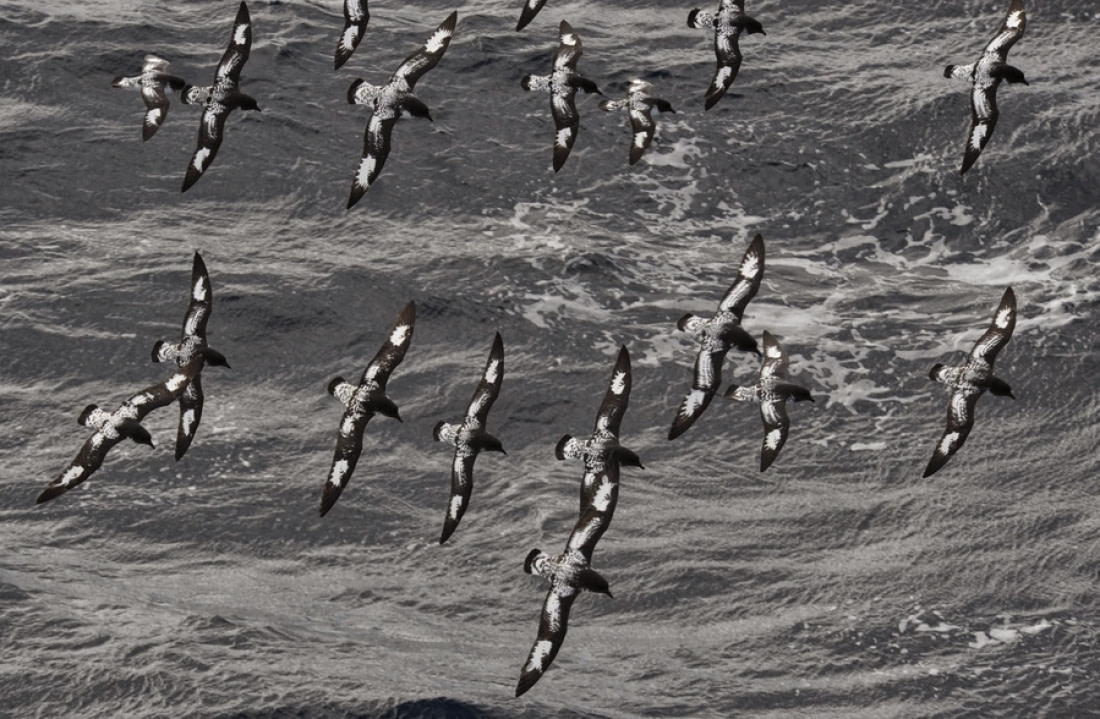
Cape petrels are a circumpolar bird found in most sub-Antarctic islands, including South Georgia. During the migration season, they typically head north to southern Brazil. When they come to South Georgia and breed, they usually nest in loose colonies on cliff ledges scattered along the coastlines.
They scrape out nests among pebbles and lay a single egg in November to early December. The incubation period lasts 41 to 50 days, and fledging 45 to 57 days in March. These birds are known to aggressively defend themselves with their wings lowered and tails raised, capable of spitting defensive stomach oil at their enemies.
 21 Dec - 08 Jan 2026
 19 Jan - 06 Feb 2026
 22 Jan - 18 Feb 2026
 28 Jan - 16 Feb 2026
 16 Feb - 10 Mar 2026
Related Trips
Falkland Islands - South Georgia - Antarctica
21 Dec 2025 - 08 Jan 2026  19 Days / 18 Nights
Falkland Islands - South Georgia - Antarctica
19 Jan 2026 - 06 Feb 2026 19 Days / 18 Nights
Remote Weddell Sea Explorer incl. South Georgia - South Sandwich Islands - Neuschwabenland - Larsen Ice Shelf - Paulet and Devil Island - Elephant Island, incl. helicopters
22 Jan 2026 - 18 Feb 2026 28 Days / 27 Nights
Falkland Islands - South Georgia - Antarctica
28 Jan 2026 - 16 Feb 2026 20 Days / 19 Nights
Falkland Islands - South Georgia - Elephant Island - Antarctica - Polar Circle
16 Feb 2026 - 10 Mar 2026 23 Days / 22 Nights
Atlantic Odyssey, excl. Antarctic Peninsula
01 Apr 2026 - 24 Apr 2026 24 Days / 23 Nights

Falkland Islands - South Georgia - Antarctic Peninsula - Photography special
24 Oct 2026 - 13 Nov 2026 21 Days / 20 Nights
Falkland Islands - South Georgia - Antarctic Peninsula
03 Nov 2026 - 23 Nov 2026 21 Days / 20 Nights
Falkland Islands - South Georgia - Antarctic Peninsula
23 Nov 2026 - 11 Dec 2026 19 Days / 18 Nights

Falkland Islands - South Georgia - Antarctic Peninsula - Birding
11 Dec 2026 - 29 Dec 2026 19 Days / 18 Nights
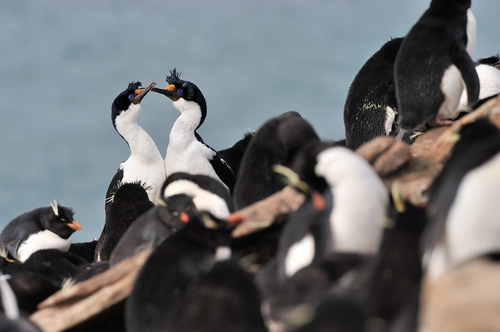
Falkland Islands - South Georgia - Antarctica
27 Dec 2026 - 14 Jan 2027 19 Days / 18 Nights
Falkland Islands - South Georgia - Antarctica
16 Jan 2027 - 03 Feb 2027 19 Days / 18 Nights

Blog


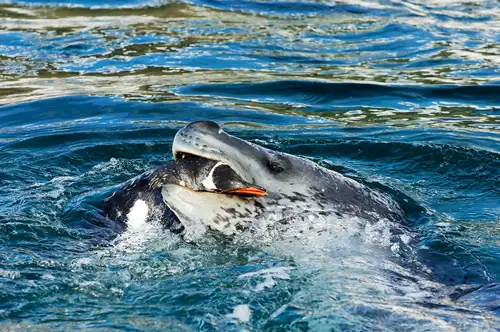
The Wildlife of Antarctica’s Seas and Skies
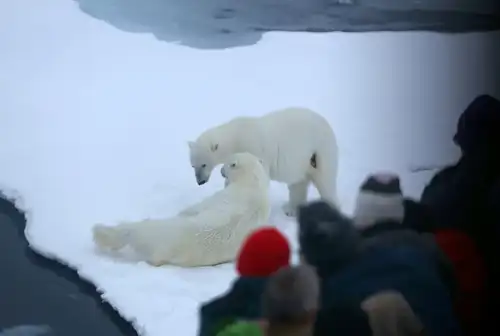
The Pack Ice and Polar Bears of North Spitsbergen

The Arctic’s Most Phenomenal Fjords
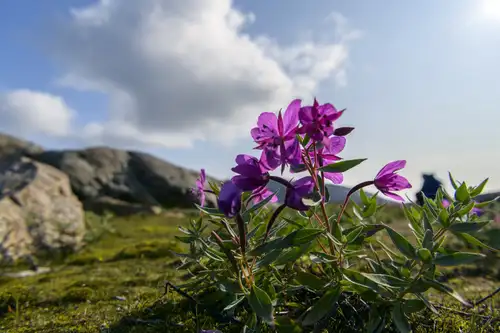
Arctic Flowers, Trees, and Other Plant Life

What to pack for your Atlantic Odyssey voyage?
Navigating by touch through the sea ice

Seven Frightfully Fun Polar Ghost Stories
10 Weather-Fueled Facts about Antarctica
The Best Arctic and Antarctic Trips for Families

10 Tried-and-True Bird Photography Tips
Arctic Seals
Fierce and Feathered: the Skuas of Antarctica
Deception Island deceptively active
The Mysteries of the Beluga Whale
Spitsbergen: a true polar bear trip

The History of Antarctica in Maps
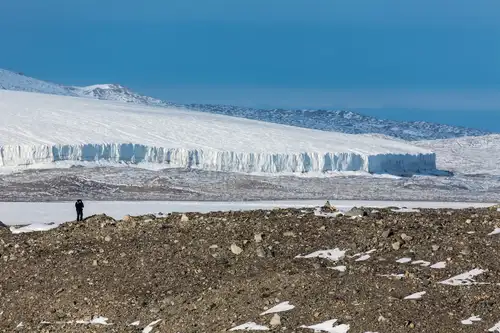
The Secret Life of Glaciers: How They Form, Move, and Melt
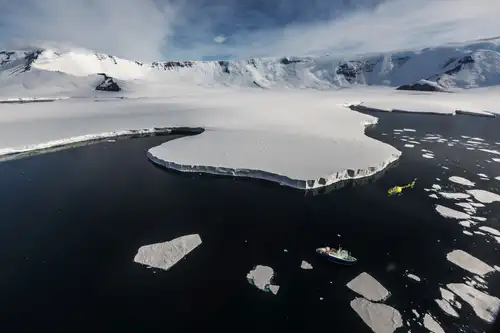
Taking a polar expedition cruise delivers no shortage of show-stopping highlights, but one of the most exhilarating is lifting off from the ship in a helicopter and taking flight over the incomparable Antarctic wilderness.
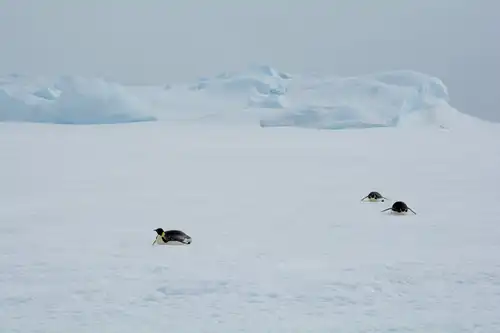
Encounter with the emperor penguin in Antarctica