Franz Josef Land Sites Species And Experiences - Nexta Expeditions
Franz Josef Land Sites, Species, and Experiences

Franz Josef Land Sites, Species, and Experiences

The archipelago of Franz Josef Land is to Russia what Svalbard is to Norway: Both island groups offer excellent Arctic scenery, adventurous outdoor activities, and a good chance of seeing iconic species like polar bears and walruses - alongside a wide range of marine mammals and seabirds.

blog-image

But though the similarities are many, Franz Josef Land is actually quite distinct. Here we’ll discuss some of the unique landing sites we intend to visit on our Franz Josef Land cruises.

Arthur Island

One of our intended landing sites in Franz Josef Land is Arthur Island, located north of Zemlya Georga in the Queen Victoria Sea. Arthur Island was named by English explorer Frederick George Jackson after his brother, Arthur Jackson, during the Jackson-Harmsworth Polar Expedition. The island is almost entirely glaciated, and we have a fair chance of spotting polar bears here.

Bell Island

This Franz Josef Land island was named in 1880 by British explorer Benjamin Leigh Smith. Known for its bell-shaped mountain, Bell Island lies in the southwest of the archipelago and is a site we may visit if we cannot land at Cape Flora (details below). Smith built a wooden lodge on Bell Island from which to conduct his Arctic expeditions. This lodge, named Eira Lodge, remains to this day.

blog-image

Camp Ziegler

A landing site we intend for the middle of our Frans Josef Land voyages, Camp Ziegler was one of the camps used by the Fiala-Ziegler Polar Expedition of 1903-1905. This expedition, which unfortunately failed in its objective to reach the North Pole, sought refuge at Camp Ziegler after repeated setbacks. You can learn all about the history of this important site on our Franz Josef Land voyage, while also enjoying the area’s beautiful mountains and glacier fronts.

blog-image

Cape Flora

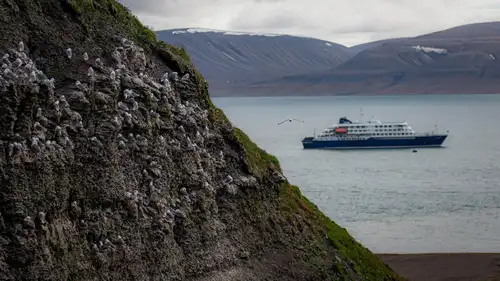
Located in one of the few areas of Franz Josef Land’s Northbrook Island that is not glaciated, Cape Flora’s historical significance is assured. In 1881 Benjamin Leigh Smith was shipwrecked here, and in 1896 the explorers Frederick George Jackson and Fridtjof Nansen ran into each other at Cape Flora while on separate expeditions. But as historically rich as this spot is, it is equally rich in wildlife: On the cliffs behind Cape Flora are large colonies of Brünnich’s guillemots, and here we can sometimes witness the younger birds trying to glide down to the sea.

blog-image

Cape Norway (Cape Norvegia)

This historic Franz Josef Land site, not to be confused with the Cape Norvegia of Antarctica, was the 1895-96 wintering spot of Norwegian explorers Hjalmar Johansen and Fridtjof Nansen. Their hut still stands here on Jackson Island, and our plan is to pay it a visit.

blog-image

Nagurskoye Air Base

Russia’s northernmost base was named after Polish-Russian pilot Jan Nagórski and was built in the 1950s as a staging area for US-bound Soviet Long Range Aviation bombers. Though we can see the base from our ship, we are not permitted to land here. Even so, this is a fascinating area for anyone interested in the many remote research bases that populate the high Arctic.

Rubini Rock

Home to healthy colonies of seabirds, Rubini Rock is also a major Arctic geological site. This columnar basalt formation is located on Hooker Island and was another discovery of Benjamin Leigh Smith. Here you can see little auks, Brünnich’s guillemots, black guillemots, kittiwakes, and fulmars. You might also spot harp seals, bearded seals, or Greenland whales.

blog-image

Rudolf Island

Franz Josef Land has been the setting of numerous historic expeditions, and few of its 192 islands can claim this honor more than Rudolf Island. Named after the Crown Prince of Austria by the Austro-Hungarian North Pole Expedition, Rudolf Island is also home to the northernmost scientific station in the world. Here we hope to see the remains of historic 19th-century Italian and American expeditions. We may even land at Cape Fligely, the northernmost landmass in Eurasia, just one of many “high points” offered on our Franz Josef Land voyage.


blog-image

Blog
go-leftgo-right

Circumnavigating Spitsbergen - Nexta Expeditions
Blog

Circumnavigating Spitsbergen
Many of our expedition cruises focus on specific areas of the Arctic or Antarctica, delving deep into local wildlife and other natural highlights. However, some programs aim to provide a broader survey, visiting a variety of sites to offer guests a wider perspective.
Amphibian, reptiles and herbivore mammals in the Arctic - Nexta Expeditions
Blog

Amphibian, reptiles and herbivore mammals in the Arctic

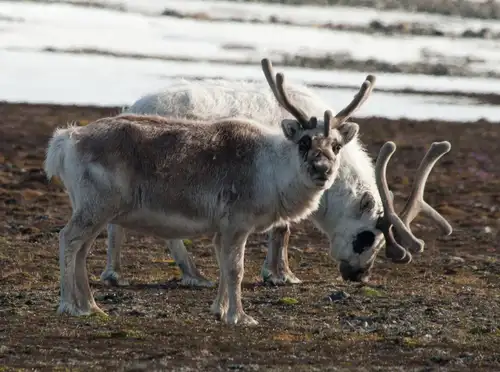
Arctic ecosystems are relatively young in geological terms, having primarily developed over the past three million years. Generally, species richness is lower in the Arctic compared to more southerly regions, aligning with scientific observations that biodiversity decreases from the Equator to the poles.
Polar Bear Sets Impressive New Diving Record - Nexta Expeditions

Blog

Polar Bear Sets Impressive New Diving Record

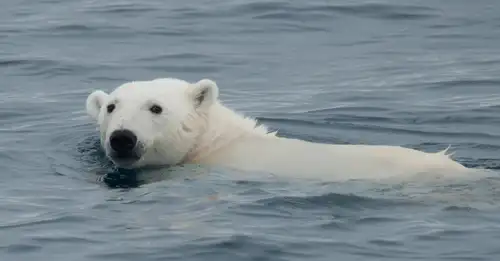
According to polar bear experts Rinie van Meurs and Dr. Ian Stirling, the new record for polar bear diving is an astounding three minutes and 10 seconds. Unless this particular polar bear has an unusually large lung capacity, we can now safely assume that these creatures have the ability to remain underwater for an extended period of time.
What to Pack for Your Expedition Cruise to the Arctic or Antarctica - Nexta Expeditions
Blog

What to Pack for Your Expedition Cruise to the Arctic or Antarctica

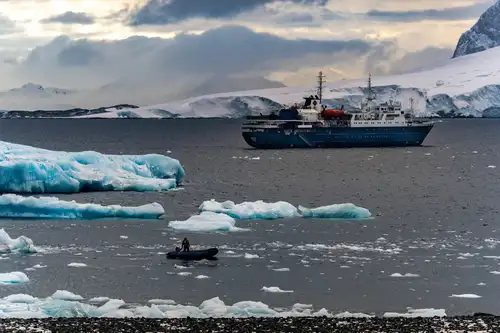
It’s easy to get confused about what to pack for a polar cruise. Some items are provided and some are not, and it’s not always clear which is which. This article will make your polar pack list painstakingly clear. Promise.
Five Birds You Might See on Your Greenland Cruise - Nexta Expeditions
Blog

Five Birds You Might See on Your Greenland Cruise

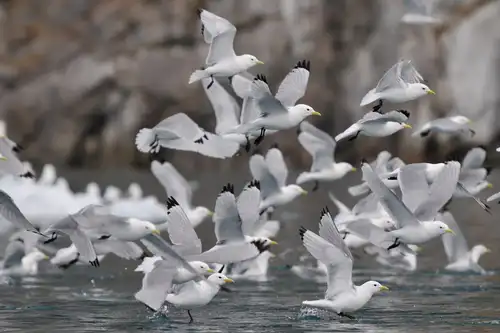
A Greenland expedition cruise offers birdwatchers a unique opportunity to capture stunning avian photographs. With over 230 bird species, Greenland boasts both spectacular landscapes and diverse winged wildlife.
The Seasons of Antarctica: When to Visit and Why - Nexta Expeditions
Blog

The Seasons of Antarctica: When to Visit and Why

You’ve decided to book your dream trip – an adventurous Antarctica cruise that will give you a winning chance to see otherworldly environments, encounter exotic wildlife, and take part in activities that will spoil your inner explorer like nothing else.
Svalbard’s Texas Bar - Nexta Expeditions
Blog

Svalbard’s Texas Bar

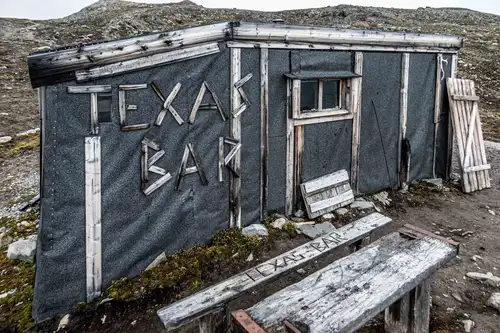
Texas Bar is one of the historic areas we visit on certain Svalbard trips, and it always proves to be a cherished landing site among both our guides and guests. This might be surprising, however, given that its name can be a bit misleading.
Seven Facts About Antarctic and Sub-Antarctic Penguins - Nexta Expeditions
Blog

Seven Facts About Antarctic and Sub-Antarctic Penguins

Approximately 50 million years ago, Antarctica was detaching from the vast supercontinent of Gondwana, and penguins were emerging as a distinct species. Initially native to warmer regions, they gradually adapted to the cooling climate of Antarctica as they ventured further south.
Explore Antarctica Without Leaving Your Couch - Nexta Expeditions
Blog

Explore Antarctica Without Leaving Your Couch

There are numerous ways to embark on an Antarctica expedition from the comfort of your home. Explore these fantastic resources to experience the White Continent without leaving your couch.
The Evolving Shipboard Eco-traveler - Nexta Expeditions
Blog

The Evolving Shipboard Eco-traveler

Feeling stuck in the monotony of everyday life? Looking for a change of scenery? Look no further! Most of us spend our lives on solid ground, despite our bodies being composed of 71.5% water. You'd think we'd have a natural inclination to be in or on the water! So why not try something different? Consider an Arctic holiday adventure on the same waters that famous explorers once navigated!
A Day of Whale Watching in Antarctica - Nexta Expeditions
Blog

A Day of Whale Watching in Antarctica

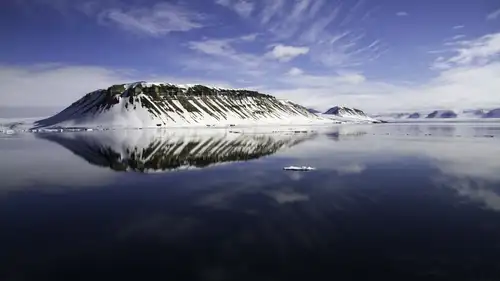
This morning we awoke early to enjoy the first light in Wilhelmina Bay, with the snow and cloud blanketing the surrounding mountains. As dawn broke, we could see the blows of humpback whales scattered throughout the bay. Some of the whales were closer to the ship and we spotted their small dorsal fins and occasionally their white patterned tails. It was a terrific start to our first full day in Antarctica.
The Ice-Jewelled Geology of Spitsbergen - Nexta Expeditions
Blog

The Ice-Jewelled Geology of Spitsbergen

The Svalbard archipelago is located in the Arctic Ocean, roughly 660 km (410 miles) north of Norway's northernmost point. This region is a haven for geologists, boasting a rich geological history that spans from the Mesozoic era (65-245 million years ago) through the Cambrian era (570 million years ago) and back to the Archean era, over 3.5 billion years ago.
12 Things to Do in Antarctica - Nexta Expeditions
Blog

12 Things to Do in Antarctica

Traveling to Antarctica is unlike traveling to any other place on Earth.
Where the Polar Bears Roam - Nexta Expeditions
Blog

Where the Polar Bears Roam

Going to the Arctic without clapping eyes on a wild polar bear can be reasonably compared to visiting Africa without seeing a giraffe or a zebra or, most analogously, a lion.
Discover the Scoresby Sund Fjord System in East Greenland - Nexta Expeditions
Blog

Discover the Scoresby Sund Fjord System in East Greenland

Are you considering a trip to Greenland? One destination you absolutely must visit is the world's largest fjord with stunning landscapes: Scoresby Sund.
A Bug’s Life in Svalbard - Nexta Expeditions
Blog

A Bug’s Life in Svalbard

When you think about Svalbard wildlife, you might imagine reindeer, Arctic foxes, polar bears – the primary animal attractions that draw passengers to an Arctic cruise. But in fact, the Svalbard archipelago is a thriving location for over 1,000 species of terrestrial and freshwater invertebrates: animals that lack backbones. Despite this richness of life, however, these invertebrates are only found in the Isfjord and Kongsfjord areas of these wonderfully diverse islands.
Shackleton’s Long-Lost Endurance Discovered in Antarctica - Nexta Expeditions
Blog

Shackleton’s Long-Lost Endurance Discovered in Antarctica

A discovery expedition launched by the Falklands Maritime Heritage Trust achieved a long-awaited mission when it located Anglo-Irish explorer Ernest Shackleton’s lost ship Endurance last Saturday (March 5).
Six Must-See Svalbard Sites - Nexta Expeditions
Blog

Six Must-See Svalbard Sites

It's home to humanity's last-ditch supply of crop seeds, the world's northernmost settlement of over 1,000 people, and it is one of the best places on Earth to spot a polar bear.
Greenland: East vs. West - Nexta Expeditions
Blog

Greenland: East vs. West

East and West Greenland offer vastly different experiences due to their unique climates, wildlife, habitation, and geology.
10 Tips for Photographing the Northern Lights - Nexta Expeditions
Blog

10 Tips for Photographing the Northern Lights

The northern lights, also known as the aurora borealis, offer some of the most breathtaking photographic opportunities in the Arctic. However, capturing this stunning phenomenon requires more than just luck. To take your best northern lights photos, it's helpful to understand some key aspects of aurora-specific photography.