



Show More

Blog


Blog
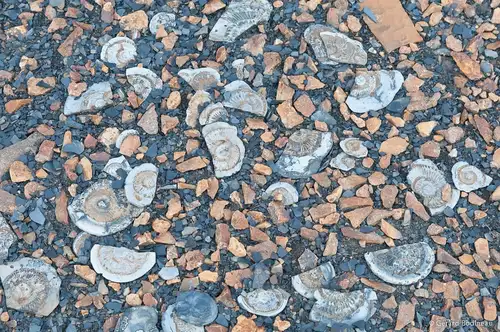
Svalbard a Disneyland for geologists
Svalbard is situated in the north-western corner of the Eurasian plate. Historically, Svalbard was part of a vast continent that included North America, Greenland, and Eurasia. At one point, both Northeast Greenland and Svalbard were submerged under the ocean before resurfacing.
Blog
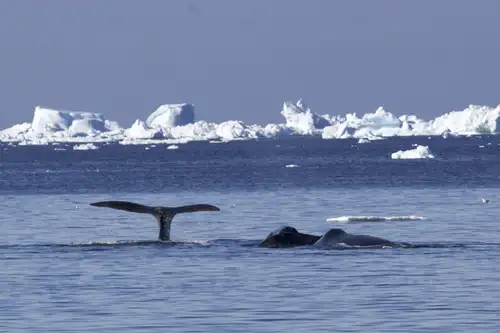
The bowhead whale, whaling about the Arctic
The bowhead whale typically resides near pack ice, often in shallow waters. These whales are commonly found north of Europe, between Canada and Greenland, in the Hudson Bay area, the Okhotsk Sea, and the Bering, Chukchi, and Beaufort seas. In these regions, they filter food through their large baleen plates. Bowheads are known to open their large mouths and graze along the surface, in the water column, or on the sea floor.
Blog
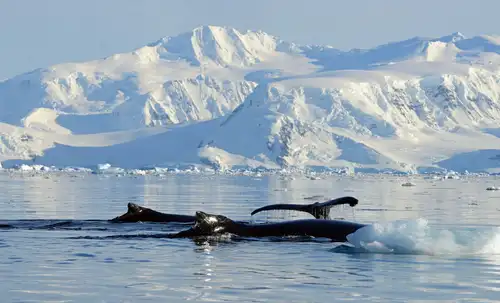
Humpback Whales: the Stars of the Western Antarctic Peninsula
The marine ecosystem of the West Antarctic Peninsula (WAP) stretches from the Bellingshausen Sea to the northern tip of the peninsula. This region includes the Antarctic Sea Ice Zone, a highly productive area that supports large populations of marine mammals, birds, and Antarctic krill. One of the highlights of this region, which you can observe on a whale-spotting Antarctica cruise, is the humpback whale.
Blog
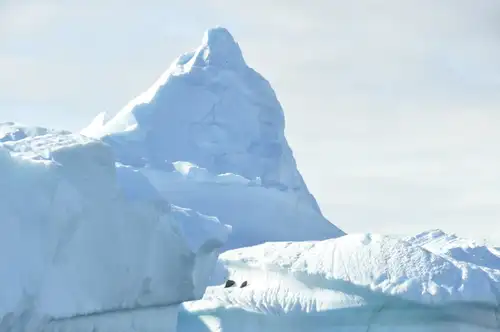
Life migrating through the Polar Front
Since James Cook’s second voyage to Antarctica from 1772-1775, which provided the first descriptions of Antarctic animals, scientists have progressively uncovered the biodiversity of the Antarctic and sub-Antarctic regions. Numerous expeditions and research projects have since been undertaken to understand the unique ecosystems of this continent.
Blog
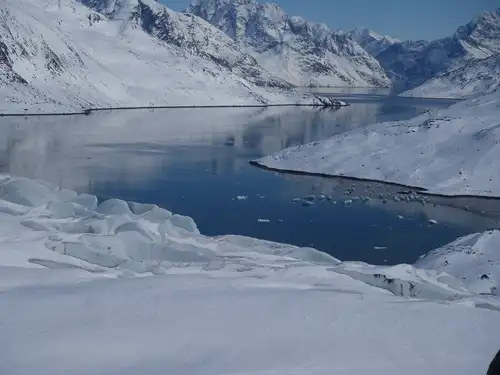
How and When Did Greenland Become Covered in Ice?
Although it may be hard to believe, there was a time when Greenland was more green than icy. Today, those who embark on a Greenland expedition are greeted with views of the Greenland ice sheet and the marine life that thrives in this region, including seals and whales. Polar bears are also prominent in the northern and eastern parts of Greenland. These animals have adapted to their environment, but a few million years ago, the massive island would not have been as welcoming to them.
Blog
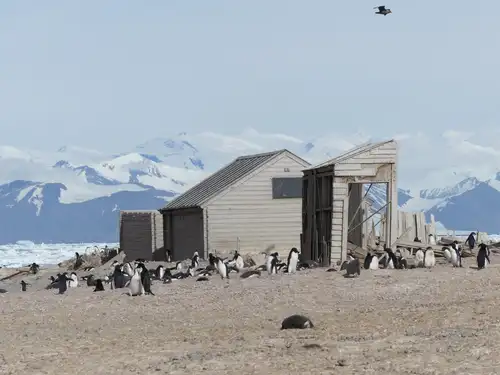
The First Buildings in Antarctica: Borchgrevink’s Historic Huts
Borchgrevink’s huts at Cape Adare hold a significant place in Antarctic history, being the first structures ever built on the continent.
Blog
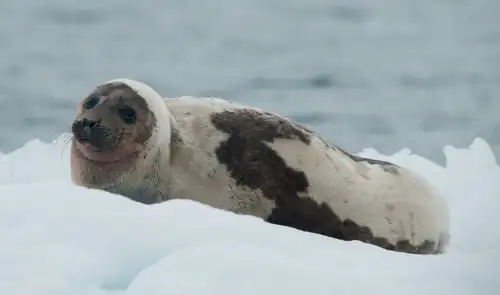
Harp seals harping on in Greenland
Harp seals are a moderately sized species, typically reaching about 1.6 meters in length and weighing around 130 kilograms. Both males and females are similar in size and weight, with males being only slightly larger. They possess a thick, robust body, a small broad and flat head, short narrow flippers, and a narrow muzzle.
Blog
Three Antarctica Cruise Deals
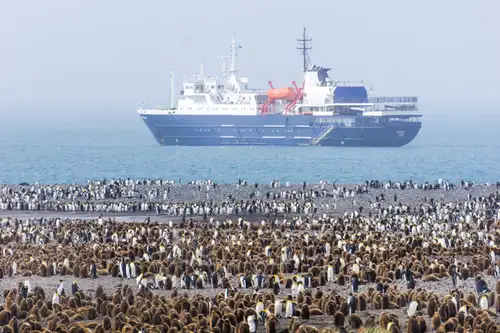
For many travelers, Antarctica represents the ultimate polar destination. Its vast white landscapes offer an endless array of surreal vistas, much of its unique wildlife is found nowhere else on Earth, and its complete lack of an indigenous human population provides a sense of untouched seclusion that few other places can match.
Blog
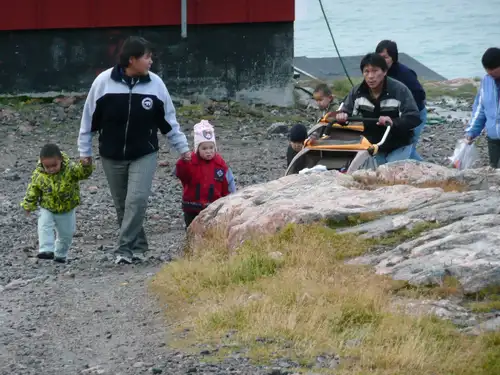
Greenlandic Inuit Beliefs
Greenland is the world’s largest island and with the northern tip around 740 kilometres from the North Pole it is the northernmost country on Earth. The island is around 2,670 kilometres long and is about 650 kilometres across at its widest point.
Blog
Bouvet Island: The Most Remote Island in the World
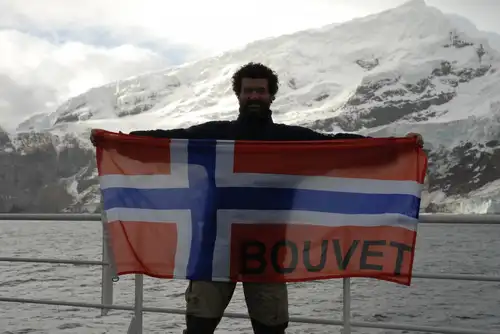
On January 1, 1739, French Commander Jean-Baptiste Charles Bouvet de Lozier made an extraordinary discovery: a volcanic island so remote that it lies 2,600 km (1,600 miles) from the nearest inhabited land.
Blog
10 Bountiful Blue Whale Facts
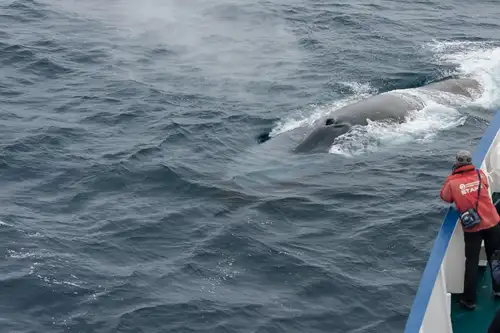
The umbrella term “whale” refers to a wide variety of large marine mammals. To zero in on blue whales, however, we’ll need to unpack this term a bit. The Latin word for whale, cetus, is the root of the whale infraorder, Cetacea, the largest parvorder of which is Mysticeti.
Blog
The Wonderful Weddell Sea: Places, Pics, and Impressions
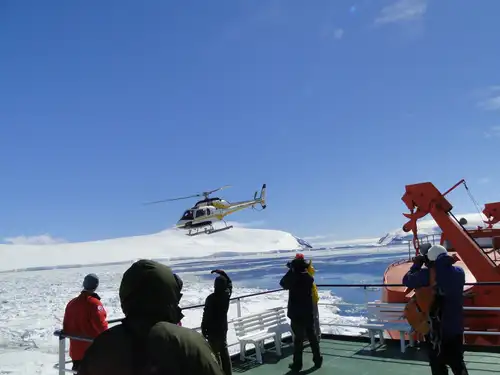
When we talk about Antarctica, it’s easy to slip into familiar words: amazing, astounding, extraordinary, exceptional. And though most Antarctic locations more than deserve these descriptions, some deserve them more than others.
Blog
Scoresby Sund: the Greatest Greenland Adventure
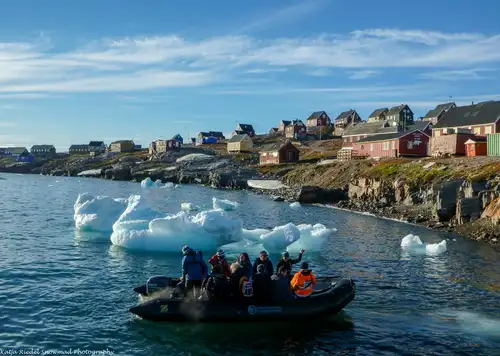
In a land of expansive mountains, colossal glaciers, and majestic shorelines, few places are as expansive, colossal, or majestic as Scoresby Sund.
Blog
“The polar bear will still be there”
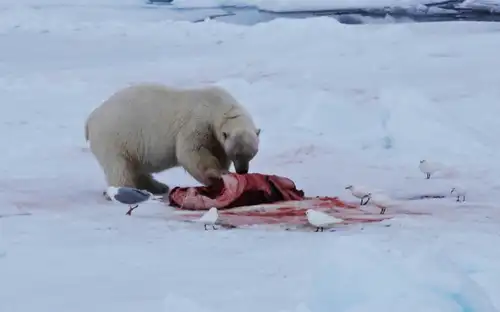
For several hours, we had been navigating the pack ice in search of polar bears. Despite numerous binoculars scanning the ice, no bears were visible, and only a few tracks were found. This suggested we might be in an area with fewer bears. Later that morning, we decided to head a few miles east, suspecting a higher bear population there.
Blog
North Norway, Northern Lights, and All the Pretty Whales
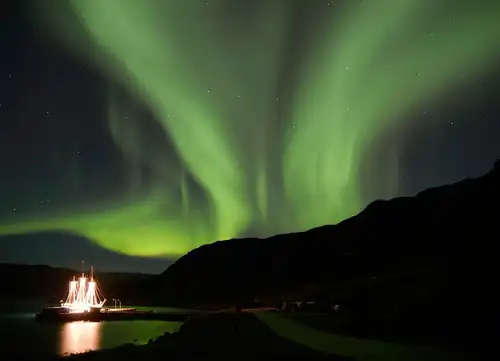
At first glance, visiting Northern Norway outside of a blazing-hot summer might seem daunting for the average traveler.
Blog
A Bug’s Life in Svalbard
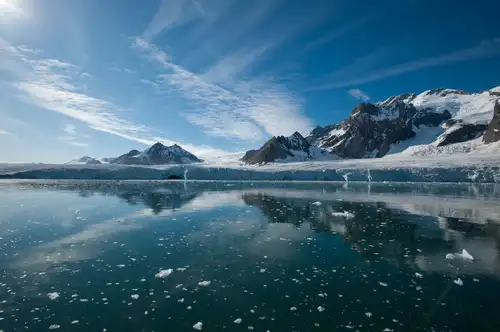
When you think about Svalbard wildlife, you might imagine reindeer, Arctic foxes, polar bears – the primary animal attractions that draw passengers to an Arctic cruise. But in fact, the Svalbard archipelago is a thriving location for over 1,000 species of terrestrial and freshwater invertebrates: animals that lack backbones. Despite this richness of life, however, these invertebrates are only found in the Isfjord and Kongsfjord areas of these wonderfully diverse islands.
Blog
Science of the Ross Ice Shelf
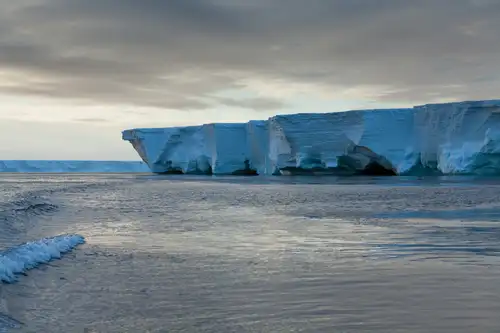
Antarctica’s Ross Ice Shelf is vast, spanning 487,000 sq. km – comparable to the size of France – with a thickness that varies from a few hundred meters near the sea to over 1,200 meters away from the floating edge. The edge along the Ross Sea forms a towering ice wall, rising up to 50 meters above the water, with most of the ice submerged below the waterline.
Blog
Kayaking In Greenland
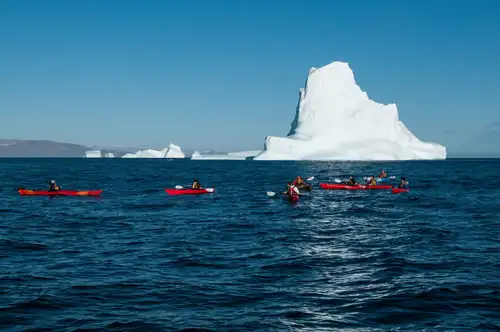
Think of Greenland and two images come to mind:
Blog
Orcas of the Polar Seas
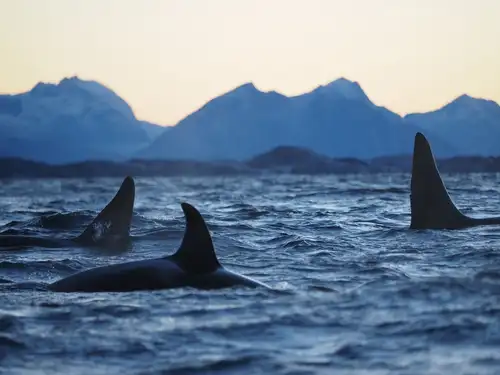
The orca, also known as the killer whale, is the apex marine predator and possibly the most widespread vertebrate on the planet. While they are most numerous in colder regions like Antarctica, Norway, and Alaska, they also inhabit tropical and subtropical seas. Here, we’ll explore some essential orca facts you might want to know before encountering them in person, concluding with a fantastic video showcasing our top ten favorite killer whale facts.
Blog
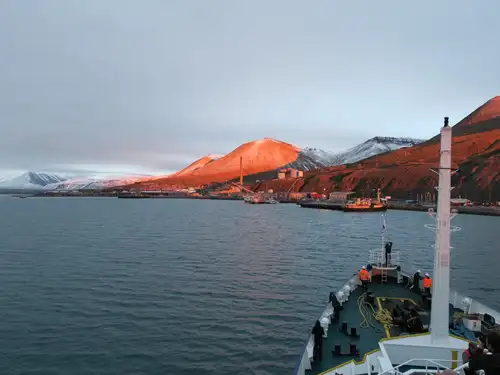
Port Pastimes: 7 Fun Things to Do in Longyearbyen
Waiting in port for an Arctic expedition cruise to begin might seem a little like waiting for water to boil or coffee to brew or a Seinfeld reunion to materialize: Time seems to defy its own laws, life slows to a crawl, and you begin to wonder if it’s really going to be worth it.