

On the evening of February 11, 1907, Irish-born polar explorer Ernest Shackleton, already among the more famous polar explorers in the world, announced his intention to embark on a momentous Antarctic expedition.
His goal: to reach the South Pole.
The very same night, fellow explorer Roald Amundsen was giving a lecture at the Royal Geographical Society about his 1903 - 1906 expedition through the Northwest Passage. He had made this voyage on a converted herring boat, an impressive feat of navigation that for the previous three centuries had been unsuccessfully attempted with great loss of life.
Inspired by Amundsen’s talk, Shackleton believed he could win the South Pole for England. But the pressure was high, as he wrote in a letter to his wife Emily: “I am representing 400 million British subjects.”
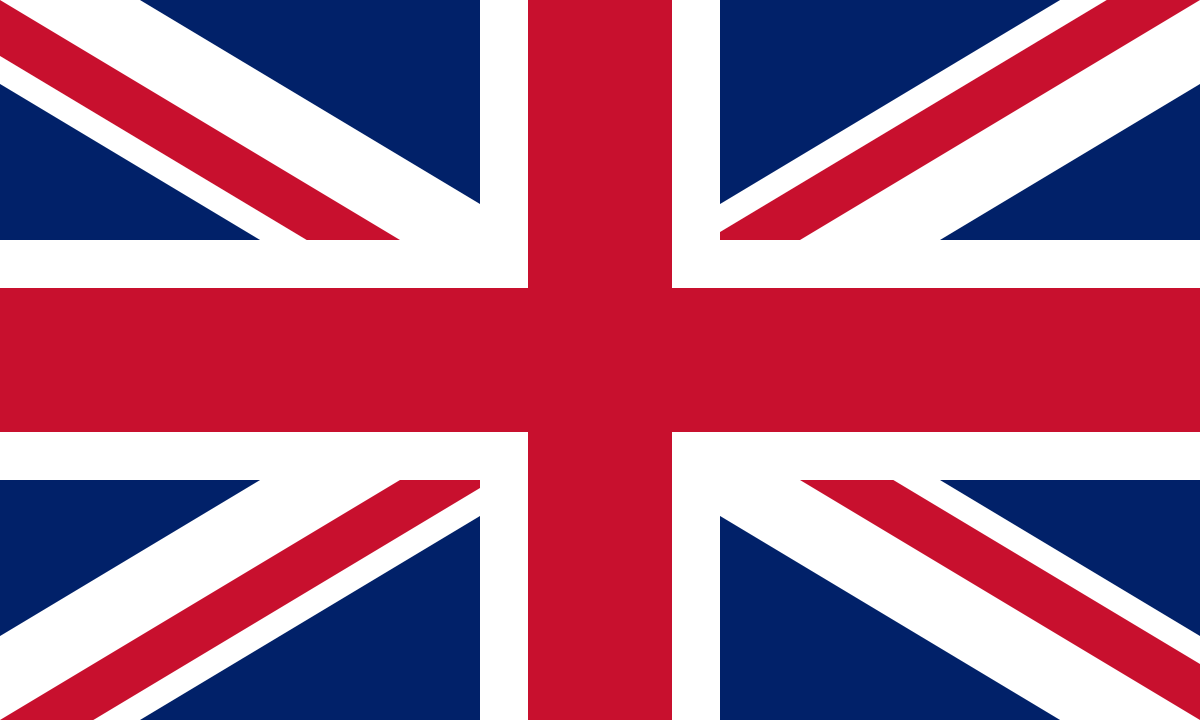
Still, Shackleton was determined. On August 5, 1907, he held a farewell dinner on his sealing ship Nimrod. Shackleton and his wife were seated near the Union Jack, which had been presented to Shackleton by Queen Alexandra with a note that read, “May this Union Jack, which I entrust to your keeping, lead you safely to the South Pole.”
With this royal seal of approval, Shackleton and his crew departed on what would be one of the most memorable Antarctic expeditions in history.

Shackleton plans to use Scott’s Discovery hut
Specifically, the purpose of Shackleton’s journey to Antarctica was to reach both the magnetic and geographic South Pole. As he and his crew set sail from Lyttleton Harbour, New Zealand, on his final leg to Antarctica, some 50,000 people lined the streets to catch a glimpse of the explorer and his ship.
Meanwhile, back in England, polar explorer (and sometimes rival) Robert Falcon Scott was following the news warily. Between the medals he was receiving from numerous geographical societies, which included an honorary doctorate from Cambridge University, he learned of Shackleton’s plan to use the Discovery hut Scott and his crew had built during their 1901 - 1904 expedition. Scott wrote to Shackleton, declaring his objections: I needn’t tell you that I don’t wish to hurt your plans, but in a way I feel I have a sort of right to my own field of work in the same way that Peary claimed Smith’s Sound and many African travellers their particular locality – I am sure you will agree with me in this, and I am equally sure that only your entire ignorance of my plan could have made you settle on the Discovery route without a word to me.

Scott had powerful supporters who supported him on this issue, including the Royal Geographical Society’s former president, Sir Clements Markham, its current president, Sir George Goldie, and its secretary, J. Scott Keltie. Markham viewed Shackleton as the black sheep of Scott’s previous expedition and believed using Scott’s hut was shameful behavior.
Even Wilson, who was Shackleton’s friend, wrote a warning to him:
If you go to McMurdo Sound and even reach the Pole – the gilt will be off the gingerbread because of the insinuation that will almost certainly appear in the minds of a good many, that you forestalled Scott who had a prior claim to the use of that base.
Bowing to the pressure, Shackleton signed an agreement not to use the base. Shackleton tried to observe the agreement by setting up base in King Edward VII Land instead, but this plan was thwarted when the expedition encountered thick ice, heavy seas, and large storms that forced them to make for Scott’s hut regardless.
This unlucky necessity tormented Shackleton, who wrote in his diary, “I had promised, and I felt each mil that I went to the West was a horror to me.”

Shackleton passes Scott’s farthest southern position
Shackleton’s Antarctic expedition was getting tougher by the day. He had decided not to bring sled dogs for hauling, instead relying on four ponies and his own men. But the ponies weakened and were eventually shot for meat. By December, only one pony was left the only consolidation for the expedition was they had passed Scott’s farthest South position on November 26. Two days later, they scaled a red granite rock to look out on a spectacular view. Their doctor, Eric Marshall, wrote about it: To the South a great glacier extended as far as the eye could reach, flanked on either side by rugged ice-covered mountains, until lost sight of 60 miles distant where the mountains on the East flank and the Cloudmaker on the West formed a narrow’ or waist, which forecast great ice disturbances as the glacier flowed from the distant plateau, which we now realise guarded the secrets of the Pole itself. Shackleton’s South Pole crew had made an important discovery: Beardmore Glacier, the gateway to the South Pole.
Three days later, the Shackleton expedition lost its last pony when it fell down a crevasse. The men were shattered by exhaustion, and their rations were depleted. They had covered 885 km (550 miles) from their base and were still over 400 km (250 miles) away from the South Pole.
On Christmas Day, they camped in awful conditions. One of the crew, Wild, wrote about them: “May none but my worst enemies ever spend their Christmas in such a dreary God-forsaken spot.”

Despite the circumstances, the men tried to keep their sprits high. Wild wrote about this, too:
Here we are 9,500 ft. above sea level, farther away from civilisation that any human being has ever been since civilisation was, with half a gale blowing, and drifting snow flying, and a temperature of 52° of frost, and yet we are not miserable.
Shackleton also wrote of their cheerfulness and the fine open-air life of Antarctica. But he knew their odds of reaching the South Pole were slim at best, recording this in his diary: I cannot think of failure, yet I must look at the matter sensibly and the lives of those who are with me. I feel that if we go on too far, it will be impossible to get back over this surface, and then all the results will be lost to the world. We can now definitely locate the South Pole on the highest plateau in the world, and our geological work and the meteorology will be of great use to Science: But all this is not the Pole, and man can only do his best, and we have arrayed against us the strongest forces of Nature.

Shackleton makes his last push to the South Pole
On January 9, 1909, at four in the morning, the men left a makeshift depot that contained all the remaining supplies they would need to take them back to their previous camp. They then made a last push to get within 100 miles of the South Pole. Carrying only a supply of chocolate, biscuits, and sugar, the men ran as hard as they could over the snow. Stopping at the highest latitude anyone on Earth had yet reached, they unfurled the Union Jack.
Exhausted, hungry, and disappointed Shackleton wrote, “We have shot our bolt, and the tale is 88.23 S. 162 E.” They were 112 miles (180 km) from the Pole.
Although it did not ultimately succeed in its objective, Shackleton’s Antarctic expedition is still remembered as among the most daring and determined in polar history. During this voyage, Shackleton and his crew discovered Beardmore Glacier, made the first ascent of Mount Erebus, and found the approximate location of the South Magnetic Pole.
While discussing this expedition with his wife, he is said to have remarked, “A live donkey is better than a dead lion, isn’t it?” She is said to have agreed.
The legend of Shackleton’s South Pole voyage is rivaled only by his later traverse of South Georgia, part of which you can hike with us on certain Antarctica trips. For this and many other reasons, Ernest Shackleton remains one of the most legendary polar explorers in history.



Blog



The Arctic Hare: Easter Bunny
Greenland: Where the Kayak Was Invented
Life migrating through the Polar Front
Tracking Greenland’s Wildlife from Space
The first race to the South Pole in 50 years
Seven Sublime Antarctic Bays
The Norse Settlement of Greenland
Eight Engaging Reindeer Facts
8 Whales You Might See During Your Antarctica Cruise
The South Georgia Seven: Hikes, Fjords, Whales, & Penguins
Weddell Sea, Shackleton’s Endurance, and New Swabia

What to Pack for Your Expedition Cruise to the Arctic or Antarctica
9 Facts about the Greenland Shark
Imperial Antarctica: the Snow Hill Emperor Penguins
Two for the Snow: Polar Cruises for Couples
Weddell seals: The data collectors scientists of Antarctica
The Plants of Antarctica
Antarctic Icon: 44 Facts About the Emperor Penguin
Gough Island: Seabird Capital of the South Atlantic